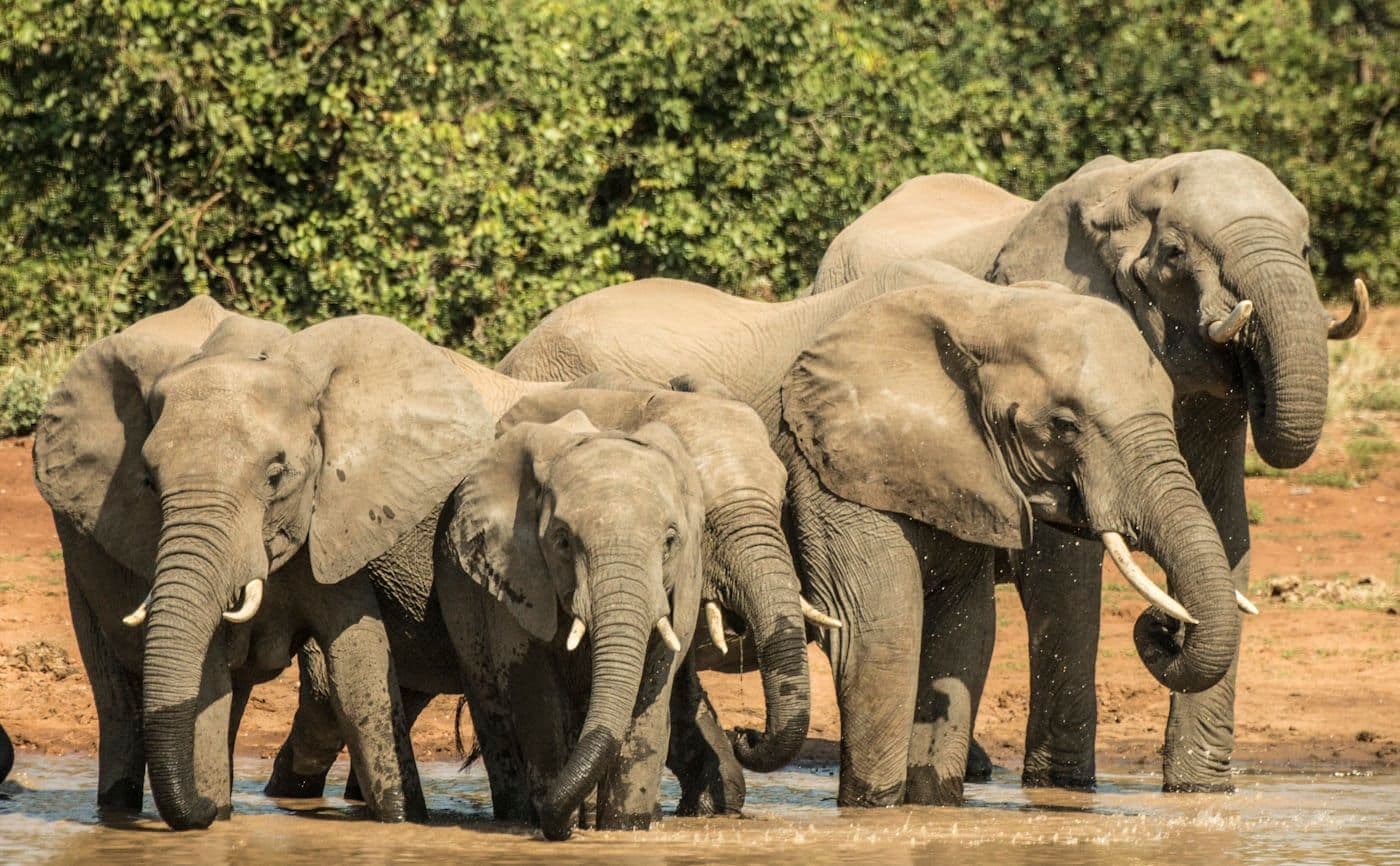
This is the key decision for any South Africa safari: do you explore Kruger National Park independently in your own vehicle, or do you stay at a private game reserve bordering Kruger where expert guides drive you in open vehicles and track animals on foot?
Both options give you Big Five viewing in the same ecosystem. But the experiences — and the costs — are fundamentally different.
Quick Comparison
| Factor | Kruger National Park | Private Game Reserves |
|---|---|---|
| Cost per night | $50-$150 (rest camps) | $400-$3,000+ (all-inclusive lodges) |
| Game drives | Self-drive in your own vehicle | Guided in open Land Rovers with tracker |
| Night drives | Not allowed (gates close at sunset) | Yes — spotlight drives reveal nocturnal wildlife |
| Walking safaris | Limited, specific trails only | Yes — guided bush walks with armed ranger |
| Off-road driving | Not allowed (stay on roads) | Guides can go off-road to follow sightings |
| Vehicle density | Can be high at popular sightings | Strictly limited (typically 3 vehicles max per sighting) |
| Accommodation | Rest camps (basic-comfortable) | Luxury lodges (some among Africa's finest) |
| Food | Self-catering or rest camp restaurants | All-inclusive gourmet dining |
| Independence | Total — you drive, you choose, you explore | Guided — expert-led, structured game drive schedule |
| Size | 19,485 km² | 200-650 km² per reserve |
Kruger National Park: The Self-Drive Safari
The Experience
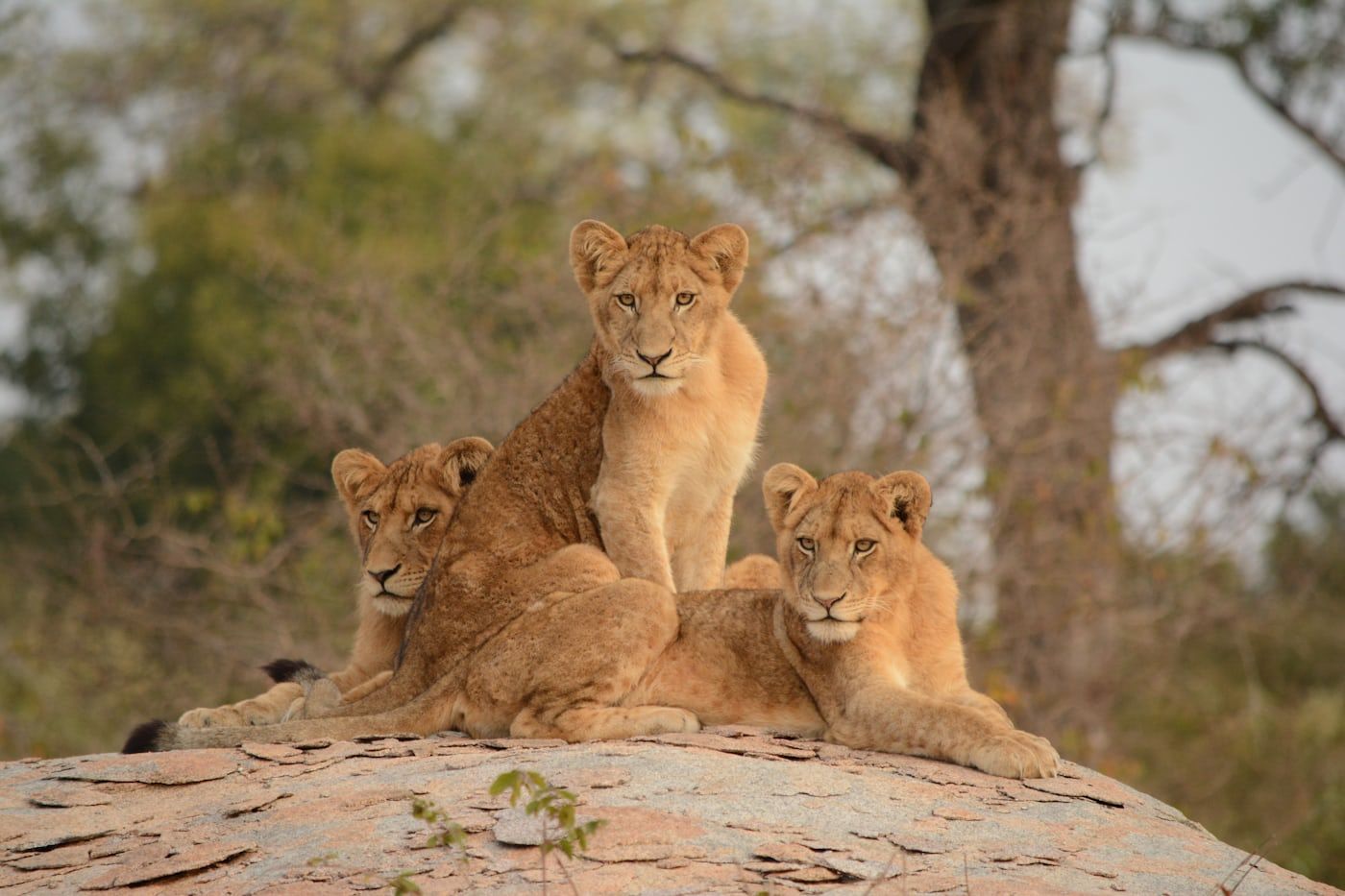
Kruger is one of the world's great self-drive safari parks. You rent a car (a standard sedan works on tarred roads; a 4x4 is needed for some gravel roads), enter through one of the park's nine main gates, and drive the network of roads looking for wildlife. It's just you, your vehicle, and whatever appears around the next bend.
The independence is exhilarating. You decide where to go, how long to stay at a sighting, and which roads to take. You eat when you want, stop when you want, and set your own pace. For travelers who enjoy self-reliance and don't want a structured schedule, Kruger's self-drive experience is uniquely satisfying.
Wildlife Viewing
Kruger supports all of the Big Five plus cheetah, wild dog, hippo, giraffe, zebra, and over 500 bird species. Wildlife density is high, particularly along the major rivers (Sabie, Olifants, Letaba) where vegetation is thicker and water attracts animals year-round.
The challenge: In your own enclosed vehicle on tarred roads, you're limited to what happens to be visible from the road. You can't follow a leopard into the bush or drive to where a lion pride is resting 200 meters off-road. You'll see animals — plenty of them — but sightings depend on luck and patience rather than guide expertise and tracking skill.
Tip: Drive the S-roads (secondary gravel roads) rather than sticking to the tarred main routes. These quieter roads pass through denser bush and often produce better sightings with fewer vehicles.
Rest Camp Accommodation
Kruger's 12 main rest camps and numerous bush camps offer accommodation from basic camping sites ($25/night) to air-conditioned bungalows ($100-$150/night). The camps are fenced (keeping large wildlife out), have communal kitchens (for self-catering), restaurants, shops selling basic supplies, swimming pools, and fuel stations.
Top camps: Skukuza (largest, most facilities, central location), Lower Sabie (excellent riverside location, high wildlife density), Satara (best for big cats — the surrounding grassland attracts predators), and Olifants (dramatic cliff-top setting overlooking the river).
Cost
A 3-day self-drive Kruger safari can cost as little as $150-$250/person (rest camp accommodation, self-catering, fuel, and park fees of R440/~$24 per person per day). This makes Kruger one of the cheapest quality Big Five safari experiences in Africa.
Private Game Reserves: The Guided Luxury Safari
The Experience
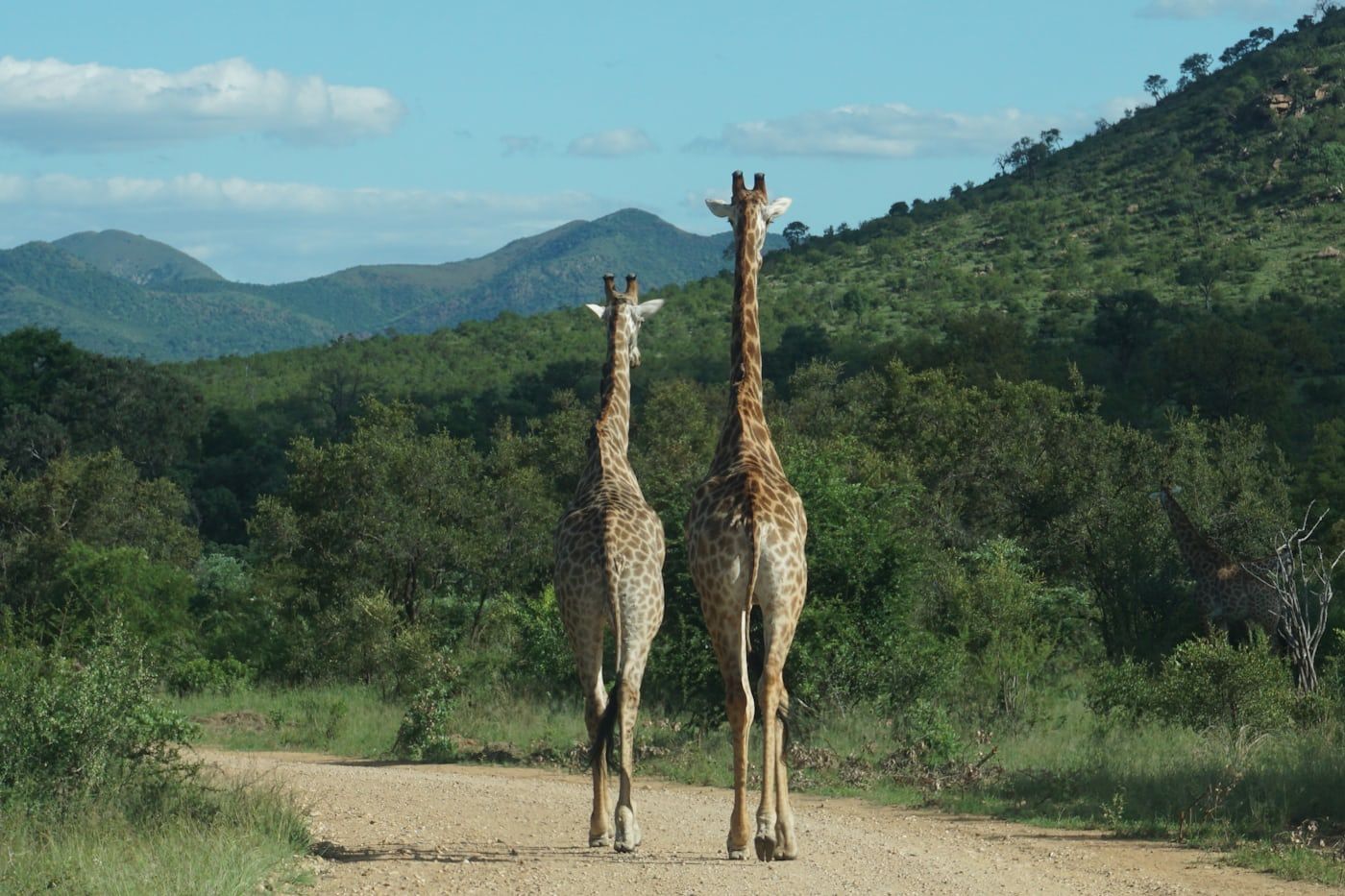
The private game reserves bordering Kruger — most famously the Sabi Sands, Timbavati, Klaserie, Manyeleti, and Balule — operate on unfenced conservancies that share open borders with Kruger. Animals move freely between the national park and the private reserves. The wildlife is the same. The experience is completely different.
You stay at a lodge (typically 8-24 guests maximum) and are taken on game drives in open-sided Land Rovers with a professional guide driving and a tracker sitting on a seat mounted on the front bumper, reading the ground for animal tracks. The guide communicates with other lodges via radio, building a real-time picture of wildlife movements.
The key difference: Off-road driving. When the tracker spots leopard prints leading into the bush, the guide can follow them off-road — through scrub, over dry riverbeds, around termite mounds — until you're sitting 10 meters from a leopard that Kruger self-drivers would never see. This off-road capability transforms the hit-rate for elusive species.
Night drives (not allowed in Kruger proper) reveal a completely different cast of characters: bushbabies, genets, civets, porcupines, aardvarks, and predators on the hunt. Spotlights sweep the bush while the tracker scans for eye-shine.
Walking safaris with an armed ranger and tracker give you a ground-level perspective — learning to read animal tracks, identify bird calls, and understand the ecosystem at a pace that game drives can't match.
Leopard Viewing
The Sabi Sands is widely considered the best place in Africa to see leopards. The resident leopards are habituated to vehicles and allow extraordinarily close approaches. Multi-generational leopard sightings (mother with cubs) are possible. In Kruger proper, leopards exist in similar numbers but are far harder to find from the road.
Accommodation & Service
Private reserve lodges range from comfortable (Manyeleti properties from ~$300/night) to some of the finest safari accommodation on Earth (Singita Sabi Sand from ~$3,000/night). All-inclusive rates typically cover accommodation, all meals, local drinks, two game drives per day, walking safaris, and laundry.
The service level — personal attention from your guide, bespoke dining (bush breakfasts, boma dinners under the stars), spa treatments, and private plunge pools overlooking waterholes — is a world apart from Kruger's utilitarian rest camps.
Cost
The all-inclusive rates seem steep: $400-$1,500/person/night at mid-range to luxury properties. But these include everything — meals, drinks, game drives, guide, and activities that would be extras elsewhere. When comparing costs, factor in Kruger's car rental, fuel, food, park fees, and potential guided drive bookings.
Mid-range comparison (3 nights):Kruger self-drive: ~$150-$250/person total. Manyeleti/Balule private reserve: ~$1,000-$1,500/person total. Sabi Sands luxury: ~$3,000-$9,000/person total.
Which Should You Choose?
Choose Kruger Self-Drive If:
- Budget is your primary concern (Kruger is 5-10x cheaper)
- You enjoy driving and independent exploration
- You've done safaris before and can spot wildlife from a vehicle
- You want to spend a week or more in the bush at an affordable rate
- You're comfortable with self-catering and basic accommodation
- You want to cover a large area (Kruger is enormous — different regions offer different landscapes and wildlife)
Choose a Private Reserve If:
- Seeing leopards (and seeing them well) is important to you
- You want the expertise of a professional guide and tracker
- Night drives and walking safaris appeal to you
- You prefer luxury accommodation, gourmet food, and premium service
- You have a limited number of days (2-3 nights at a private reserve is enough for a complete experience)
- This is your honeymoon, anniversary, or special occasion
- You want the highest possible sighting quality per day
Consider Both
Many travelers spend 2-3 nights at a private reserve (intensive, guided Big Five experience) followed by 2-3 nights self-driving in Kruger (independence, different landscape, budget-friendly). This combination gives you the best of both worlds.
Browse other South Africa safari experiences for guided options and private reserve packages.
Practical Tips
For Kruger Self-Drivers
Book rest camp accommodation early. Popular camps (Lower Sabie, Satara, Skukuza) sell out 3-6 months ahead for peak season (June-September). Book through SANParks (South African National Parks) website.
Be at the gate when it opens. The best wildlife viewing is in the first 2 hours after sunrise. Gate opening times vary by season — check the daily schedule at your rest camp.
Download the Kruger Sightings app. Other visitors log their sightings in real-time, giving you a map of recent activity. It's not guaranteed, but it significantly improves your chances.
Don't speed. The 50 km/h limit exists because animals cross roads without warning. Driving slowly also means you spot more.
For Private Reserve Guests
Tip your guide and tracker. Standard guideline: R200-R500/person/day for the guide, R100-R200/person/day for the tracker. Some lodges have a tip box for general staff. Tipping is customary and the guides work incredibly hard.
Dress in neutral colors. Olive, khaki, brown, dark green. Avoid white, bright colors, and black (attracts tsetse flies in some areas).
Bring binoculars. Even in an open vehicle, binoculars help you spot distant animals and appreciate details that the naked eye misses.
Frequently Asked Questions
Can I see the Big Five in both?
Yes. Both Kruger and the private reserves support all Big Five species. Your chances of seeing all five are higher in a private reserve (especially for leopard and rhino) due to off-road tracking and guide expertise.
Is Kruger safe for self-driving?
Very safe. The roads are well-maintained, animals are habituated to vehicles, and rest camps are fenced. The main risks are the same as any road trip: don't speed, don't get out of your vehicle in unfenced areas, and don't drive after gate closure time.
Which private reserve is best?
Sabi Sands for leopards and the widest range of luxury lodges. Timbavati for wild dogs and a slightly wilder feel. Manyeleti for the best value (fewer lodges, less traffic, lower prices). Klaserie and Balule for quieter, more remote alternatives.
Can I do a day trip to a private reserve from Kruger?
Generally no — private reserves require overnight stays and are not accessible as day visits from Kruger rest camps. The fences between some reserves and Kruger proper prevent cross-access. Plan them as separate components of your itinerary.
How does this compare to East African safaris?
South Africa's private reserves offer a more intimate, vehicle-close experience (open Land Rovers, off-road tracking) than East Africa's closed-vehicle safaris. Kenya and Tanzania offer larger landscapes and the migration. South Africa offers superior leopard viewing and the self-drive option. See our Kenya vs South Africa Safari comparison.