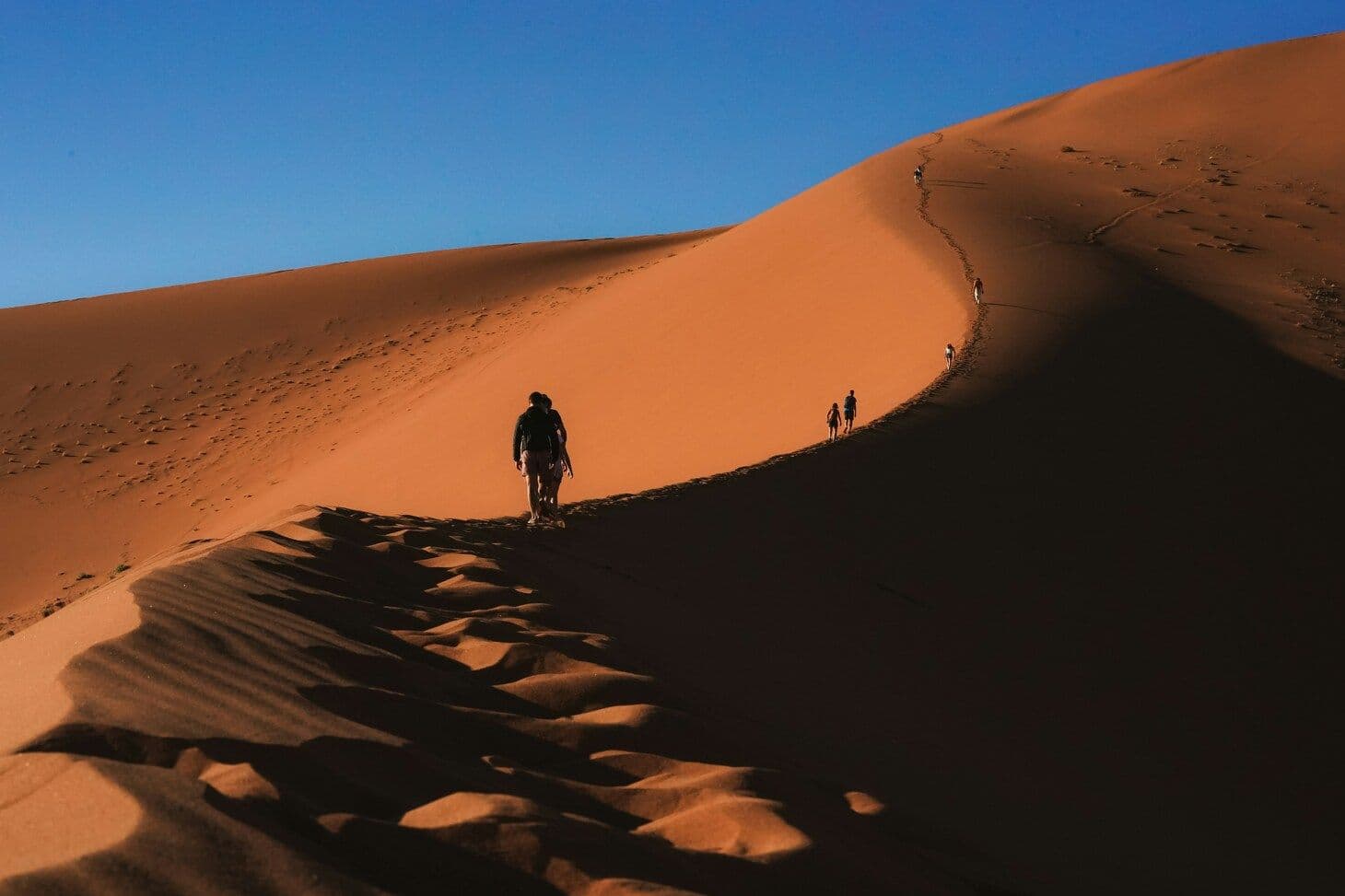
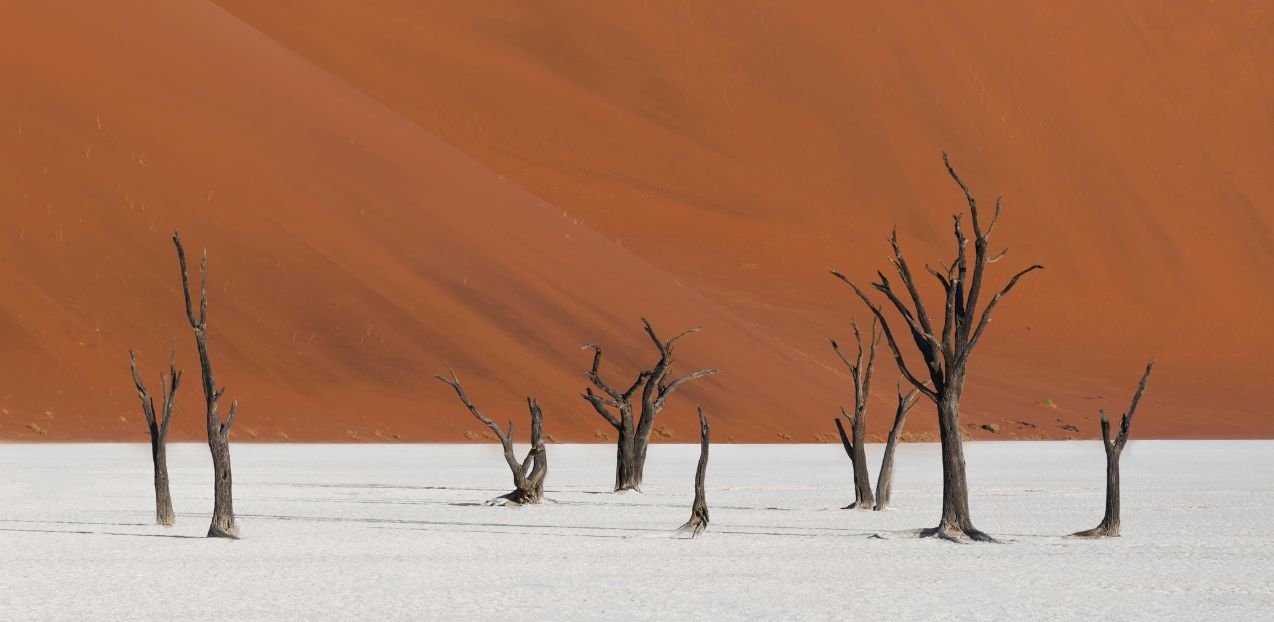
Sossusvlei is the image that defines Namibia — towering red sand dunes rising 300+ meters from the desert floor, their curved ridgelines glowing orange and gold at sunrise. Deadvlei, a white clay pan dotted with 900-year-old dead camelthorn trees against a backdrop of the highest dunes, is one of the most photographed landscapes in Africa.
Together, they're the must-see highlight of any Namibia trip. But the logistics of visiting require some planning. Here's everything you need to know.
What Are Sossusvlei and Deadvlei?
Sossusvlei is a salt and clay pan surrounded by the red dunes of the Namib Desert, located within the Namib-Naukluft National Park. The name means "dead-end marsh" in Afrikaans — the Tsauchab River occasionally fills the pan with water (creating a temporary lake), but most of the time it's a dry, cracked surface surrounded by dunes.
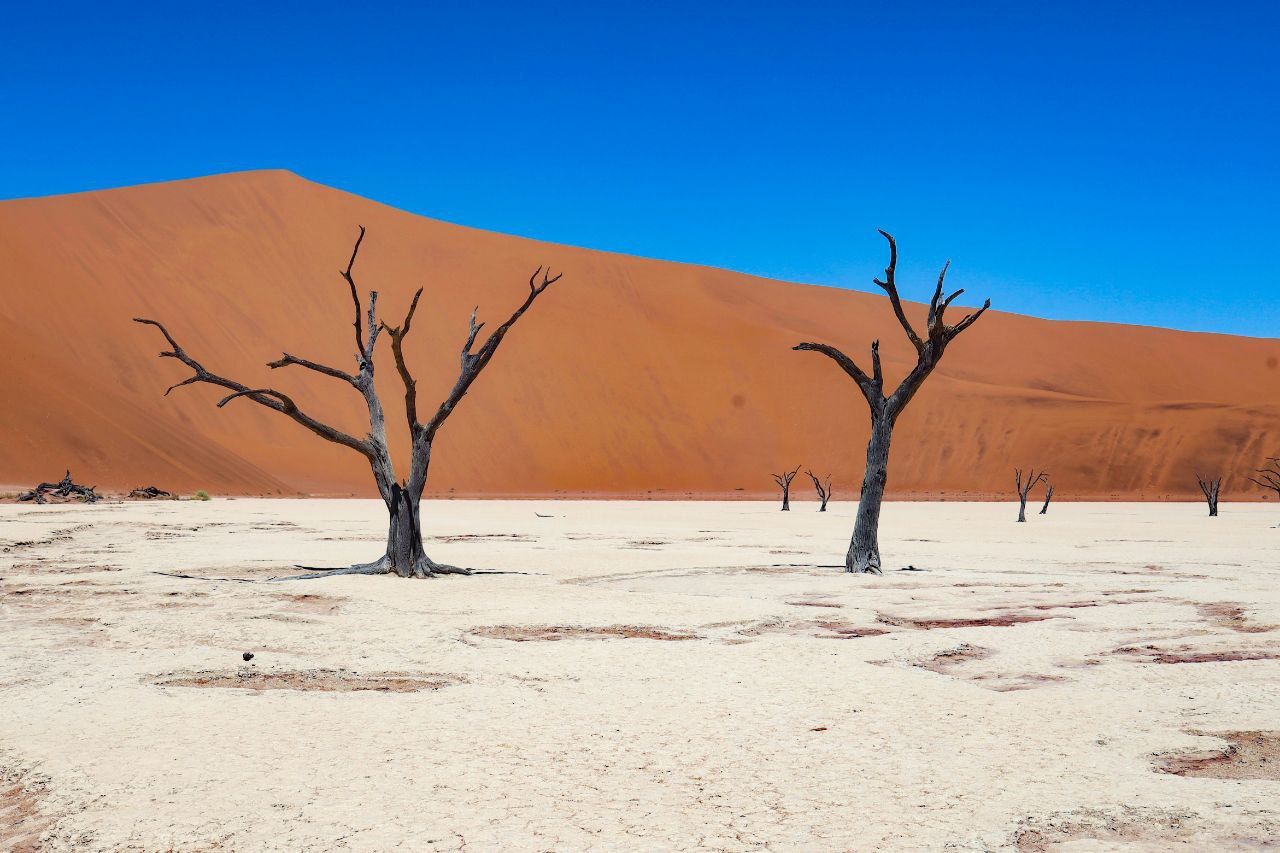
Deadvlei (sometimes written "Dead Vlei") is a smaller clay pan about 1 kilometer from Sossusvlei. What makes it extraordinary: blackened, dead camelthorn trees — estimated to be 600-900 years old — stand on the white clay floor. They haven't decomposed because the environment is too dry. The contrast of black trees, white pan, orange dunes, and blue sky creates an almost surreal visual composition.
Dune 45 is the most climbed dune in the area, located 45 kilometers from the Sesriem gate. Its name is simply its distance marker, but it's become famous for sunrise climbs because of its accessibility and its photogenic star-shaped crest.
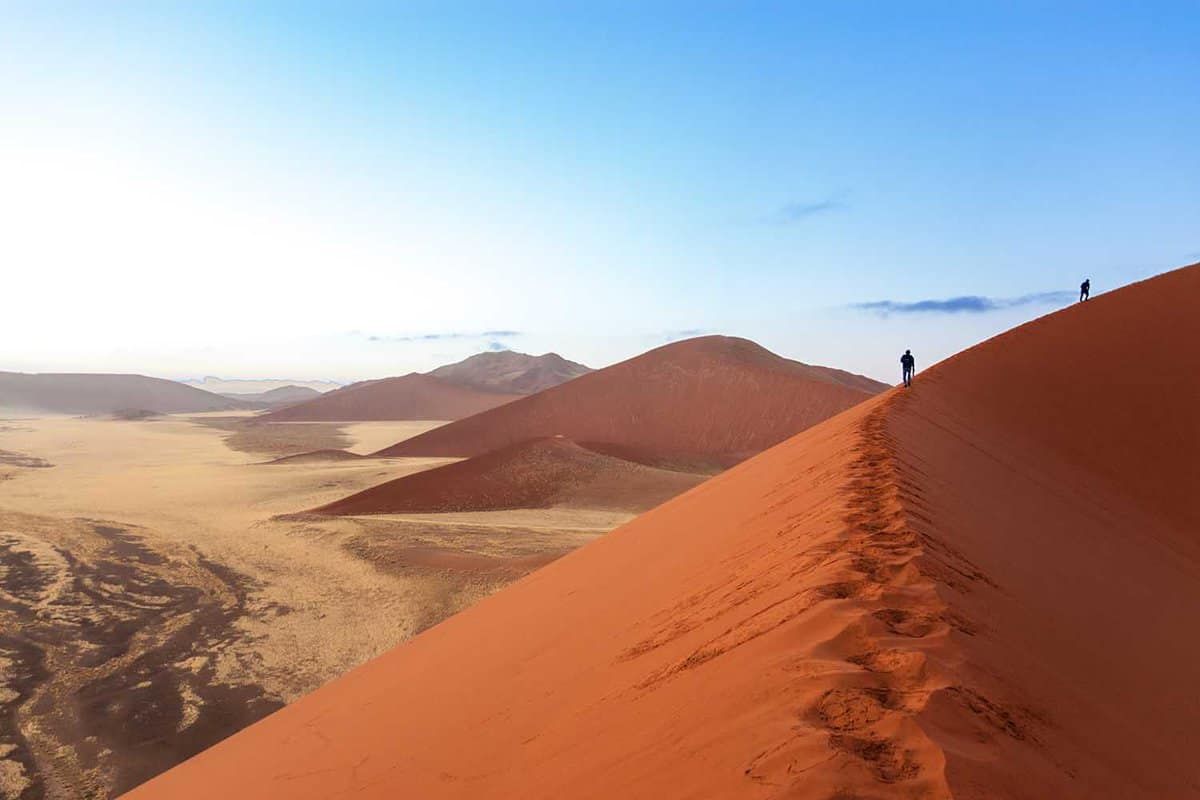
Big Daddy (also called Crazy Dune) towers over Deadvlei at approximately 325 meters — one of the tallest dunes in the world. Climbing it takes 1-2 hours (steep, soft sand) but rewards with commanding views over Deadvlei and the surrounding dune sea.
How to Get There
Sossusvlei is located within the Namib-Naukluft National Park. Access is through the Sesriem Gate, the only entrance.
From Windhoek
Distance: Approximately 350 kilometers (4-5 hours by car).Route: B1 south to Rehoboth, then C24 west through the Namib. The last section is gravel road but well-maintained.
From Swakopmund
Distance: Approximately 350 kilometers (4-5 hours by car).Route: B2 south through the Namib Desert via Walvis Bay, then inland on the C14 and D1982. The road through the Gaub and Kuiseb passes is spectacularly scenic.
From Sesriem Gate to Sossusvlei
The gate opens at sunrise (times posted daily). From the gate, a 65-kilometer paved road leads into the dune area. The road is excellent — the final 5 kilometers to Sossusvlei/Deadvlei is deep sand.
Critical decision: The last 5 km requires a 4x4. If you have a 2WD vehicle, park at the 2x4 parking area and take the shuttle ($5/person round trip, runs frequently). The shuttle is reliable and well-organized — don't let vehicle choice prevent you from visiting.
When to Visit
Best Months: April through October
The Namibian winter and dry season offers comfortable temperatures (15-25°C daytime) and clear skies. This is peak tourist season, but the dune area is large enough that it rarely feels crowded.
Sunrise Is Non-Negotiable
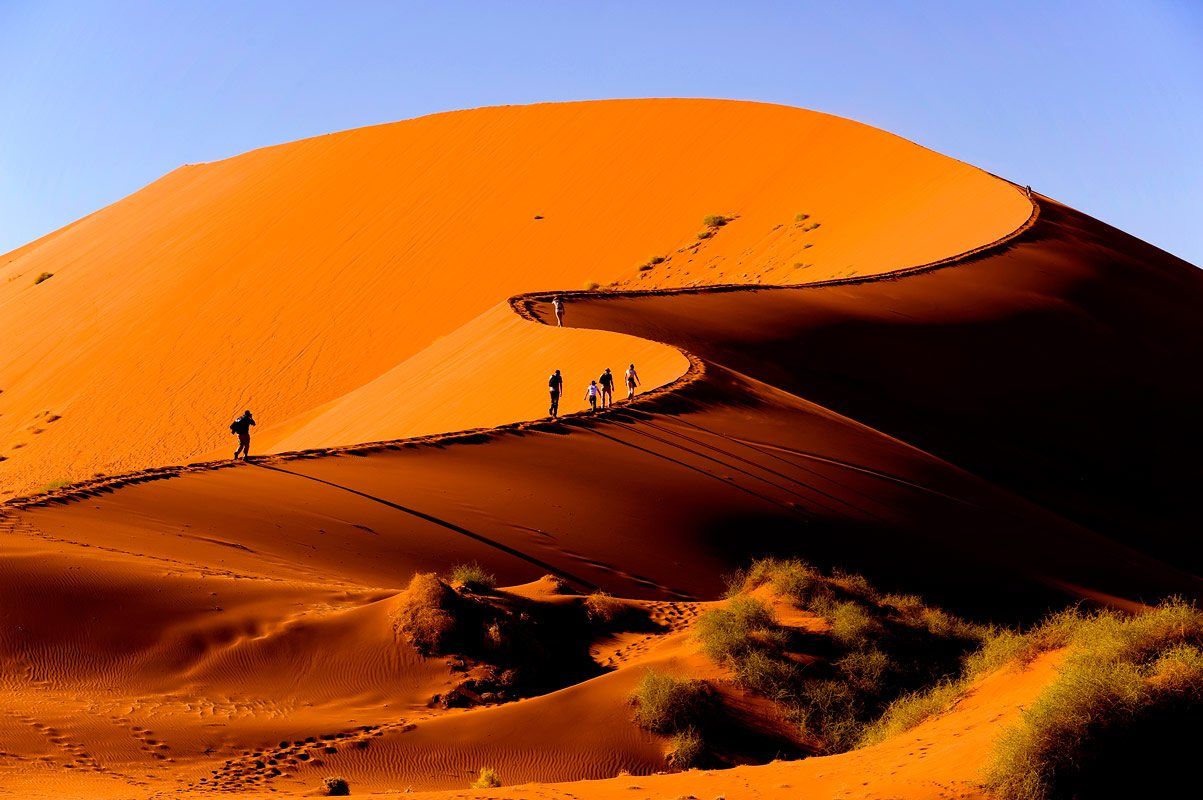
The dunes change color dramatically with the light. At sunrise, the eastern faces glow deep orange-red while the western sides remain in cool purple shadow. By mid-morning, the direct overhead sun flattens the colors and the contrast disappears. Plan to be at the Sesriem gate when it opens — the drive to Dune 45 or Deadvlei takes 45-60 minutes from the gate.
Summer (November-March)
Daytime temperatures exceed 40°C. Visiting is possible but extremely uncomfortable. If visiting in summer, arrive at the gate before dawn and plan to be back at your accommodation by 10 AM. Afternoon visits are inadvisable.
What to Do: Step-by-Step
Option 1: Dune 45 Sunrise + Deadvlei Morning (Most Popular)
5:00 AM: Arrive at Sesriem Gate before sunrise opening time.5:30 AM: Drive the 45 km to Dune 45. Climb the dune (30-45 minutes) and watch sunrise from the crest.7:00 AM: Drive the remaining 20 km to the 2x4 parking area. Take the shuttle (or drive your 4x4) the final 5 km.7:30-9:30 AM: Walk through Deadvlei. Photograph the dead trees against the dune backdrop. Optionally climb Big Daddy for aerial views.10:00 AM: Return to your vehicle and head back. Visit Sossusvlei pan if it has water (seasonal).11:00 AM-noon: Return to Sesriem area for lunch and rest.
Option 2: Sunset at Dune 45
An alternative for those staying nearby. Drive to Dune 45 in the late afternoon (the gate stays open until sunset). The western light creates different, equally beautiful colors on the dune faces. Fewer people than sunrise.
Option 3: Multi-Day Exploration
With 2-3 days based at Sesriem, you can explore at a relaxed pace — sunrise at Dune 45 one morning, Deadvlei another, Sesriem Canyon (a 30-meter-deep gorge carved by the Tsauchab River) for an afternoon walk, and stargazing at night (the Namib has some of the darkest skies on Earth).
Climbing the Dunes
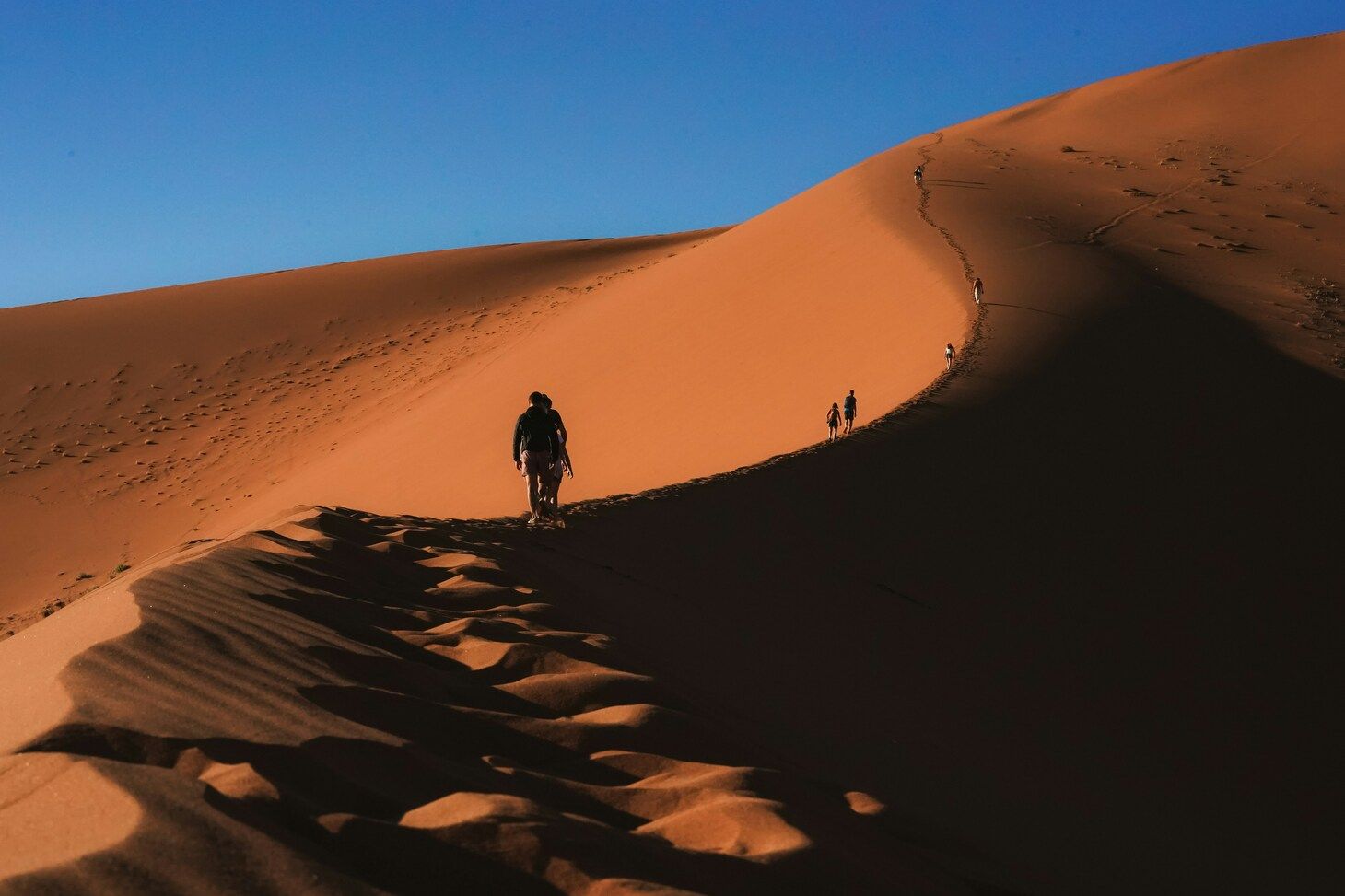
Climbing soft sand dunes is more physically demanding than most people expect. There's no trail — you walk on deep, soft sand that shifts under every step. It's like climbing stairs made of powder.
Dune 45: Approximately 170 meters high. Takes 30-45 minutes to climb. The most accessible dune — a well-defined ridge provides a natural path to the top.
Big Daddy: Approximately 325 meters. Takes 1-2 hours to climb. Steep, exhausting, and rewarding. The descent into Deadvlei on the far side is fast and fun (you can run/slide down the soft sand face).
Tips: Start early when it's cool. Bring more water than you think you need. Wear shoes that handle sand well (trail runners or hiking sandals — not flip-flops). The sand gets very hot after mid-morning.
Where to Stay
Inside the Park (Sesriem)
Staying inside the park gates at Sesriem lets you enter the dune area before the gate opens to outside visitors, giving you a 30-60 minute head start for sunrise. This is a significant advantage.
NWR Sesriem Campsite: Government-run campsite ($20-$30/site). Basic facilities (ablution block, braai pits). Book months in advance — this is one of the most in-demand campsites in Namibia. Book directly through Namibia Wildlife Resorts (NWR).
Sesriem Lodge / Le Mirage: More comfortable options inside or immediately outside the gate.
Outside the Park
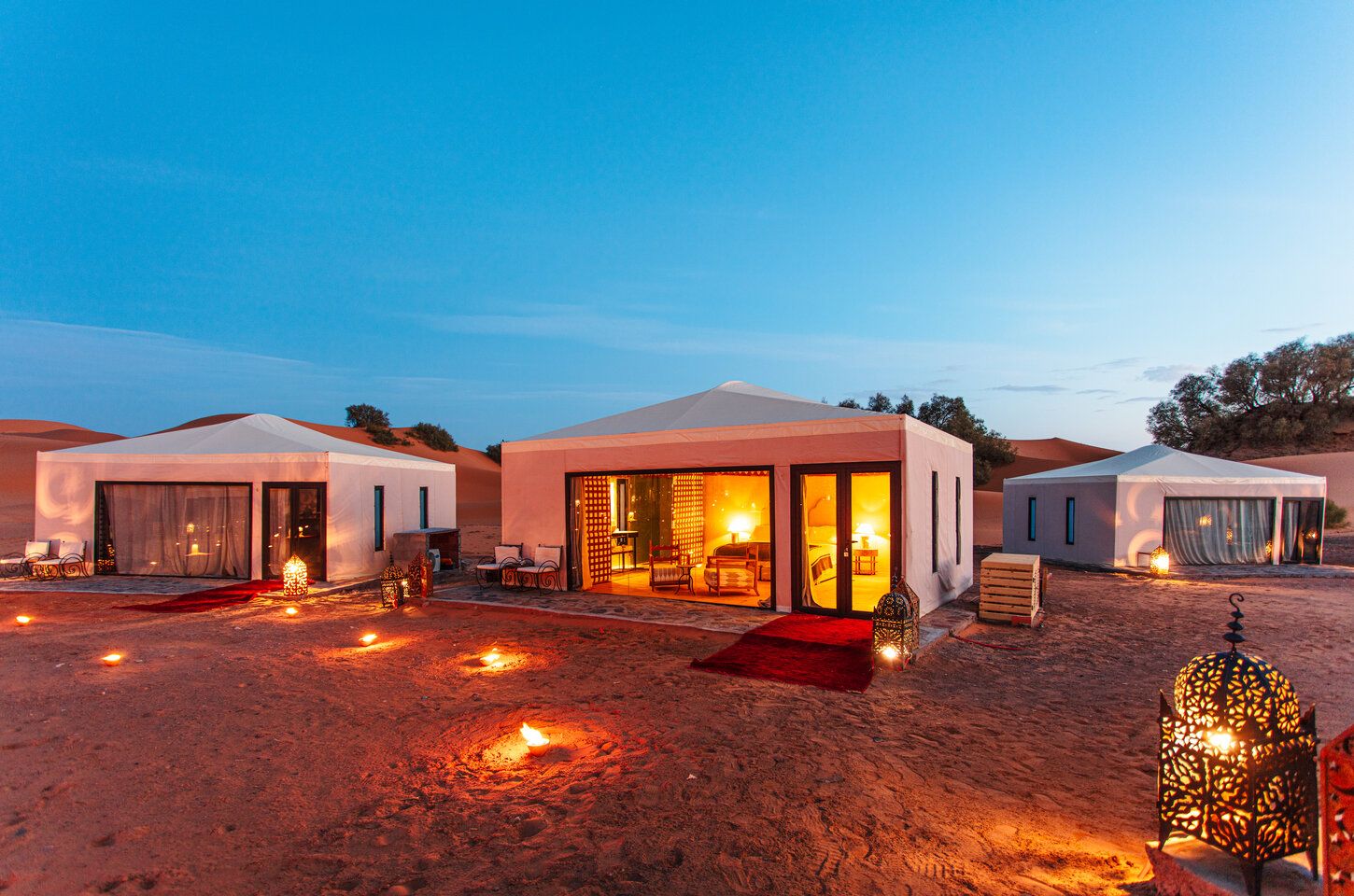
Numerous lodges and guesthouses line the approach road to Sesriem. Prices range from $50/night (basic guesthouse) to $400+/night (luxury desert lodge). You'll arrive at the gate after it opens, but the experience is still excellent — just be prepared for the 60-km drive to the dunes.
Sossus Dune Lodge (inside the park) and Kulala Desert Lodge (private reserve bordering the park with its own dune access) are highly rated mid-to-luxury options.
Practical Tips
Water: Bring at least 2 liters per person for a morning of dune climbing. There are no water sources in the dune area.
Sun protection: The combination of sand reflection and clear desert sky creates intense UV exposure. Apply high-SPF sunscreen before leaving your vehicle and reapply after climbing.
Camera: Bring a lens cloth — sand particles get on everything. A polarizing filter enhances the sky/dune contrast dramatically. Dawn light is the best; midday light is flat and uninspiring.
Footwear: The sand on dune crests is cool at dawn but becomes burning hot by mid-morning. Closed shoes or sandals with ankle straps are essential. Walking barefoot is possible at sunrise but painful by 9 AM.
Fuel: Fill up in Sesriem or at the last town before arriving. There are no fuel stations inside the park.
For guided Namibia experiences, we have a detailed Namibia itinerary guide covering Sossusvlei as part of the broader self-drive circuit. Browse Namibia experiences for bookable activities.
Frequently Asked Questions
Do I need a 4x4 for Sossusvlei?
Not necessarily. The road from Sesriem gate to the 2x4 parking area (60 km) is paved and accessible to any vehicle. Only the final 5 km to Sossusvlei/Deadvlei requires 4x4 — and a shuttle service covers this section. So a 2WD vehicle works fine.
How much does it cost to enter?
Park entry: N$150 per person ($8) + N$50 per vehicle ($3). Pay at the Sesriem gate. Cash or card accepted.
Is Deadvlei the same as Sossusvlei?
No — they're separate locations about 1 km apart, both within the same dune area. Deadvlei is the clay pan with dead trees. Sossusvlei is the larger pan that occasionally fills with water. Most visitors see both on the same morning.
Can I visit as a day trip from Swakopmund or Windhoek?
Technically possible but not recommended — it's a 4-5 hour drive each way, leaving minimal time at the dunes. An overnight stay at Sesriem is strongly recommended so you can experience sunrise, which is the defining moment.
When does Sossusvlei have water?
Rarely. The Tsauchab River reaches Sossusvlei pan only after exceptionally heavy rains, perhaps once every few years. When it does, the pan fills with a shallow lake reflecting the surrounding dunes — an extraordinary sight. You can't plan for this, but if it happens during your visit, consider yourself very lucky.