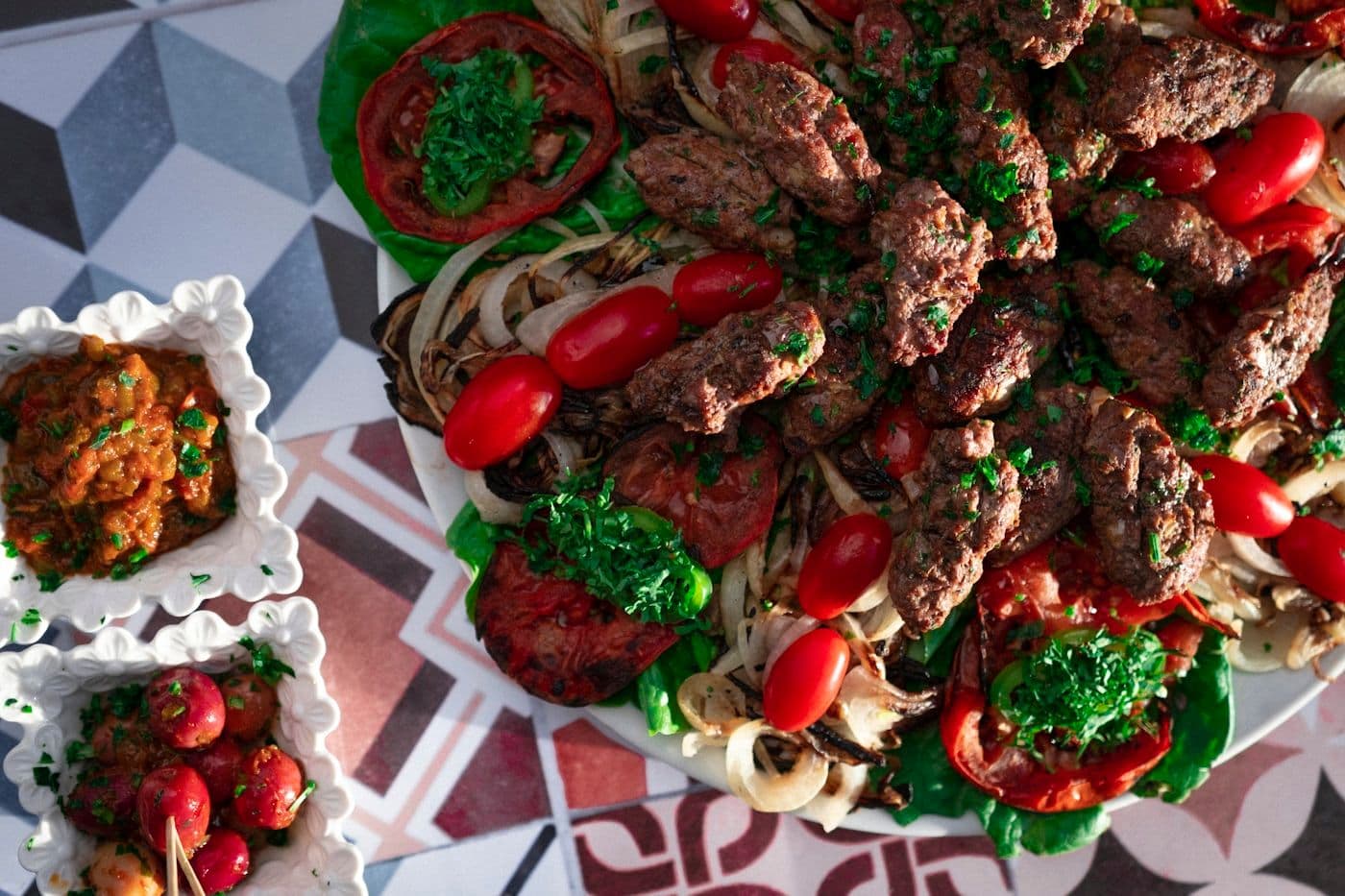
Marrakech is one of the great food cities of the world — a place where spice-laden tagines slow-cook for hours, street vendors grill lamb skewers over charcoal until midnight, and the scent of fresh mint tea follows you through every alleyway of the medina. The food here isn't a side attraction. It's central to why people come.
A food tour is one of the best ways to experience Marrakech, particularly if you're visiting for the first time. Local guides take you through neighborhoods and market stalls you'd never find alone, explain the cultural context behind each dish, and handle the language and negotiation so you can focus on eating.
Here's what to expect, what to eat, and how to choose the right tour.
The Essential Dishes of Marrakech
Before booking a tour, know what you're tasting. These are the dishes that define Marrakech's food culture.
Tagine
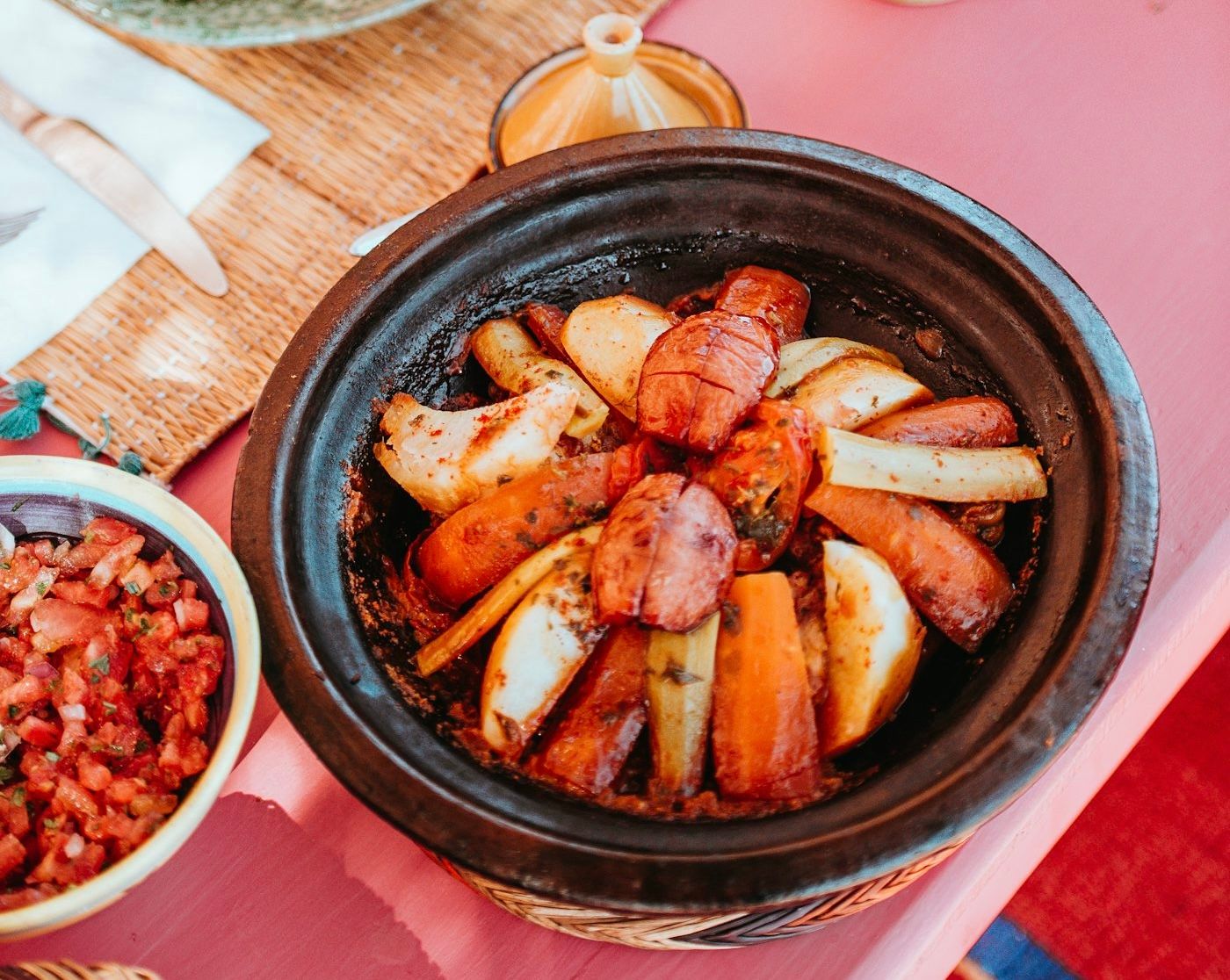
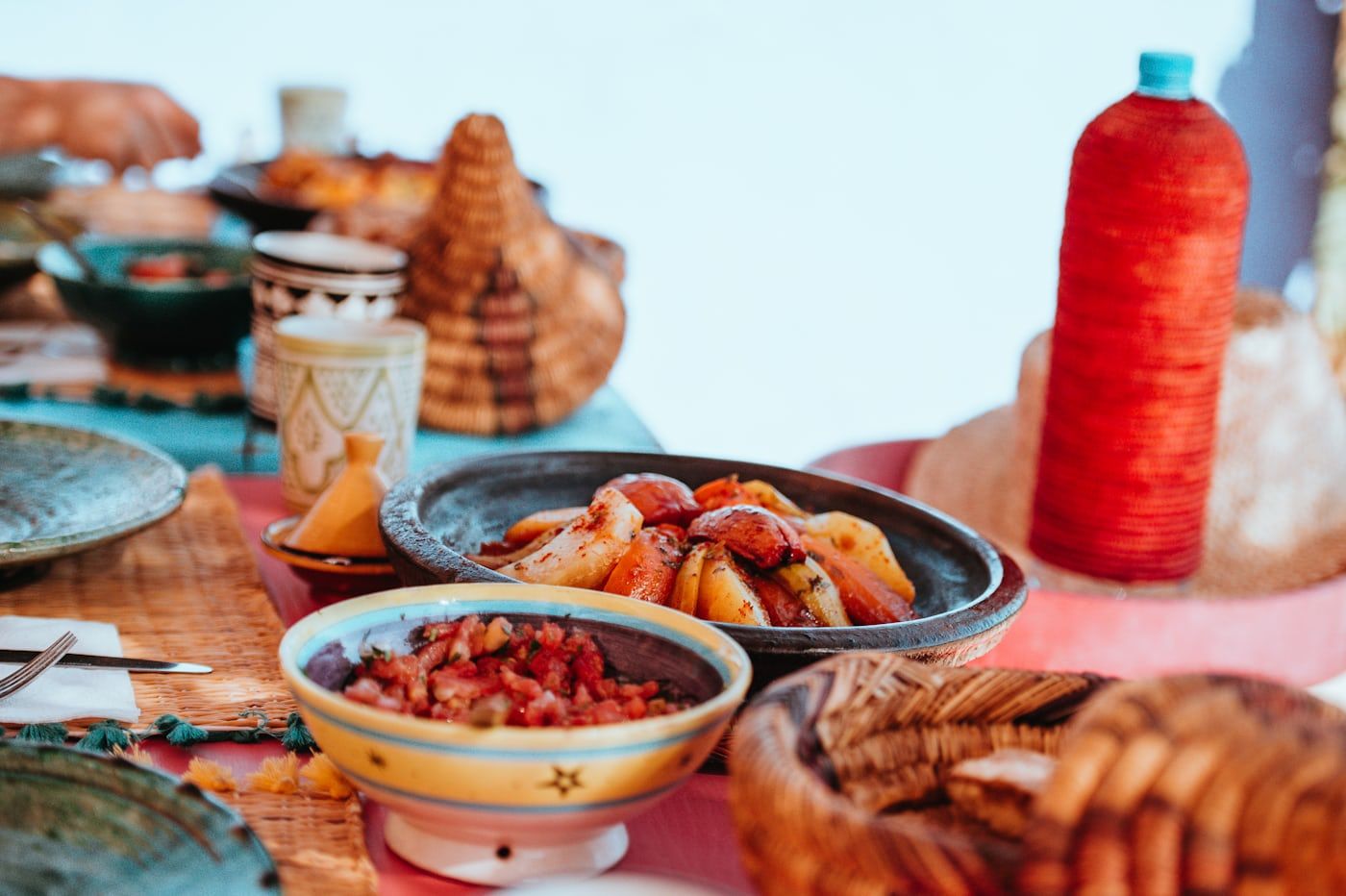
Morocco's signature dish — a slow-cooked stew named after the conical clay pot it's prepared in. The most common versions are chicken with preserved lemons and olives, lamb with prunes and almonds, and kefta (meatball) tagine with tomato and egg. The slow-cooking process creates incredibly tender meat with concentrated, aromatic sauce. You'll find tagine everywhere from street stalls to fine restaurants, but the best versions come from family-run kitchens where the recipe has been refined over generations.
Couscous
Hand-rolled semolina steamed over a broth of vegetables and meat. In Moroccan tradition, couscous is a Friday dish — families gather for the midday meal after mosque. Restaurant versions are available daily, typically served with seven vegetables and a choice of lamb, chicken, or vegetarian.
Pastilla (B'stilla)
A sweet-savory pie unique to Moroccan cuisine. Layers of shredded pigeon or chicken, almonds, eggs, and spices are wrapped in thin warqa pastry and dusted with powdered sugar and cinnamon. The combination of flavors is unexpected and extraordinary — this is the dish that most surprises first-time visitors.
Harira
A thick, warming soup of lentils, chickpeas, tomatoes, and fresh herbs, traditionally served to break the fast during Ramadan. Available year-round at soup stalls and restaurants. Rich, filling, and deeply flavorful — often paired with dates and chebakia (sesame cookies).
Msemen and Baghrir
Moroccan street breads. Msemen are square, flaky, pan-fried flatbreads — crispy on the outside, soft inside. Baghrir are spongy pancakes covered in tiny holes (called "thousand-hole pancakes") that soak up honey and butter. Both are breakfast and snack staples, available from street vendors throughout the medina.
Mechoui
Whole lamb slow-roasted in an underground clay oven until the meat falls off the bone. Traditionally served at celebrations, but available daily at specialized mechoui stalls in the medina. You buy by weight — the vendor pulls tender meat from the carcass and serves it with cumin salt and fresh bread.
Mint Tea
Morocco's unofficial national drink. Fresh spearmint leaves steeped with Chinese gunpowder green tea and generous sugar, poured from a height to create a frothy head. Refusing tea is considered impolite — you'll drink a lot of it, and you'll love it.
Types of Food Tours in Marrakech
Medina Street Food Walking Tour
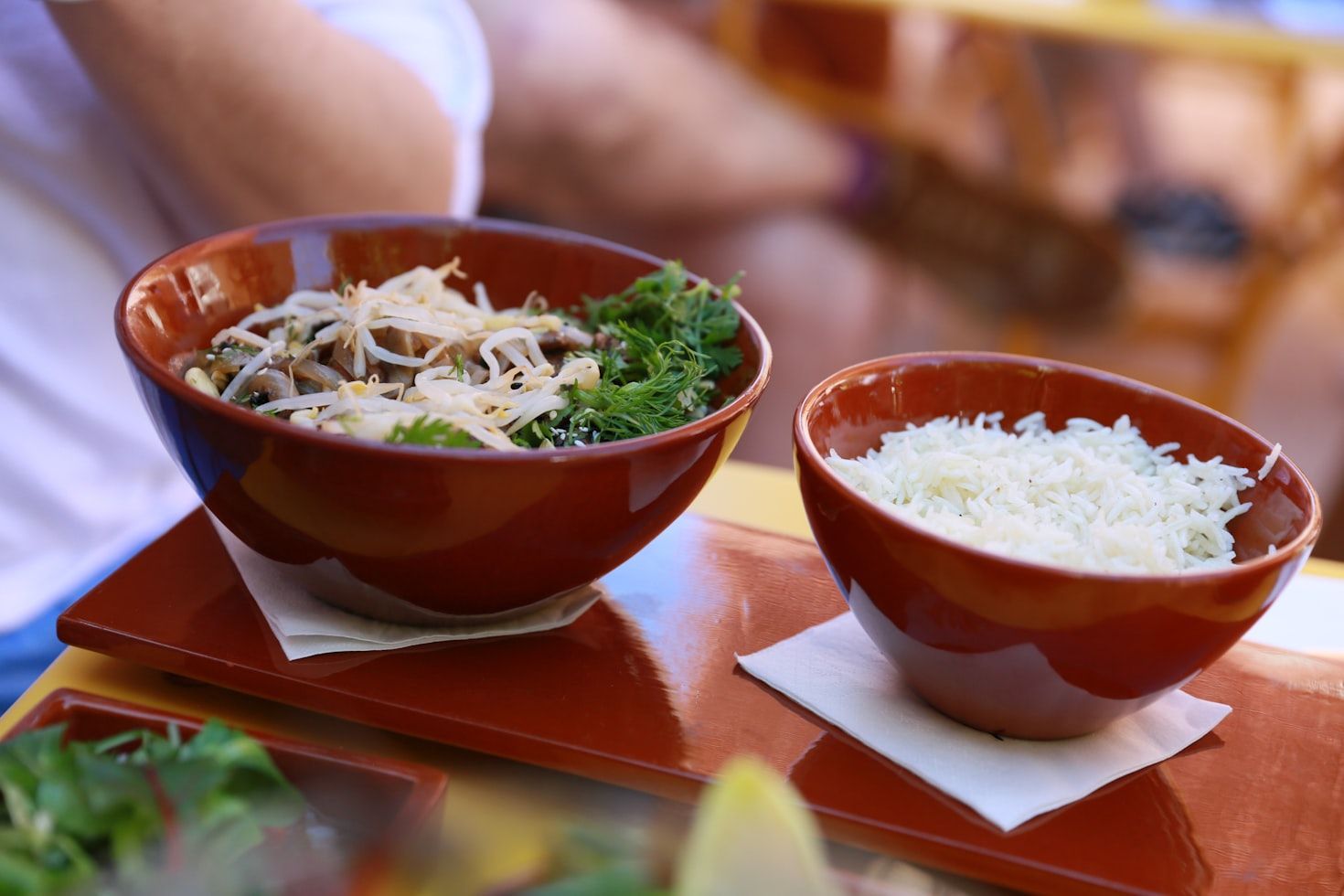
The most popular format. A local guide walks you through the medina's food stalls and hidden eateries, stopping at 6-10 locations over 3-4 hours. You'll taste street food (msemen, snail soup, fresh juices), visit a spice stall, try local favorites in hole-in-the-wall restaurants, and usually end with mint tea on a rooftop terrace.
Cost: $30–$70 per person.Best for: First-time visitors who want breadth of experience and cultural context.Duration: 3-4 hours, typically morning or evening.
Cooking Class
A deeper dive into Moroccan cuisine. You'll visit a market with your host to buy ingredients, then prepare 3-5 dishes (typically a salad course, tagine, couscous or pastilla, and a dessert) in a traditional kitchen or riad. You eat everything you cook.
Cost: $40–$100 per person.Best for: Home cooks who want to recreate Moroccan dishes at home. More intimate than a walking tour.Duration: 4-5 hours, usually starting mid-morning.
Jemaa el-Fnaa Evening Food Tour
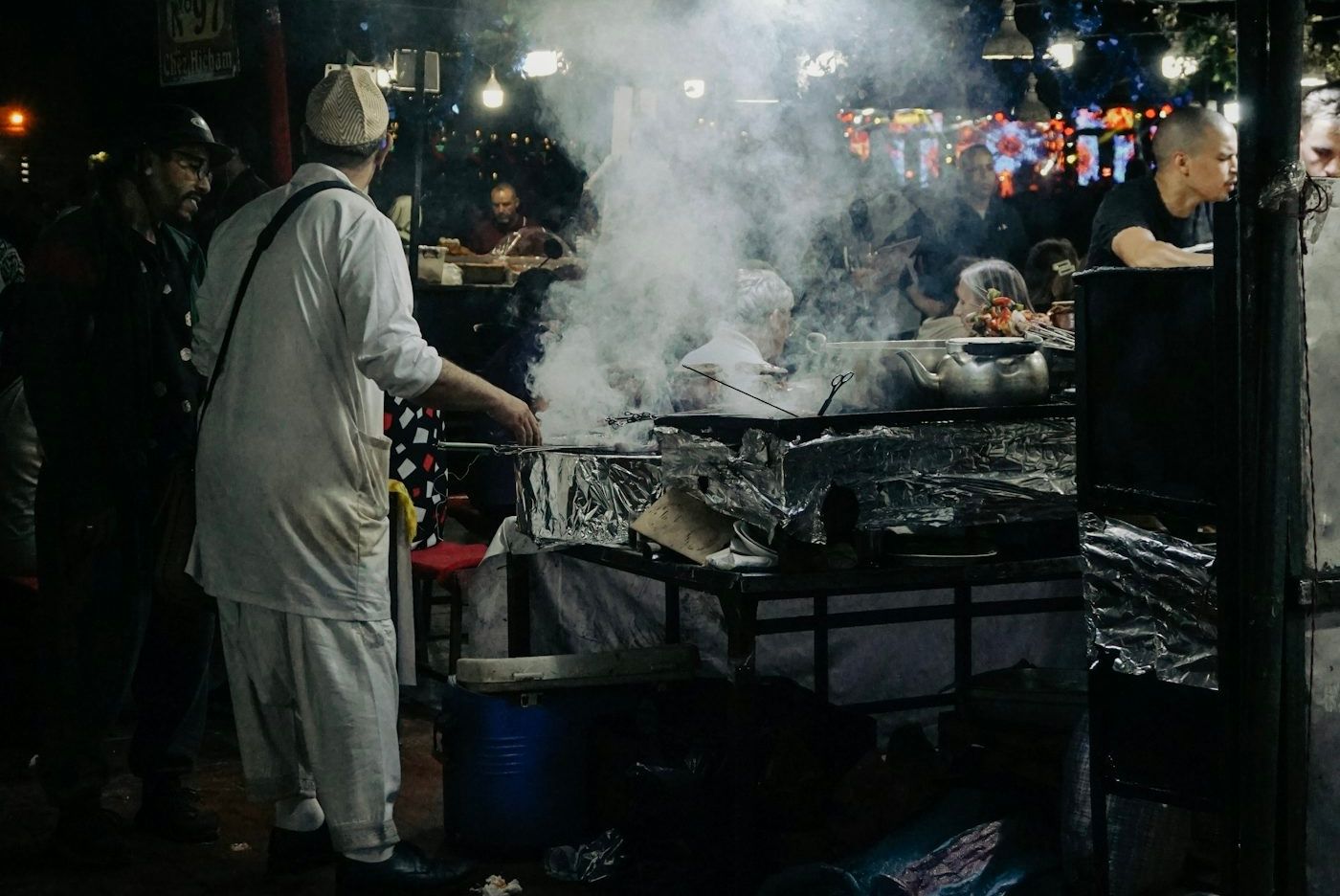
Focused specifically on the famous night market at Jemaa el-Fnaa square. The square's food stalls set up each evening, serving everything from grilled meats and seafood to snail soup, sheep's head, and fresh orange juice. A guide helps you navigate the overwhelming number of stalls and avoid the tourist traps.
Cost: $25–$50 per person.Best for: Adventurous eaters who want the full sensory experience of the square after dark.Duration: 2-3 hours, starting at sunset.
Private Food Experience
A customized food tour for your group — typically including market visits, a cooking element, and exclusive access to family kitchens or restaurants not open to the general public. Some include wine or cocktail pairings (Morocco produces wine in the Meknes region).
Cost: $80–$200 per person.Best for: Couples, special occasions, and groups who want a more exclusive experience.
Where to Eat Beyond the Tour
Restaurants
Nomad — modern Moroccan cuisine on a rooftop overlooking the spice market. The camel burger and date milkshake are Instagram-famous for good reason. Reservation recommended.
Le Jardin — a restored 1960s riad turned into a lush garden restaurant. Excellent pastilla and salads. A peaceful escape from the medina's intensity.
Café des Épices — on Place Rahba Kedima (the spice square). Simple but good food with excellent people-watching from the terrace.
Dar Yacout — a traditional fine-dining experience in a grand riad. Multi-course Moroccan feast with live music. Expensive but memorable for a special evening.
Street Food Spots
Mechoui Alley — a row of stalls near Jemaa el-Fnaa specializing in slow-roasted lamb. Point to the meat you want, pay by weight, and eat with bread and cumin salt.
Chez Lamine — a legendary hole-in-the-wall near the tanneries serving tangia (a slow-cooked meat dish in a clay pot, traditionally prepared by workers who left their pots in the communal hammam oven overnight).
Fresh orange juice stands — found on every corner of Jemaa el-Fnaa. Freshly squeezed, cold, and costs about $0.50. One of the best simple pleasures in Marrakech.
How to Choose the Right Food Tour
Read recent reviews. The quality of food tours depends almost entirely on the guide. Look for tours where reviewers mention specific dishes, specific neighborhoods, and the guide's knowledge — not just generic praise.
Small groups are better. Tours with 4-8 people allow more interaction with food vendors and guides. Large groups (12+) can feel rushed and impersonal.
Ask about dietary accommodations. Most Marrakech food tours can handle vegetarian requests with advance notice. Vegan and gluten-free are more challenging but possible. Halal is not an issue — virtually all food in Morocco is halal.
Choose morning or evening. Morning tours visit markets at their freshest and avoid the afternoon heat. Evening tours include the Jemaa el-Fnaa night market atmosphere but are hotter and more crowded.
Explore other Marrakech food and cultural experiences — including guided food walks, cooking classes, and the Marrakech E-bike Tour which includes food stops along its medina and Palmeraie route.
Tips for Eating in Marrakech
Eat where locals eat. If a restaurant is full of Moroccans, it's good. If it's full of tourists and empty of locals, proceed with caution.
Drink the orange juice. Jemaa el-Fnaa's fresh orange juice is legendary and safe. The stands with the most fruit piled up tend to be the freshest.
Try the "scary" things. Snail soup (babbouche) is earthy and warming. Sheep's head is tender and flavorful. Pigeon pastilla is divine. Morocco's unfamiliar dishes are often its best.
Carry small change. Street food is cheap — most items cost $0.50-$2. Having small denomination dirhams avoids the awkward "I don't have change" response.
Stay hydrated. The medina is hot and walking is tiring. Drink water between food stops. Many tours provide bottled water.
Frequently Asked Questions
Will I get sick from street food in Marrakech?
Most travelers eat street food without problems. The key rules: eat food that's freshly cooked and served hot, avoid raw salads from street vendors, skip anything that's been sitting out in the sun, and drink bottled water only. A food tour with a local guide naturally steers you to safe, trusted vendors.
Is Moroccan food spicy?
Flavorful, yes. Hot-spicy, generally no. Moroccan cuisine uses complex spice blends (cumin, cinnamon, saffron, ginger, turmeric) for depth of flavor rather than chili heat. Harissa (chili paste) is available as a condiment for those who want heat, but it's served separately.
How much should a food tour cost?
$30-$70 per person for a walking tour (3-4 hours, 6-10 stops) is standard. Under $25 suggests corner-cutting. Over $100 should include a cooking element or premium private experience. Prices usually include all food tastings — you shouldn't need to pay extra at stops.
Can I do a food tour during Ramadan?
Yes, but the experience is different. Daytime food tours may have limited options as some vendors close during fasting hours. However, evening iftar (fast-breaking) meals can be a beautiful cultural experience if your tour includes one. Discuss timing with your tour provider before booking during Ramadan.