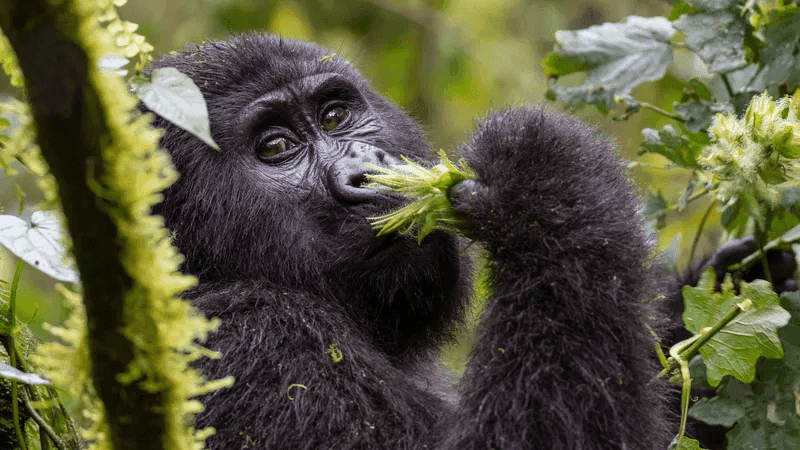
Mountain gorilla trekking is the most sought-after wildlife experience in Africa — and there are only two practical countries where you can do it: Uganda and Rwanda. Both offer life-changing encounters with endangered mountain gorillas, but they differ significantly in cost, logistics, terrain, and overall experience.
This guide compares both destinations honestly so you can decide which is right for your trip, your budget, and your travel style.
Quick Comparison: Uganda vs Rwanda Gorilla Trekking
| Factor | Uganda | Rwanda |
|---|---|---|
| Gorilla permit (2026) | $800 per person | $1,500 per person |
| Where you trek | Bwindi Impenetrable National Park or Mgahinga Gorilla National Park | Volcanoes National Park |
| Number of habituated groups | 19+ families | 12 families |
| Transfer time from airport | 8–10 hours by road from Entebbe (or 1-hour domestic flight) | 2–3 hours by road from Kigali |
| Trekking terrain | Dense, steep jungle — more physically demanding | Bamboo forest on volcanic slopes — generally less strenuous |
| Best combined with | Chimpanzee tracking, Queen Elizabeth NP, Murchison Falls | Nyungwe Forest chimps, Akagera NP for Big Five |
| Overall trip cost (5–7 days) | $2,500–$5,000 per person | $4,000–$8,000 per person |
Gorilla Permit Costs in 2026
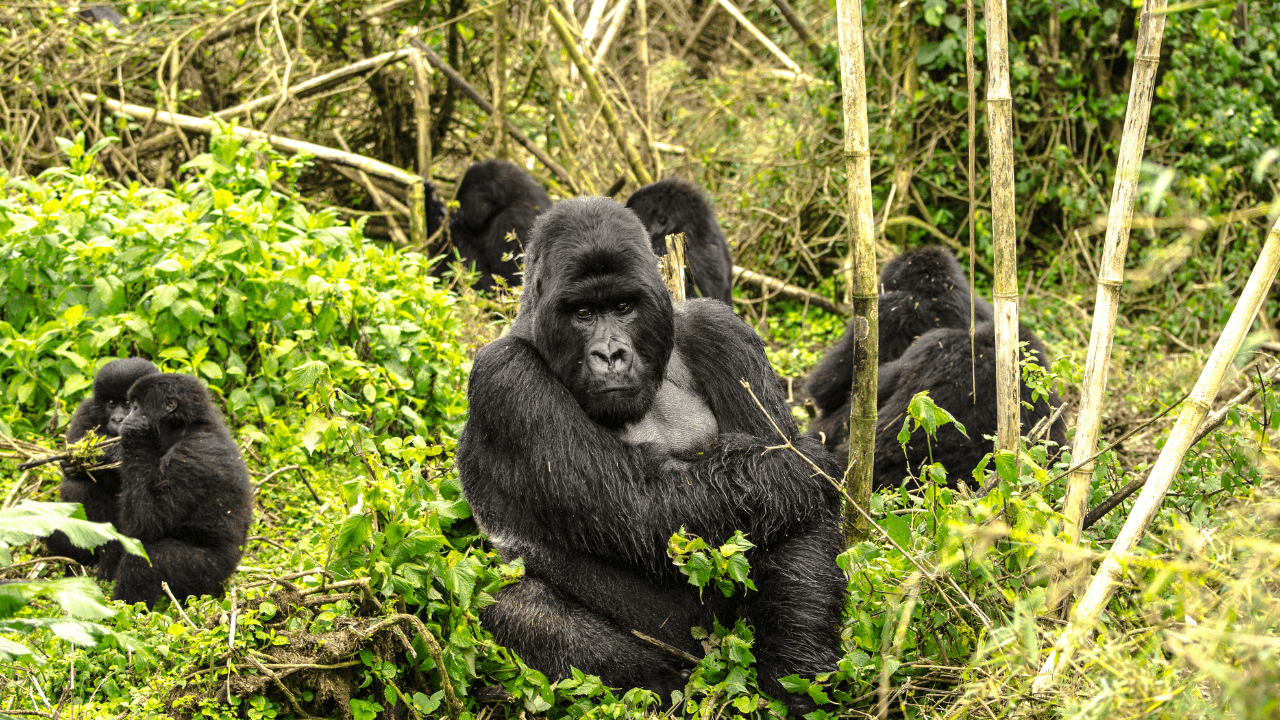
The permit is the single biggest cost in your gorilla trekking budget, and it's non-negotiable — every visitor needs one.
Uganda: $800 USD per person for foreign non-residents. This includes park entrance, a ranger-guided trek, and one hour with a habituated gorilla family. There is also a premium Gorilla Habituation Experience (GHEX) available exclusively in Bwindi's Rushaga sector for $1,500 — this gives you four hours with a gorilla family that is still being habituated to human presence. Only four guests per day can participate.
Rwanda: $1,500 USD per person for foreign non-residents. This also includes park entry and one hour with the gorillas. Rwanda offers a 30% discount on the permit if you combine gorilla trekking with visits to Nyungwe or Akagera National Parks (minimum two nights), bringing the effective cost to $1,050.
Key point: The $700 per-person difference between standard Uganda and Rwanda permits is significant. For a couple, that's $1,400 — enough to add two or three additional safari days in Uganda.
The Trekking Experience: What's Actually Different
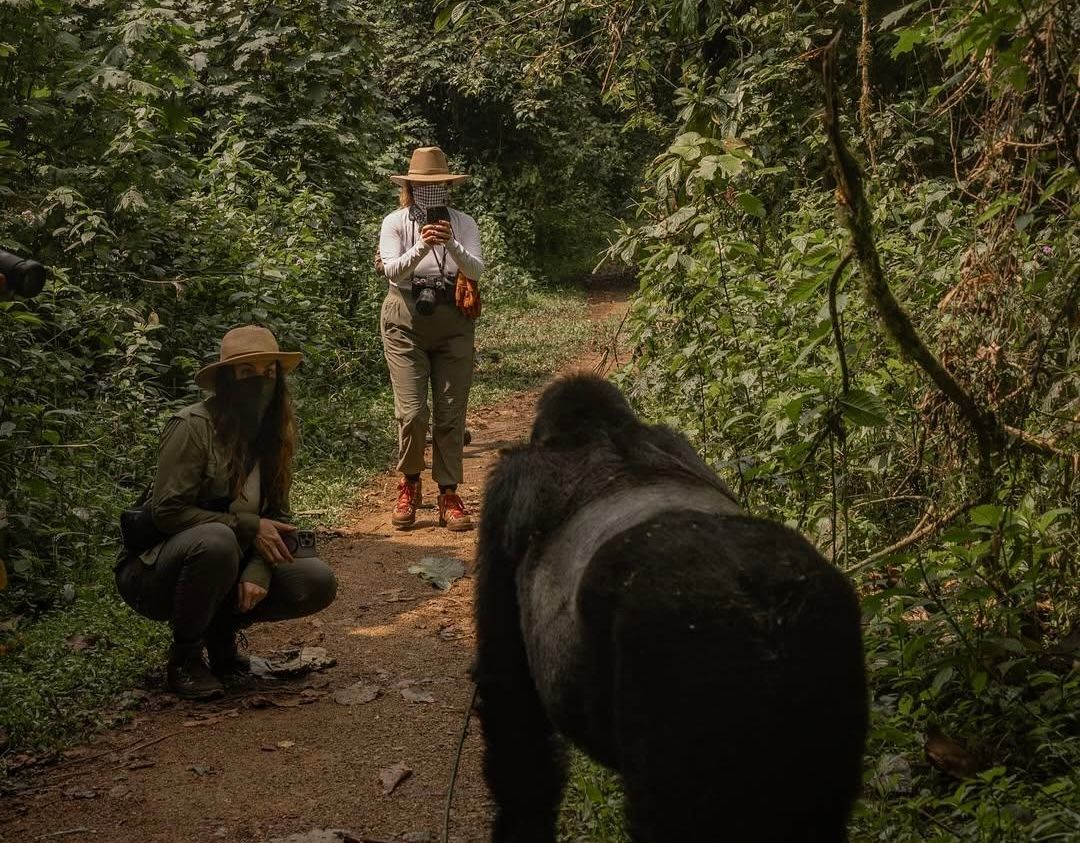
Uganda — Bwindi Impenetrable National Park
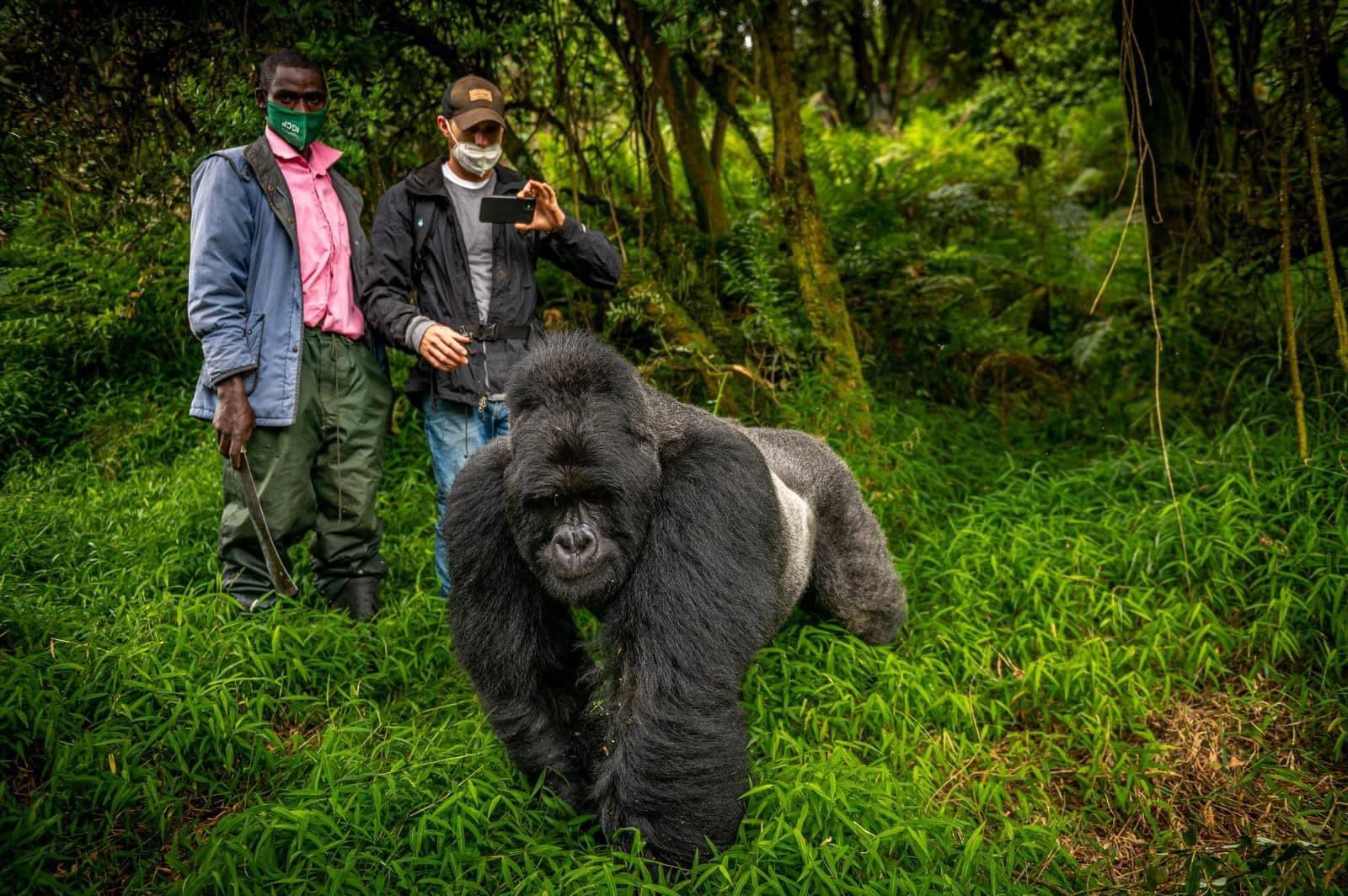
The name is accurate. Bwindi is a dense, ancient rainforest with steep ridges, thick undergrowth, and muddy trails. Treks can range from one hour to seven or more hours depending on where the gorillas are that day. The terrain is genuinely challenging — you should be reasonably fit and comfortable with uneven ground.
Bwindi is divided into four trekking sectors: Buhoma, Ruhija, Rushaga, and Nkuringo. Each has different gorilla families and varying difficulty levels. Rushaga is generally considered the easiest terrain, while Nkuringo involves steep descents and ascents.
The experience feels raw and wild. When you finally find the gorillas deep in the forest, the sense of discovery is unmatched.
Rwanda — Volcanoes National Park
Volcanoes National Park sits on the slopes of the Virunga volcanic mountain chain. The terrain is at higher altitude (2,500–4,000 meters) but the bamboo forest is generally more open than Bwindi's jungle. Treks typically range from one to four hours.
The briefing process in Rwanda is polished and well-organized. The park infrastructure is excellent, and the shorter transfer from Kigali (approximately 2.5 hours) means less travel fatigue on trekking day.
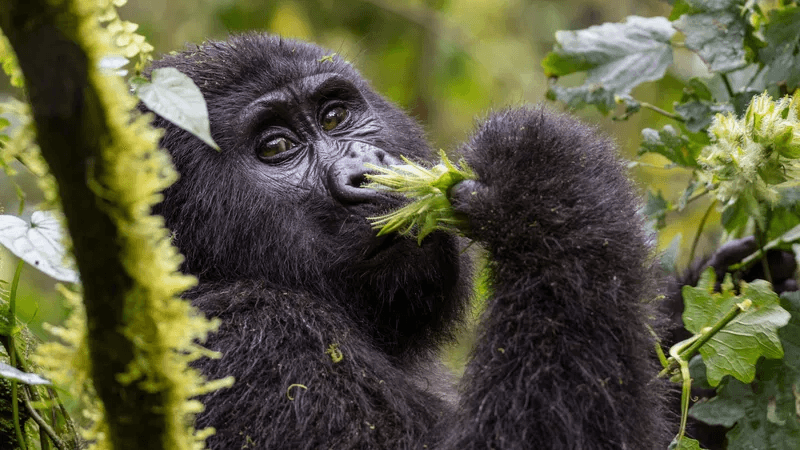
The gorilla encounter itself — one hour sitting quietly with a family of mountain gorillas — is equally extraordinary in both countries. The gorillas are the same species, and the emotional impact is the same.
Getting There: Logistics Compared
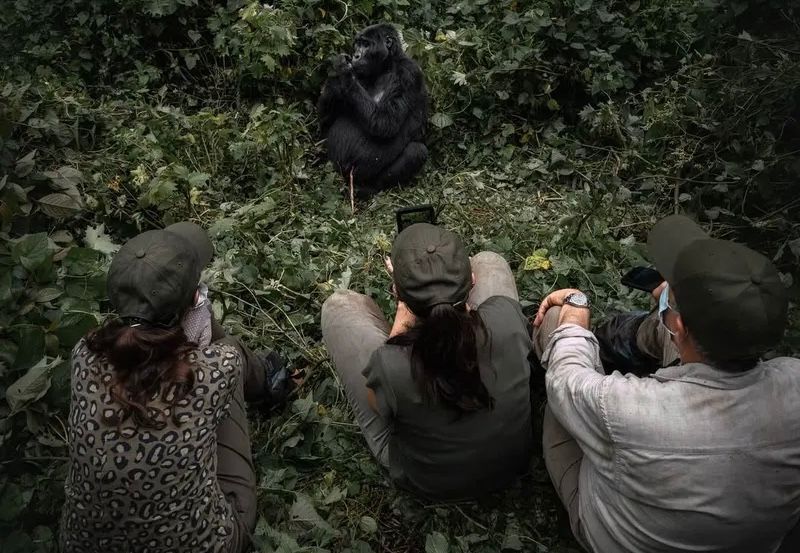
Reaching Uganda's gorilla parks
Most travelers fly into Entebbe International Airport (near Kampala). From there, the road drive to Bwindi takes approximately 8–10 hours, typically broken into two days with a stop at a national park along the way. Alternatively, you can take a scheduled domestic flight from Entebbe to Kihihi or Kisoro airstrip (about 1 hour, approximately $550 round trip), which dramatically reduces travel time.
Many visitors combine the journey with wildlife stops at Queen Elizabeth National Park (tree-climbing lions, boat safaris) or Lake Bunyonyi, making the drive part of the overall safari experience.
Reaching Rwanda's gorilla park
Kigali International Airport is well-connected with direct flights from several hubs. The drive from Kigali to Musanze (the base town for Volcanoes National Park) takes about 2.5 hours on good paved roads. You can arrive in the afternoon and be trekking the next morning.
This logistical simplicity is Rwanda's strongest advantage, particularly for travelers with limited time.
Which Should You Choose?
Choose Uganda if:
- Budget matters — the $800 permit saves significant money
- You want a longer, more immersive safari combining gorillas with other wildlife
- You value a raw, adventurous trekking experience in deep jungle
- You have 7+ days available for your trip
- You're interested in the Gorilla Habituation Experience (4 hours with gorillas)
- You want to combine gorilla trekking with chimpanzee tracking in Kibale Forest
Choose Rwanda if:
- Time is limited — you can trek within 24 hours of landing in Kigali
- You prefer easier logistics and shorter transfers
- You're comfortable with the $1,500 permit cost (or can get the 30% multi-park discount)
- You want to combine gorilla trekking with Kigali's excellent restaurants, genocide memorials, and cultural experiences
- Physical fitness is a concern — Rwanda's terrain is generally less demanding
Consider combining both: The East Africa Tourist Visa ($100) covers Uganda, Rwanda, and Kenya with multiple entries. Some travelers do gorilla trekking in Uganda for the lower cost and then spend a few days in Kigali for the city experience.
When to Go
The best months for gorilla trekking in both Uganda and Rwanda are the dry seasons: June through September and December through February. Trails are drier, trekking is easier, and visibility in the forest is better.
However, gorilla trekking operates year-round. The wet months (March–May, October–November) have lower visitor numbers, and permits are easier to secure. The gorillas are there regardless of weather.
Important: During peak season (June–August especially), permits sell out months in advance. Book as early as possible — at least 3–6 months ahead.
How to Book Your Gorilla Trek
Gorilla permits must be purchased through the respective wildlife authorities or through licensed tour operators. You cannot simply show up at the park gate.
For Uganda: Permits are issued by the Uganda Wildlife Authority (UWA). Most travelers book through a tour operator who handles the permit, accommodation, and transport as a package.
For Rwanda: Permits are issued by the Rwanda Development Board (RDB) through their online booking portal or through licensed operators.
Browse all gorilla trekking experiences to find vetted, locally-hosted gorilla safari packages in Uganda with permits included.
Frequently Asked Questions
How physically demanding is gorilla trekking?
Both destinations require walking on uneven terrain for 1–7 hours. Uganda's Bwindi is generally steeper and more physically taxing. In both countries, you can hire a porter ($15–$20) to carry your daypack and provide support on steep sections — this is highly recommended and directly supports local communities.
Can children go gorilla trekking?
The minimum age is 15 years in both Uganda and Rwanda. There are no exceptions to this rule.
What happens if I can't keep up during the trek?
Rangers will adjust the pace to the group. If you're genuinely struggling, a ranger can escort you back. In Uganda, you can hire a sedan chair ($500) to be carried by porters if mobility is a significant concern.
Is the gorilla sighting guaranteed?
No wildlife sighting is ever guaranteed, but the success rate for gorilla trekking is approximately 97–99% in both countries. The gorilla families are tracked by advance teams who locate them before your group sets out.
Can I do gorilla trekking and a Masai Mara safari on the same trip?
Yes. Many travelers combine Uganda gorilla trekking with a Kenya safari using the East Africa Tourist Visa. Fly from Entebbe to Nairobi, then continue to the Masai Mara for a completely different safari experience.