Most visitors to Egypt never leave the Nile corridor — pyramids, temples, and tombs dominate every itinerary. But 365 kilometers southwest of Cairo, in the heart of Egypt's Western Desert, lies one of the most surreal landscapes on the planet: the White Desert.
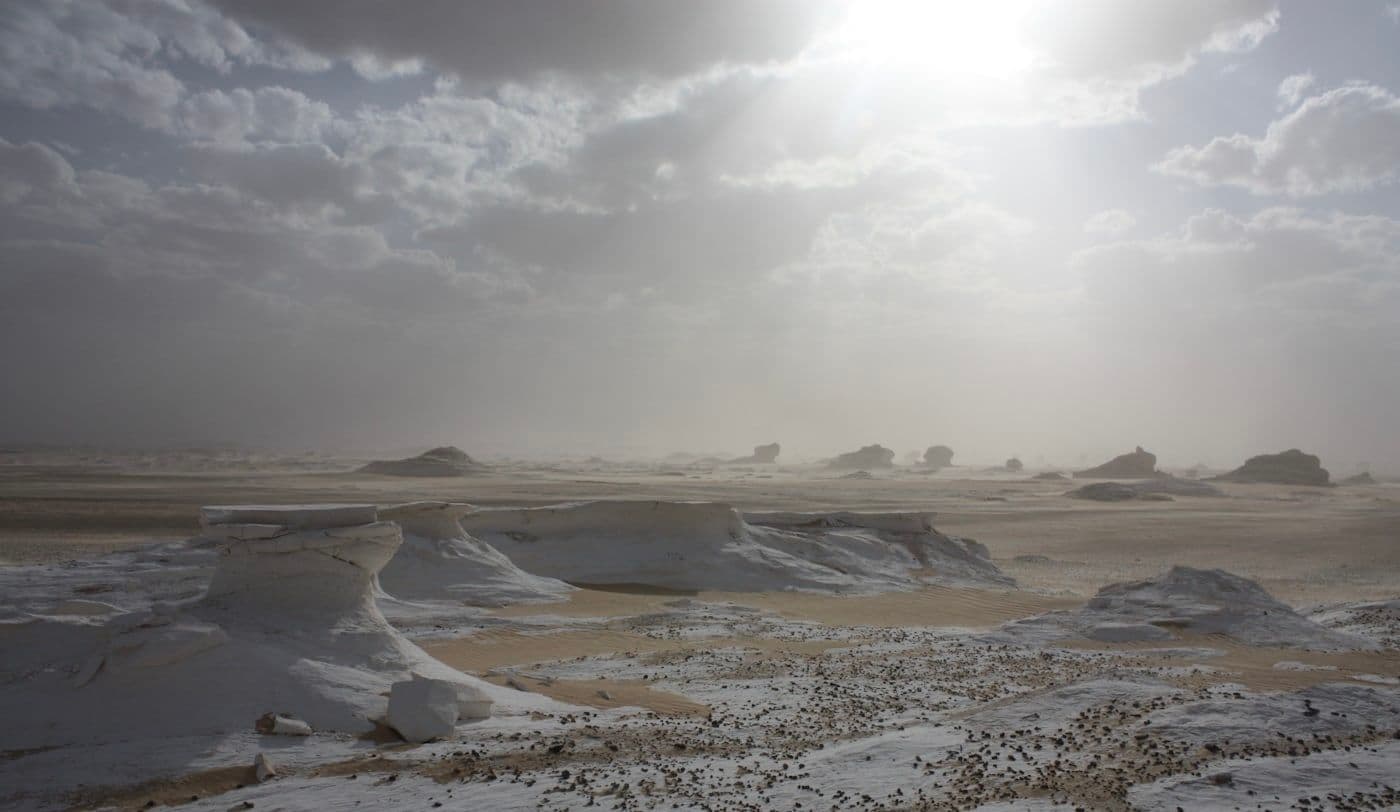
Vast fields of chalk-white limestone formations rise from the sand like sculptures carved by an alien civilization. Mushroom-shaped pillars, towering pinnacles, and wind-eroded arches stretch across the horizon in every direction. At sunset, the white rock turns orange and gold. At night, you camp among the formations under some of the clearest skies in the northern hemisphere.
If you want something in Egypt that isn't temples, the White Desert is exactly that — and very few tourists know about it.
What Is the White Desert?
The White Desert (Sahara el-Beyda) is a national park in Egypt's Western Desert, near the Farafra Oasis. The landscape consists of massive chalk and limestone formations shaped by thousands of years of wind erosion into otherworldly shapes — columns, arches, and the iconic "mushroom and chicken" formations that have become symbols of the area.
The white rock contrasts dramatically with the golden sand, creating a visual effect that looks more like another planet than North Africa. Photographers, adventure travelers, and geology enthusiasts consider it one of the most visually striking desert landscapes in the world.
The park sits within the larger Farafra Depression, flanked by the Black Desert (dark volcanic hills) to the north and the Great Sand Sea to the west. Most tours combine all three zones into a single itinerary.
What a White Desert Tour Includes
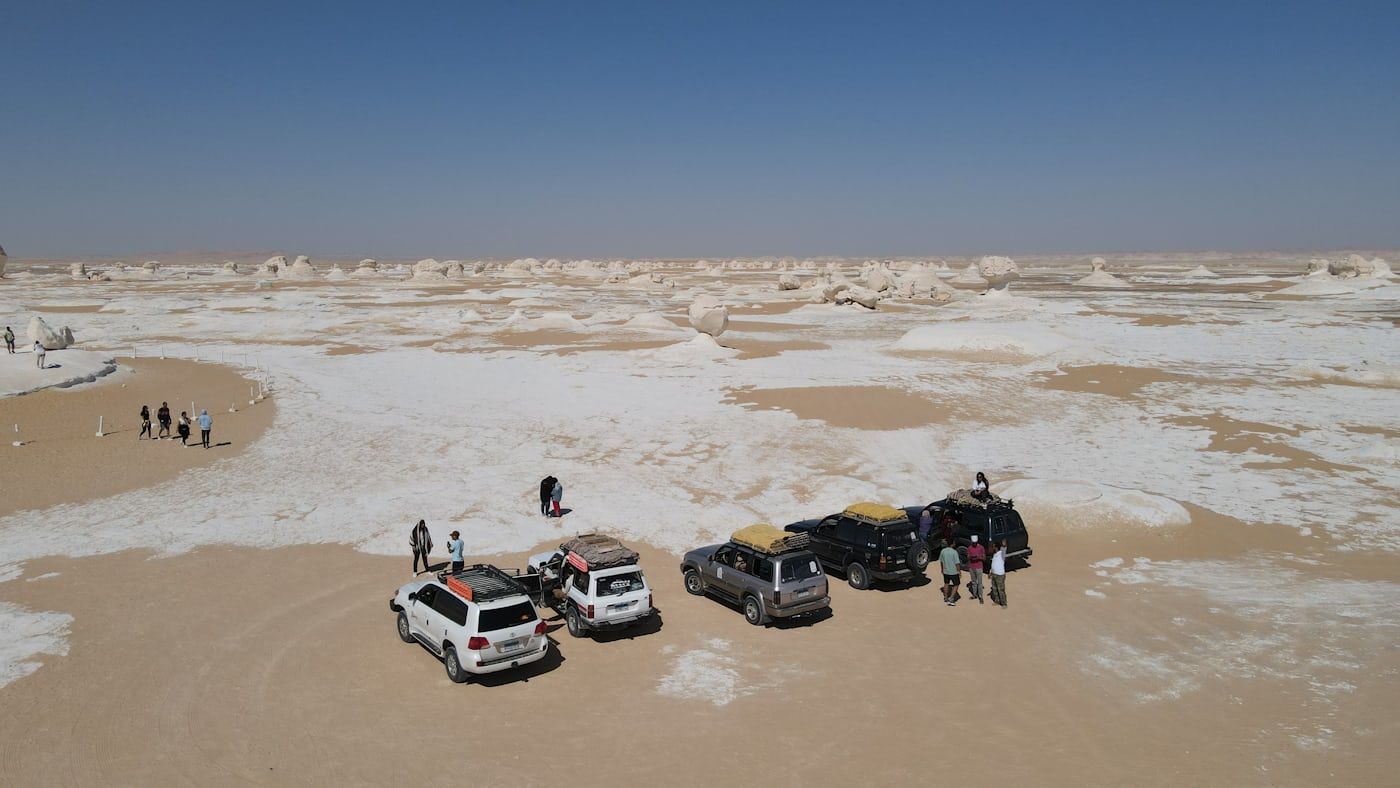
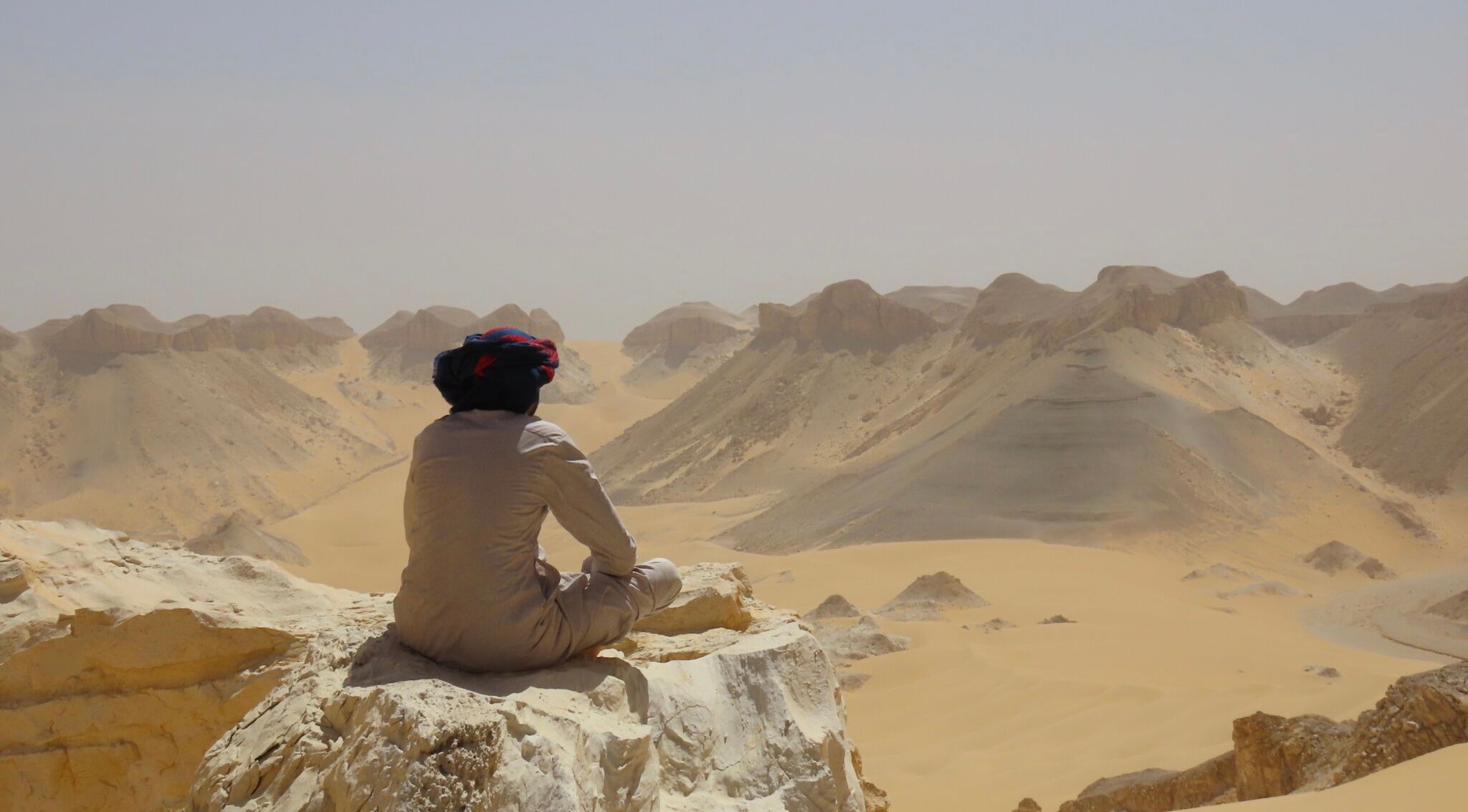
Almost all White Desert tours follow a similar structure, departing from and returning to Cairo. The experience is led by Bedouin guides from the Bahariya Oasis region who have generations of desert knowledge.
2-Day / 1-Night Tour (Most Popular)
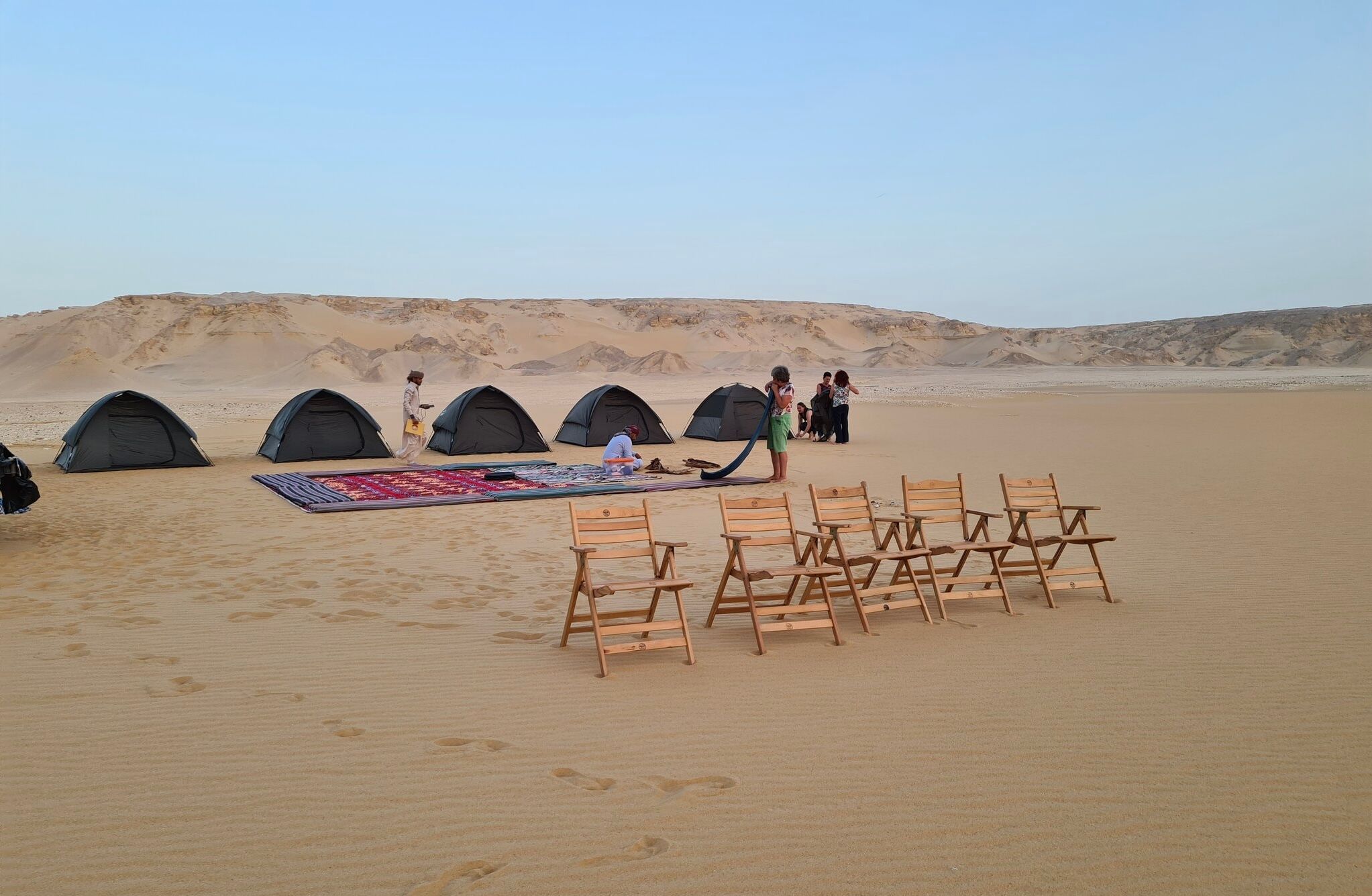
Day 1: Depart Cairo early morning (around 6-7 AM). Drive approximately 4 hours to Bahariya Oasis. After lunch, transfer to a 4x4 vehicle and head into the desert. Visit the Black Desert (dark dolerite-covered hills), Crystal Mountain (a ridge of quartz crystal formations), and the Valley of Agabat. Arrive at the White Desert by late afternoon for sunset among the formations. Bedouin camp setup: mattresses, blankets, campfire, and a freshly cooked BBQ dinner. Sleep under the stars.
Day 2: Wake for sunrise over the white formations (unforgettable). After breakfast, explore more of the White Desert. Return to Bahariya Oasis, then drive back to Cairo, arriving in the evening.
3-Day / 2-Night Tour
Adds a hotel night in Bahariya Oasis, often with visits to the oasis's hot springs (Ain Bishmo), Alexander the Great's Temple, and the Golden Mummies Museum. More relaxed pace, deeper desert exploration.
5-Day Extended Desert Tour
For serious adventurers, extended tours add the Djara Cave (stunning stalactites and prehistoric rock art), natural springs (Ain Khadra, Ain Serw), and the Great Sand Sea. Check out the 5 Days in the White Desert & Al-Jara Cave experience — a comprehensive itinerary covering all the major desert highlights with 4x4 transport, all meals, camping equipment, and expert Bedouin guides included.
What It Costs
White Desert tours are remarkably affordable compared to other Egyptian tourism experiences.
| Tour Length | Approximate Cost Per Person | Notes |
|---|---|---|
| 2-day / 1-night | $80–$150 | Most popular; includes transport, meals, camping |
| 3-day / 2-night | $120–$200 | Adds Bahariya hotel, oasis exploration |
| 5-day extended | $200–$400 | Full western desert circuit with caves and springs |
Prices typically include Cairo pickup and drop-off, 4x4 desert vehicle, all meals, camping equipment (mattresses, blankets, sometimes tents), and a Bedouin guide/driver. They do not include tips (recommended: $10-15/day for your guide), personal snacks, or travel insurance.
Group size significantly affects pricing — tours for 2 people cost more per person than groups of 4-6. Minimum group sizes of 4-5 people are common for shared departures.
When to Go
Best months: October through April. Daytime temperatures during this window range from 20-28°C — warm and pleasant for desert exploration. Nights are cold (5-10°C in winter), so warm layers are essential for camping.
Avoid: May through September. Summer daytime temperatures exceed 40°C, making desert camping extremely uncomfortable and potentially dangerous. Most operators reduce or suspend tours during peak summer.
Best within the best: November and March offer the ideal combination of mild days, cool nights, and clear skies. December through February can be quite cold at night — not unbearable, but pack accordingly.
What to Pack
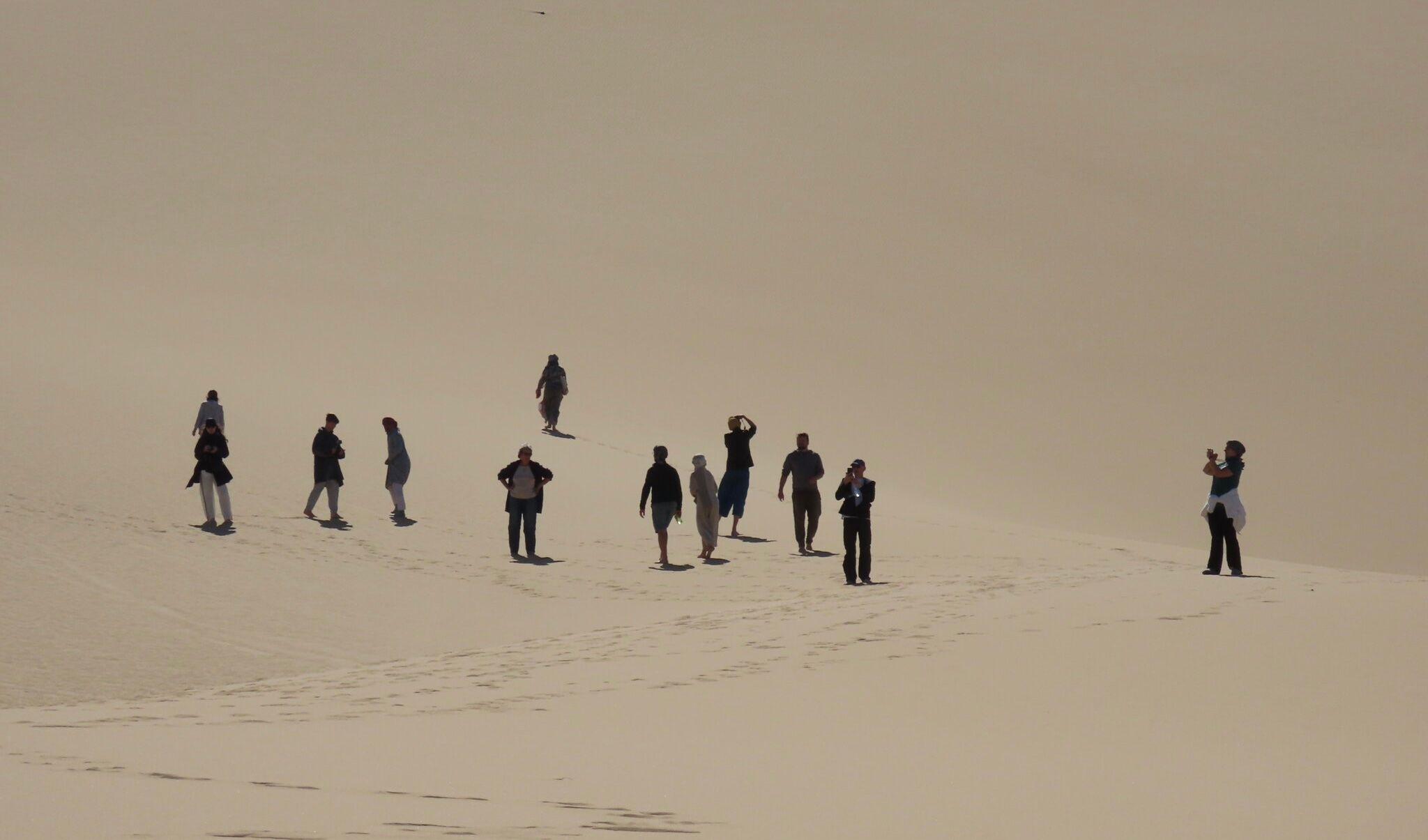
The desert environment demands specific preparation:
Warm layers — a fleece and a proper jacket for nighttime. Desert nights are genuinely cold, and many first-time visitors underestimate this.
Sun protection — hat, sunglasses, high-SPF sunscreen. The white rock reflects sunlight intensely.
Comfortable walking shoes — you'll be walking on sand and rock. No need for hiking boots, but sandals alone won't cut it.
Headlamp or flashlight — there is zero electricity in the desert camp. Essential for nighttime.
Camera with charged batteries — there are no charging points. Bring a power bank. The sunrise and sunset light on the white formations is extraordinary.
Toilet paper and wet wipes — facilities are basic (behind a rock, essentially). Plan accordingly.
Warm sleeping bag liner (optional) — blankets are provided but can be thin in budget tours. A silk or fleece liner adds significant warmth.
The Camping Experience
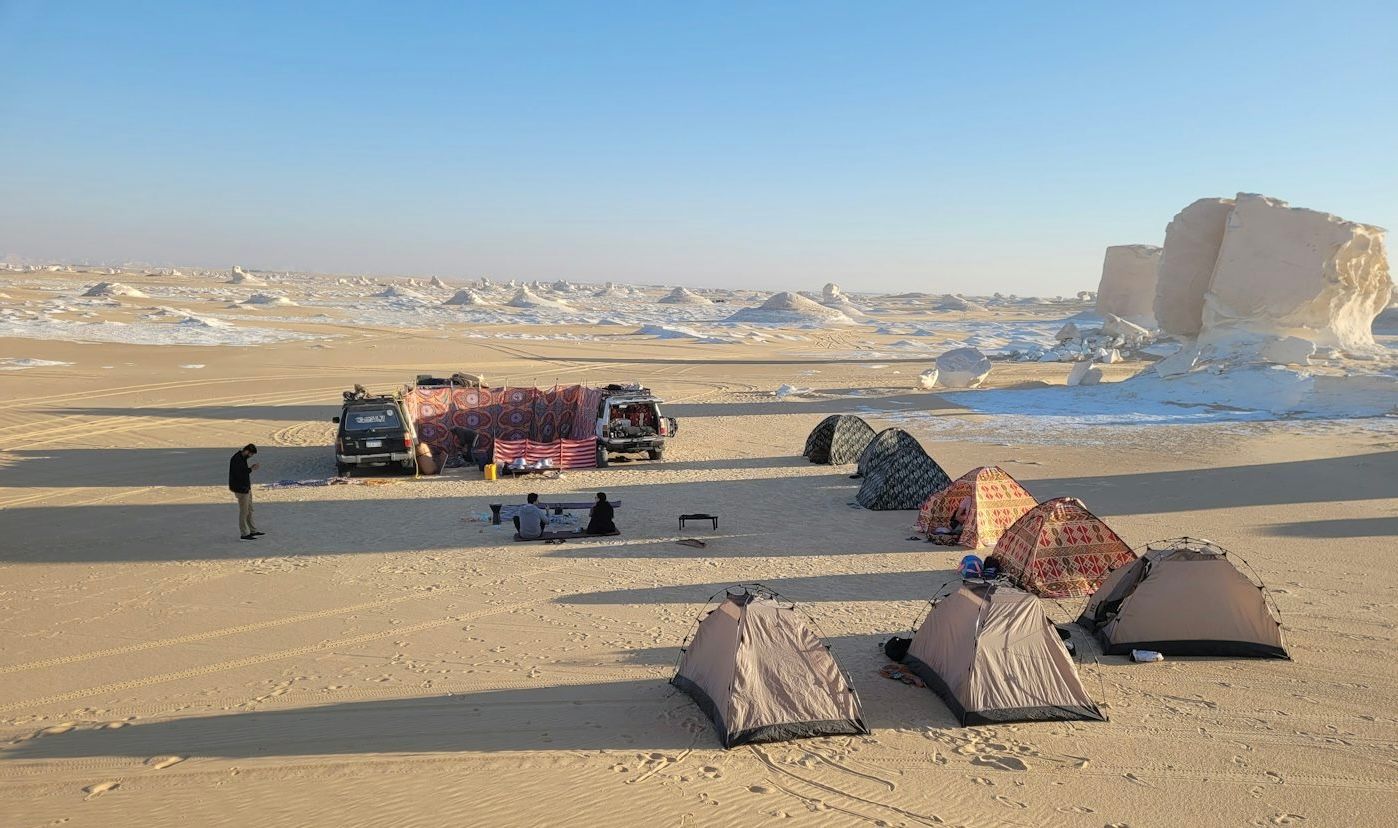
Camping in the White Desert is the highlight for most visitors. Your Bedouin guide sets up camp among the formations — a clearing with mattresses on the ground, blankets, and a campfire for cooking and warmth.
Dinner is typically grilled chicken or meat with rice, salad, and bread, prepared fresh over the fire. Tea is brewed continuously in the Bedouin tradition. After dinner, your guide may play traditional music. The silence of the desert — truly complete silence — is something most people have never experienced.
The night sky is the other star of the show. With zero light pollution, the Milky Way is visible as a bright band across the sky. Stars are so dense they're difficult to distinguish individual constellations. If you've never seen a truly dark sky, this will change your understanding of what "stargazing" means.
You sleep on the mattresses in the open air (tents are available in some tours but most people prefer sleeping under the stars). The formations around you take on ghostly, beautiful shapes in the moonlight.
Getting There and Logistics
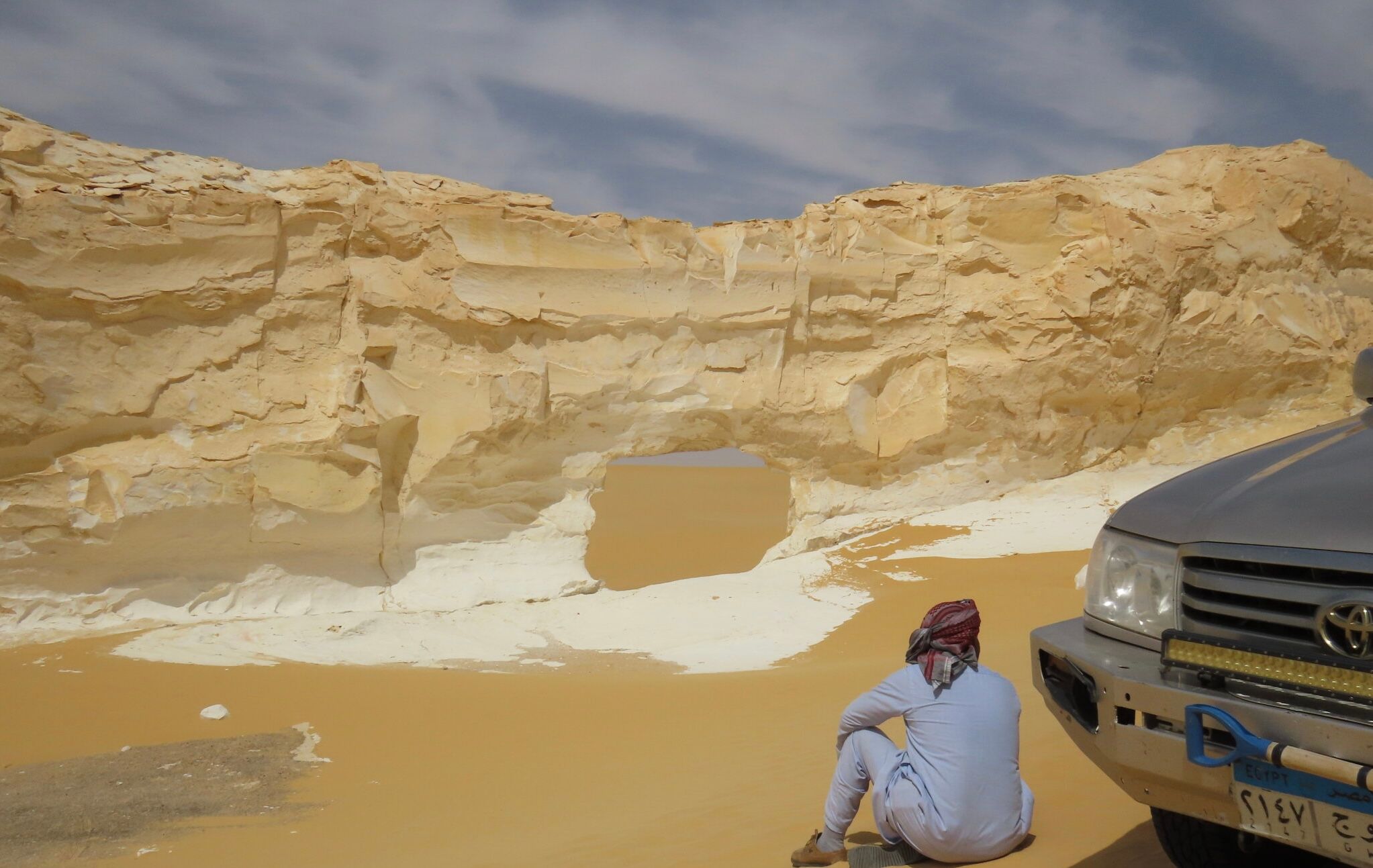
The White Desert is not accessible independently — you need a 4x4 vehicle, a desert permit, and a guide who knows the unmarked routes. All visits must be arranged through a tour operator.
From Cairo: Most tours include round-trip transport. The drive to Bahariya Oasis takes approximately 4 hours on a good highway. From Bahariya into the desert is another 2-3 hours by 4x4 on unpaved terrain.
Desert permits: Required and typically arranged by your tour operator. Your passport details are needed in advance (usually 24 hours before departure).
Phone signal: Non-existent once you enter the desert. Inform people of your itinerary before departure and embrace the disconnection.
Medical considerations: The nearest hospital is in Bahariya Oasis (basic) or Cairo (4+ hours). Travel insurance with medical evacuation coverage is strongly recommended. Bring any personal medications you need.
Who Is This For?
The White Desert is ideal for:
Travelers who've already seen Egypt's ancient sites and want something completely different — nature over monuments, silence over crowds.
Photography enthusiasts — the light conditions, formations, and night sky create extraordinary shooting opportunities.
Adventure travelers who enjoy desert camping, off-road driving, and wilderness experiences.
Couples and small groups looking for a unique, romantic experience (desert camping under stars is about as romantic as it gets).
It's less suitable for travelers with significant mobility limitations (the terrain requires some walking on uneven ground), very young children (the camping is basic), or anyone uncomfortable with minimal bathroom facilities.
Explore all Egypt experiences including the 5-day White Desert and Al-Jara Cave adventure.
Frequently Asked Questions
Is the White Desert safe?
Yes. The Western Desert around Bahariya and Farafra is a well-established tourism zone with an excellent safety record. Your Bedouin guide carries communication equipment and knows the terrain intimately. The area is far from any conflict zones.
How far is the White Desert from the Pyramids?
The White Desert is approximately 500 kilometers from the Giza Pyramids — about 5-6 hours total, including the drive to Bahariya Oasis and the 4x4 transfer into the desert.
Can I visit the White Desert as a day trip from Cairo?
Technically possible but not recommended. The drive alone is 8+ hours round trip, leaving almost no time for the desert itself. A minimum 2-day/1-night tour is needed to experience the White Desert properly — the sunrise and camping under stars are the core of the experience.
Do I need to be physically fit?
No extreme fitness is required. You'll walk on sandy and rocky terrain for moderate distances (1-2 hours of walking across a full day), but the pace is relaxed. The 4x4 handles the long distances. If you can walk on a beach, you can manage the White Desert.
Is it worth adding to a standard Egypt itinerary?
If you have 2-3 days to spare beyond Cairo, Luxor, and Aswan, the White Desert is arguably the most rewarding addition to any Egypt trip. It offers something no temple or museum can — complete immersion in a landscape that feels like it belongs on another planet.