Mauritius is famous for its beaches — and they are genuinely extraordinary. But reducing this Indian Ocean island to a "beach destination" misses what makes it truly special. Behind the resort strips and turquoise lagoons lies a volcanic island with hiking trails through cloud forests, rum distilleries in colonial plantations, giant tortoises you can hand-feed, underwater waterfalls visible from the air, and a cultural fusion of Indian, Chinese, French, African, and Creole influences found nowhere else on Earth.
If you're spending 5-7 days in Mauritius and want more than a sunbed, this guide covers the experiences worth leaving the resort for.
Nature & Adventure
Le Morne Brabant Hike
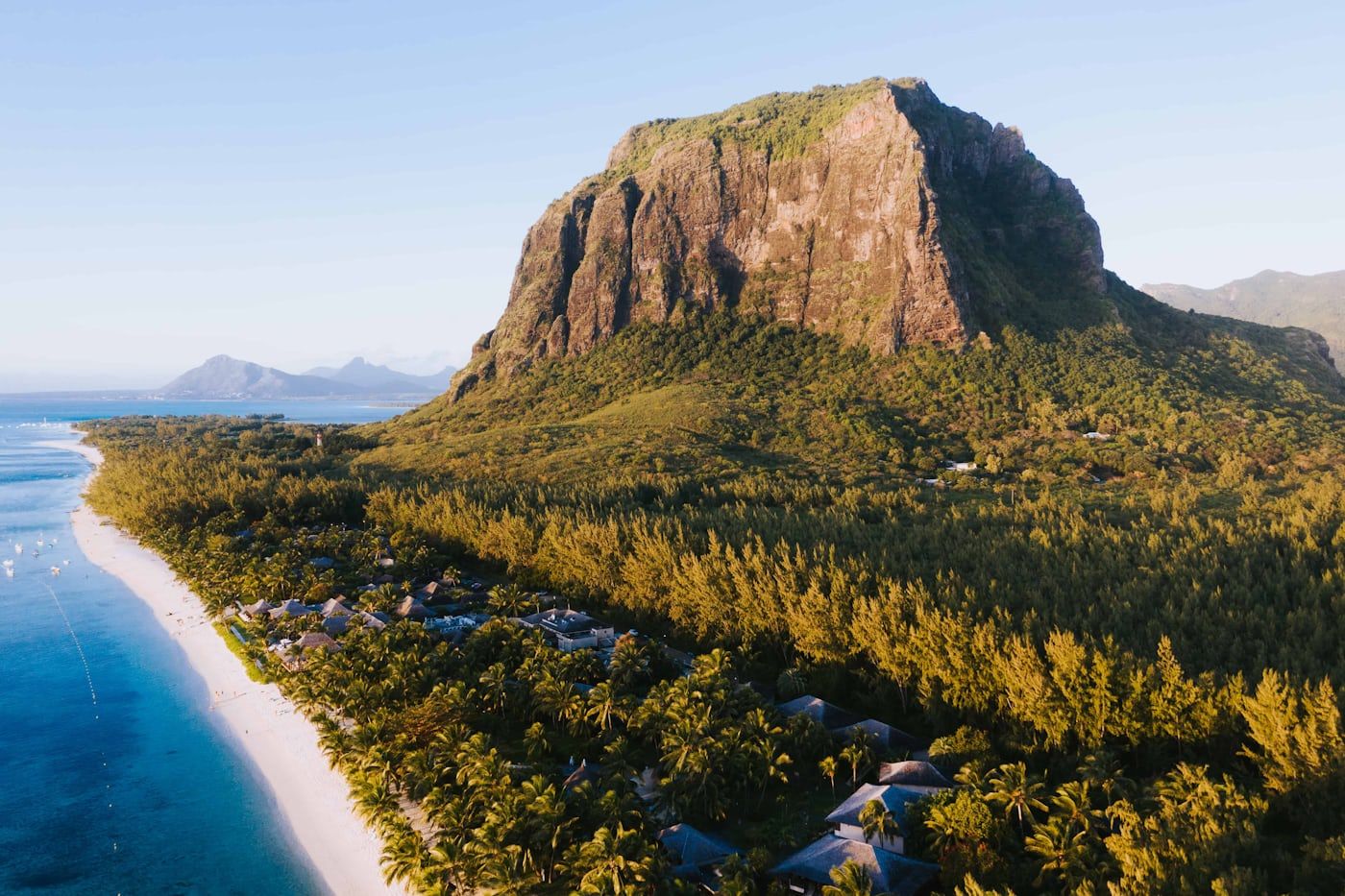
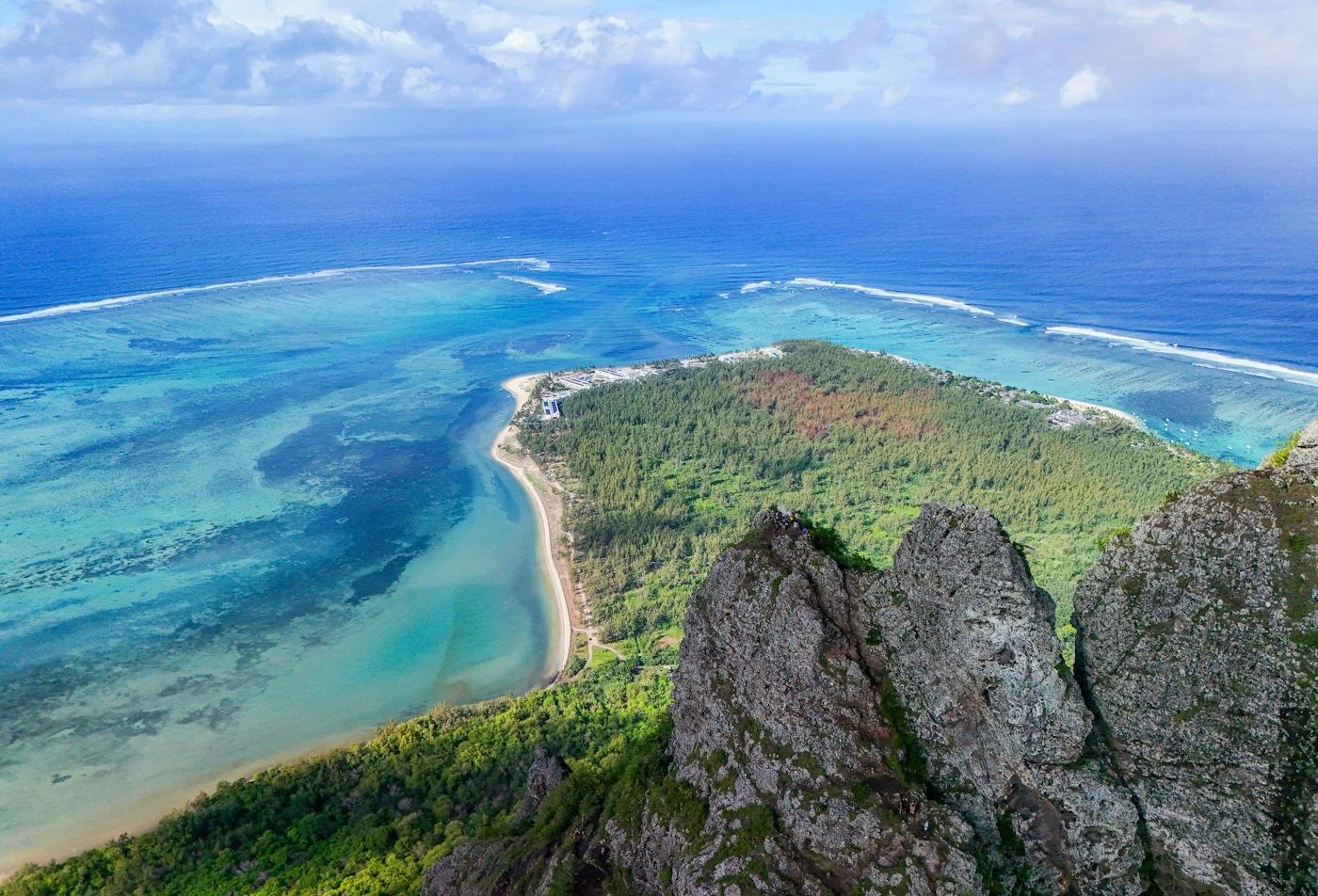
Le Morne is a dramatic basalt mountain on the southwest peninsula — a UNESCO World Heritage Site that served as a refuge for escaped enslaved people in the 18th and 19th centuries. The hike to the cross at the top (556 meters) takes approximately 3-4 hours round trip and rewards with panoramic views over the lagoon, the reef, and the island's interior.
Difficulty: Moderate. The final section is steep with some scrambling required. Not suitable for young children or those with vertigo.
What to know: A guide is mandatory for the upper section (since 2016). Book through a licensed operator. Start early to avoid afternoon heat and clouds.
Black River Gorges National Park
Mauritius's largest national park protects the island's remaining native forest — a dense, misty landscape of ebony trees, giant ferns, and waterfalls. Over 300 species of flowering plants and several endemic bird species (including the Mauritius kestrel, saved from extinction) live here.
The most popular trail is the Macchabée Trail — a 10-kilometer loop through the heart of the forest with viewpoints over the gorges. The Alexandra Falls viewpoint requires only a short walk from the road and is accessible for most fitness levels.
Underwater Waterfall (Aerial View)
One of Mauritius's most striking natural phenomena — sand and silt deposits on the ocean floor near Le Morne create an optical illusion of a massive underwater waterfall, visible from the air. Helicopter tours ($250-$400/person, 15-30 minutes) offer the best view, though some seaplane operators also fly over the site.
Note: This is an optical illusion, not an actual undersea waterfall. But the visual effect from above is genuinely stunning and makes for unforgettable photographs.
Swimming with Dolphins
In the early morning, pods of spinner and bottlenose dolphins gather in the bays along Mauritius's west coast (particularly near Tamarin Bay). Boat tours take small groups to swim alongside the dolphins in their natural habitat.
Ethical note: Choose operators that follow responsible wildlife interaction guidelines — no chasing pods, limited time in the water, and no touching the animals. The experience should be on the dolphins' terms.
Culture & Heritage
Chamarel: Seven Coloured Earth & Rum
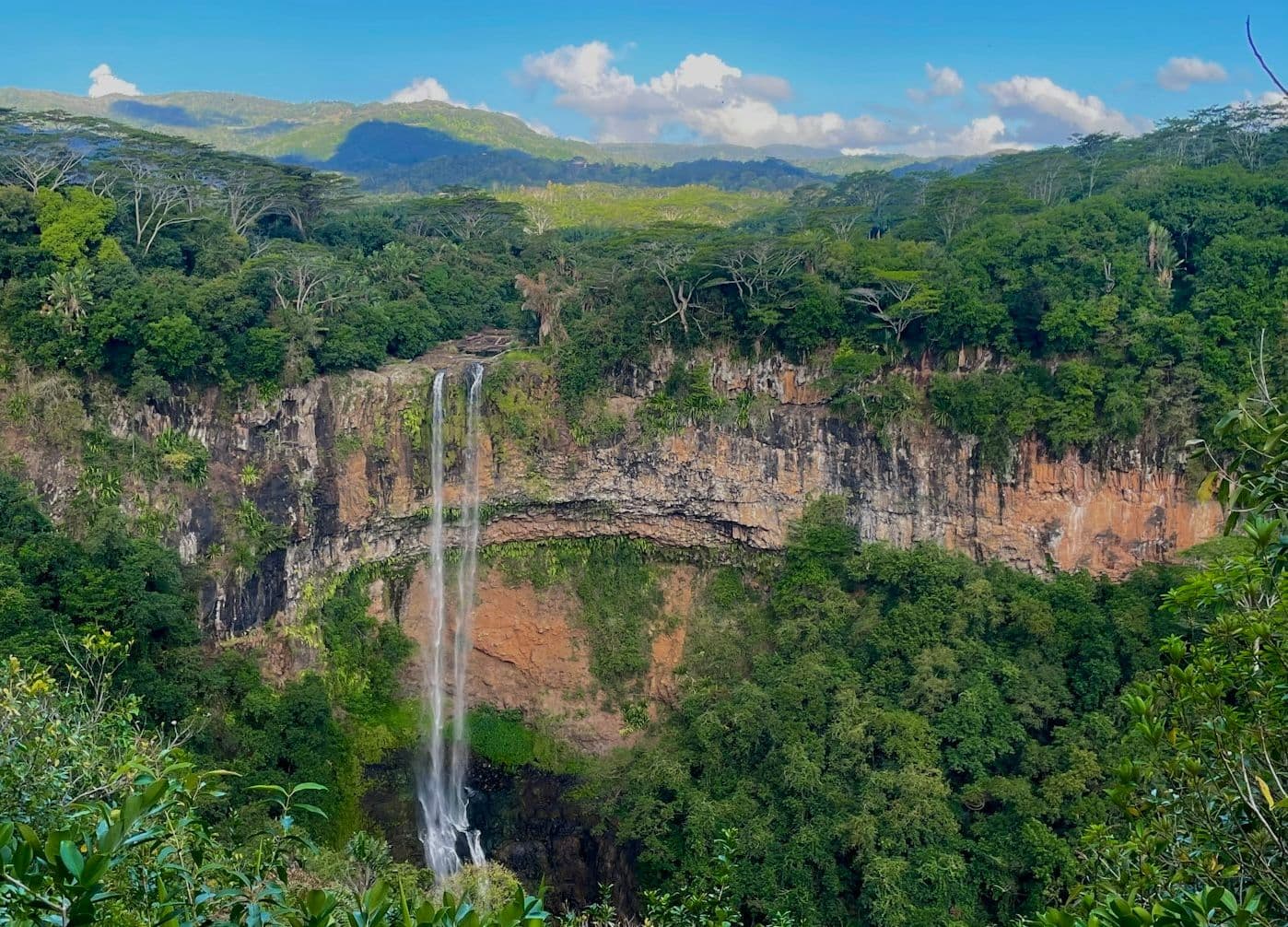
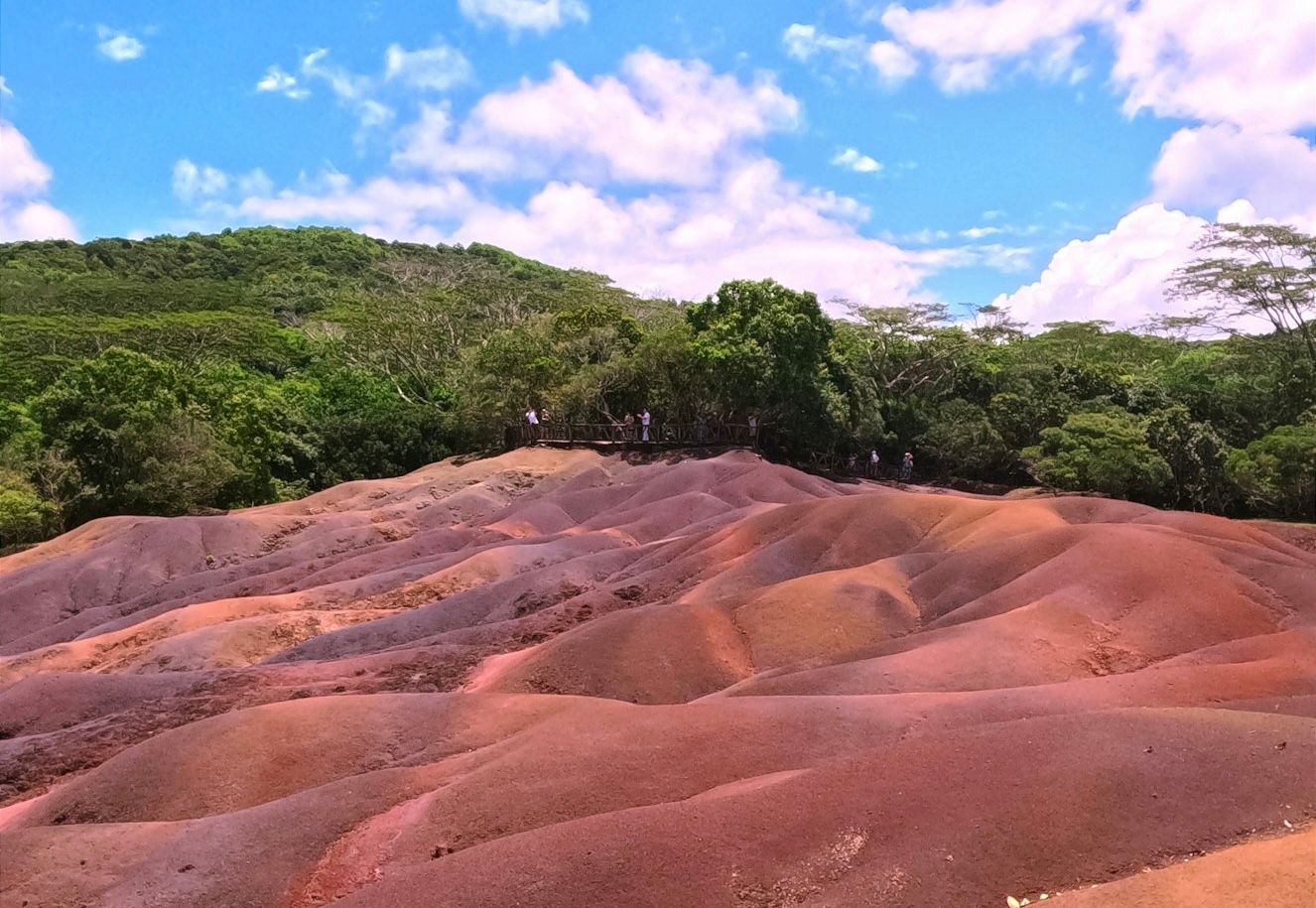
The village of Chamarel in the southwest is home to two must-see attractions. The Seven Coloured Earth is a geological curiosity — exposed volcanic soil in seven distinct colors (red, brown, violet, green, blue, purple, yellow) that never mix even after heavy rain. Adjacent, the Chamarel Waterfall (100 meters) is the island's tallest.
After the geological wonder, visit the Rhumerie de Chamarel — a working rum distillery producing premium agricultural rum from local sugarcane. The tour covers the distillation process, and the tasting session includes aged rums that rival Caribbean producers. The on-site restaurant serves excellent Mauritian-French fusion cuisine with valley views.
Port Louis Central Market
The capital's central market is the best place to experience Mauritius's multicultural soul. Stalls sell spices, tropical fruits, dried fish, Chinese herbs, Indian sweets, and Creole sauces — all within a few meters of each other. The food court upstairs serves some of the best and cheapest meals on the island: dholl puri (Indian-Mauritian flatbread with yellow split pea filling), mine frit (fried noodles), and gâteau piment (chili cakes).
Best visited: Weekday mornings for the freshest produce and least tourist density. The market is open Monday through Saturday.
Aapravasi Ghat (UNESCO World Heritage Site)
This immigration depot in Port Louis is where approximately 450,000 Indian indentured laborers arrived between 1834 and 1920 — the beginning of the Indian diaspora that shapes modern Mauritius. The site is a powerful and sobering complement to Mauritius's resort image, documenting the transition from slavery to indentured labor in the British Empire.
Eureka House
A beautifully preserved 19th-century Creole mansion in Moka (central Mauritius), Eureka House offers a glimpse into the island's colonial plantation era. The house contains original furniture, maps, and photographs. The surrounding garden is peaceful, and the on-site restaurant serves traditional Creole cuisine.
Wildlife Encounters
Casela World of Adventures
A nature park in the west offering interactions with giant tortoises (hand-feeding), walking with lions (controversial — evaluate your own position on captive wildlife interactions), zip-lining over a canyon, and quad biking. The tortoise encounter is the highlight for most visitors — Mauritius has a population of Aldabra giant tortoises that are gentle, ancient, and photogenic.
Île aux Aigrettes
A nature reserve on a small island off the southeast coast, managed by the Mauritian Wildlife Foundation. Guided walks reveal the island's restored native forest and some of Mauritius's rarest species: the pink pigeon, ornate day gecko, and Telfair's skink. A great option for wildlife and conservation enthusiasts.
Blue Bay Marine Park
Mauritius's best snorkeling spot — a protected lagoon on the southeast coast with clear water, healthy coral, and abundant tropical fish. Glass-bottom boat tours are available for non-snorkelers. The marine park is free to visit.
Food & Drink
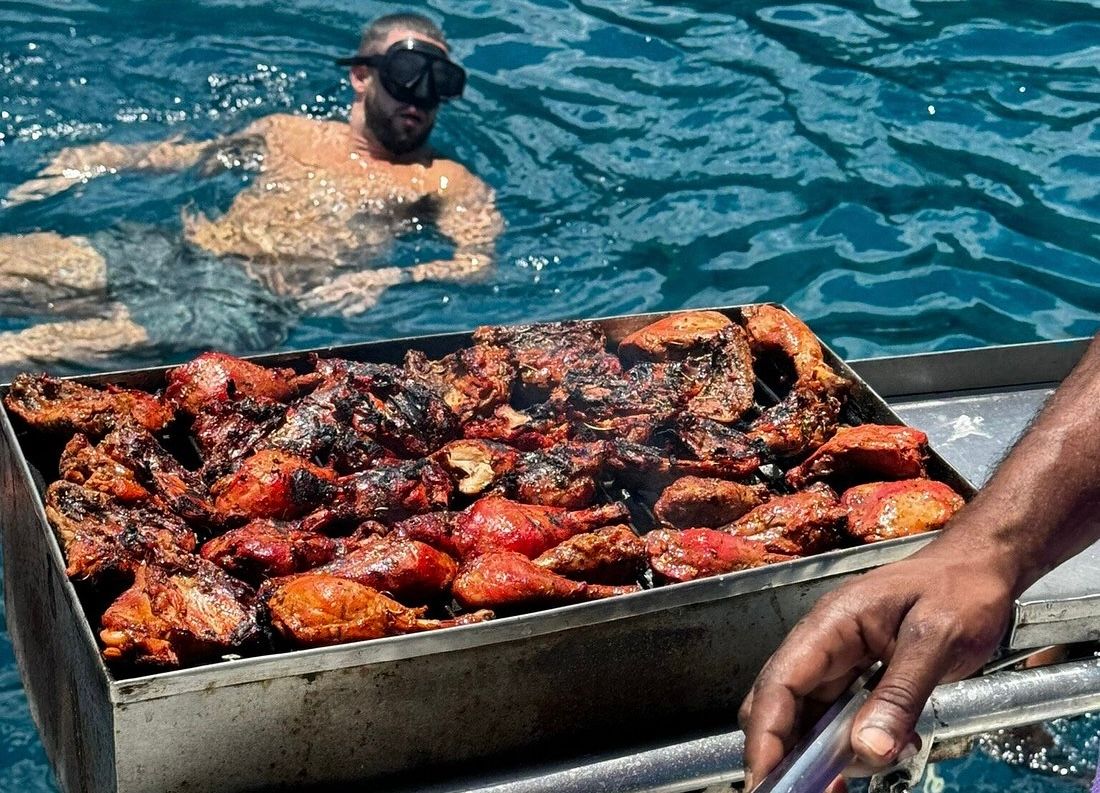
Mauritian cuisine is one of the island's best-kept secrets — a fusion of Indian, Chinese, French, African, and Creole cooking traditions that results in bold, complex flavors.
What to Try
Dholl puri — the island's most popular street food. A thin flatbread filled with ground yellow split peas, served with curry and various chutneys. Available from roadside vendors across the island for less than $1.
Octopus curry (cari ourite) — tender octopus in a fragrant tomato and spice curry. A coastal specialty, best eaten in fishing villages along the south coast.
Alouda — a sweet, refreshing drink made with agar jelly, basil seeds, milk, and ice — sold from mobile carts and market stalls. The Mauritius equivalent of a milkshake, but more interesting.
Gâteau piment — deep-fried chili and lentil fritters. Addictively crispy and available from street vendors everywhere. Usually served with fresh bread and chutney.
Rum — Mauritius produces excellent agricultural rum (made from fresh sugarcane juice rather than molasses). Visit distilleries at Chamarel, St. Aubin, or Labourdonnais for tastings.
Practical Information
Getting Around
Rental car — the best way to explore beyond your resort. Driving is on the left (UK-style). Roads are generally good but narrow in places. Traffic around Port Louis is heavy during rush hours. Rental costs approximately $30-$50/day.
Taxis — available but expensive without pre-negotiated rates. Always agree on a price before getting in.
Public buses — extensive network covering the entire island. Very cheap ($0.50-$1 per trip) but slow and not always comfortable. A good option for budget travelers with flexible schedules.
When to Visit
Best months: May through December. The weather is warm and pleasant (24-30°C), rainfall is lower, and the southeast trade winds keep conditions comfortable. September and October are the driest months.
Cyclone season: January through March. Tropical cyclones are possible, bringing heavy rain and strong winds. Hotels offer discounted rates, but outdoor activities may be disrupted.
Whale and dolphin season: July through November for humpback whale sightings off the west coast.
Budget
Mauritius ranges from affordable to very expensive depending on your choices. Street food meals cost $1-$3. Mid-range restaurant dinners cost $15-$30. Luxury resort dining can exceed $100 per person. Entry fees for attractions are generally modest ($5-$15). The biggest expense is accommodation — resort rates range from $100/night to $2,000+/night.
How Many Days
Three to four days covers the main highlights outside of beach time. If you're combining with a safari in Kenya, Tanzania, or Madagascar, plan for 5-7 total days in Mauritius — 2-3 for exploration, 2-4 for beach relaxation.
Explore all Mauritius experiences — from guided tours and adventure activities to cultural experiences hosted by local islanders.
Frequently Asked Questions
Is Mauritius just a honeymoon destination?
Not at all. While the luxury resorts cater heavily to honeymooners, Mauritius has genuine depth for all traveler types — families (giant tortoises, water sports), adventure travelers (Le Morne hike, kitesurfing), culture enthusiasts (Port Louis market, Aapravasi Ghat), and food lovers (the Creole-Indian-Chinese-French fusion cuisine).
Can I combine Mauritius with a safari?
Yes. Common combinations include Kenya/Tanzania safari + Mauritius beach (direct flights from Nairobi, approximately 4 hours), or Madagascar wildlife + Mauritius relaxation (direct flights from Antananarivo, approximately 2 hours). See our Madagascar guide for combination itinerary ideas.
Do I need a visa?
Most nationalities (including US, UK, EU, and many African countries) do not need a visa for stays up to 90 days. A valid passport, return ticket, and proof of accommodation are required on arrival.
Is Mauritius expensive?
It can be, but doesn't have to be. Luxury resorts and high-end dining are genuinely expensive. However, guesthouses ($40-$80/night), street food ($1-$3/meal), and public buses ($0.50/ride) make budget travel very achievable. The biggest savings come from eating like locals and staying outside resort complexes.