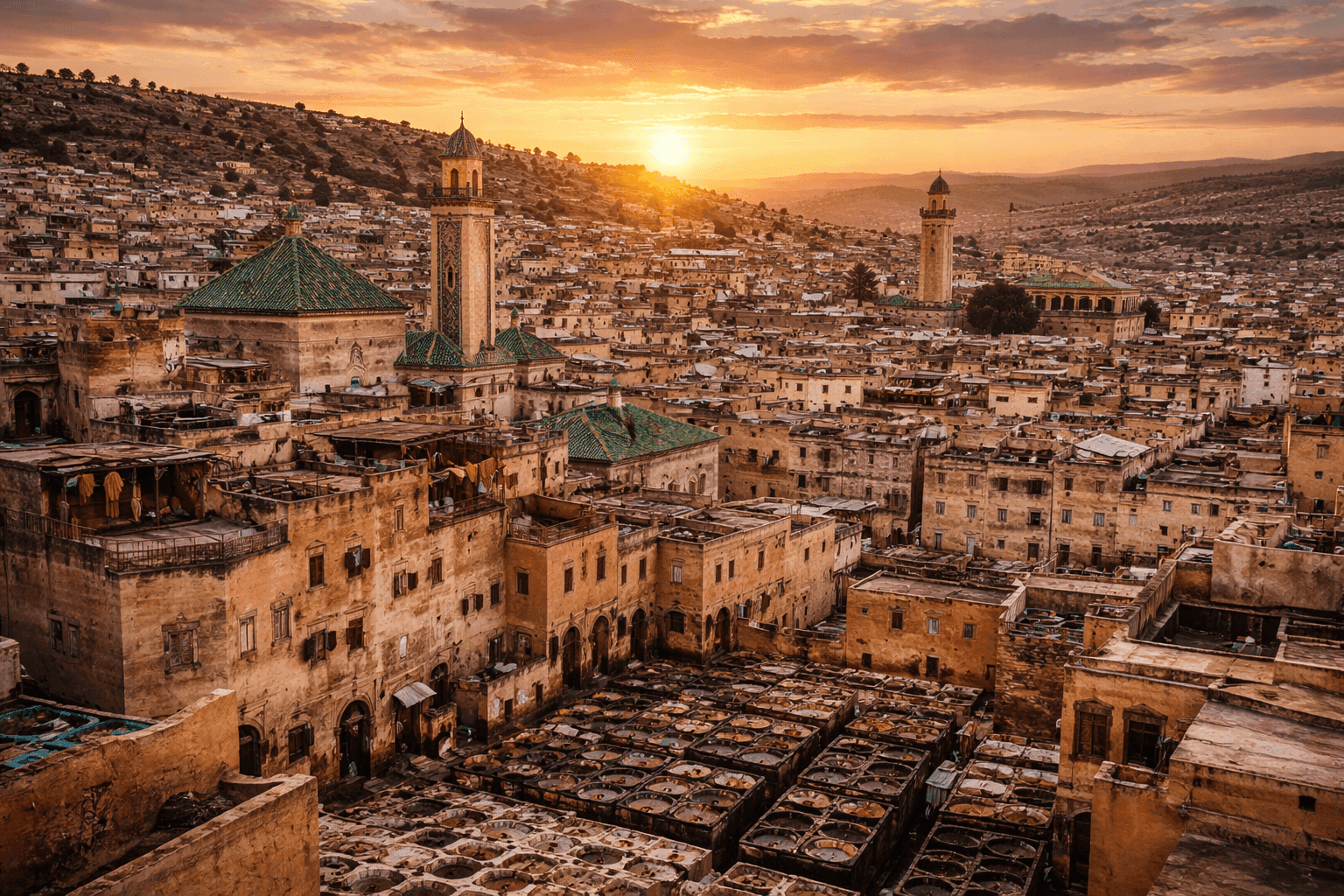
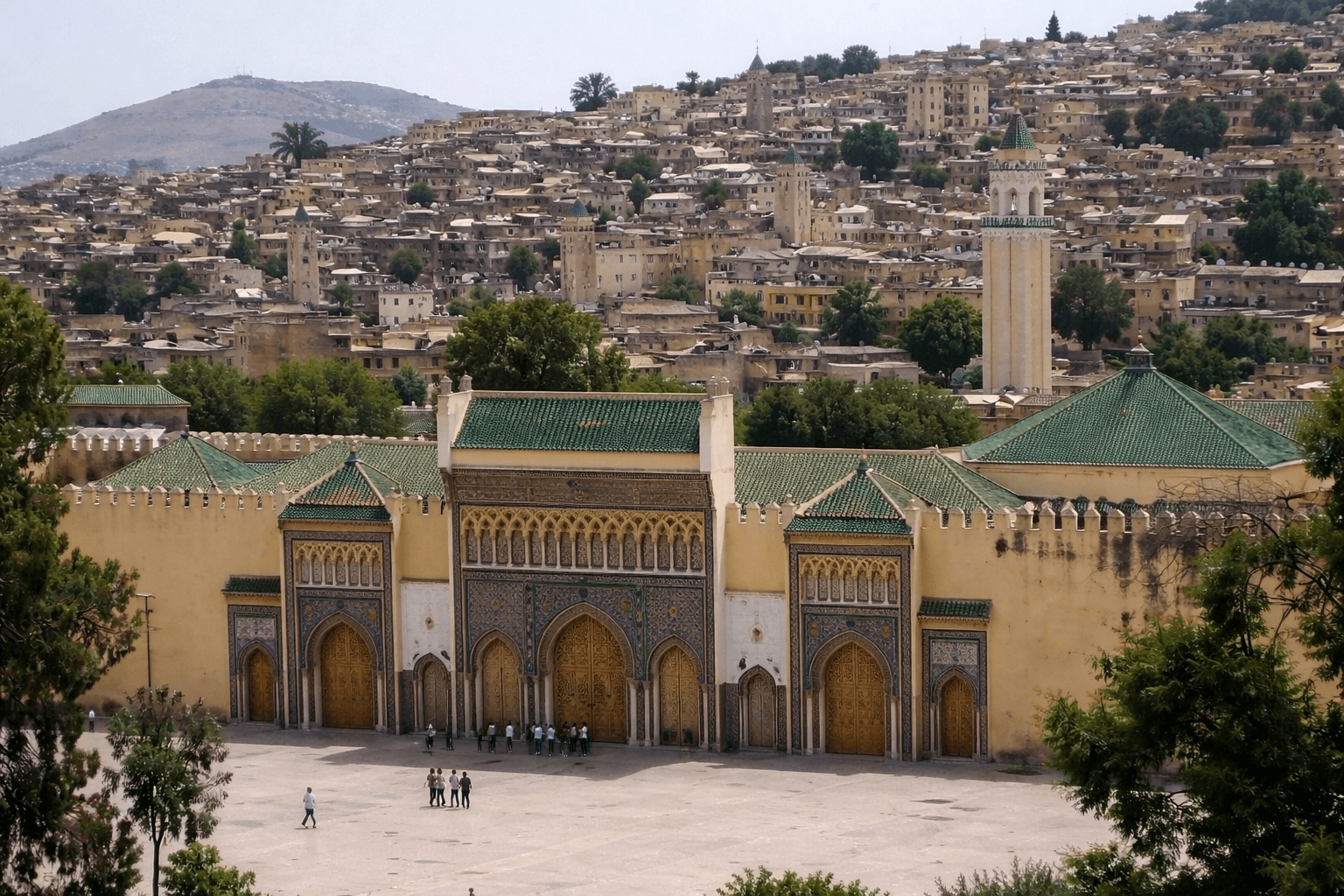
Fes el-Bali is the world's largest car-free urban zone — a medieval labyrinth of over 9,000 alleyways, 300+ mosques, and the oldest operating university on Earth. Where Marrakech has been polished for tourism, Fes remains raw, complex, and deeply authentic. The medina is a working city, not a museum: artisans still hammer copper, tanners still dye leather in medieval vats, and donkeys still carry goods through streets too narrow for any vehicle.
It's also disorienting, intense, and easy to get lost in — which is exactly why a guide matters here and why this article exists.
Why Fes Matters
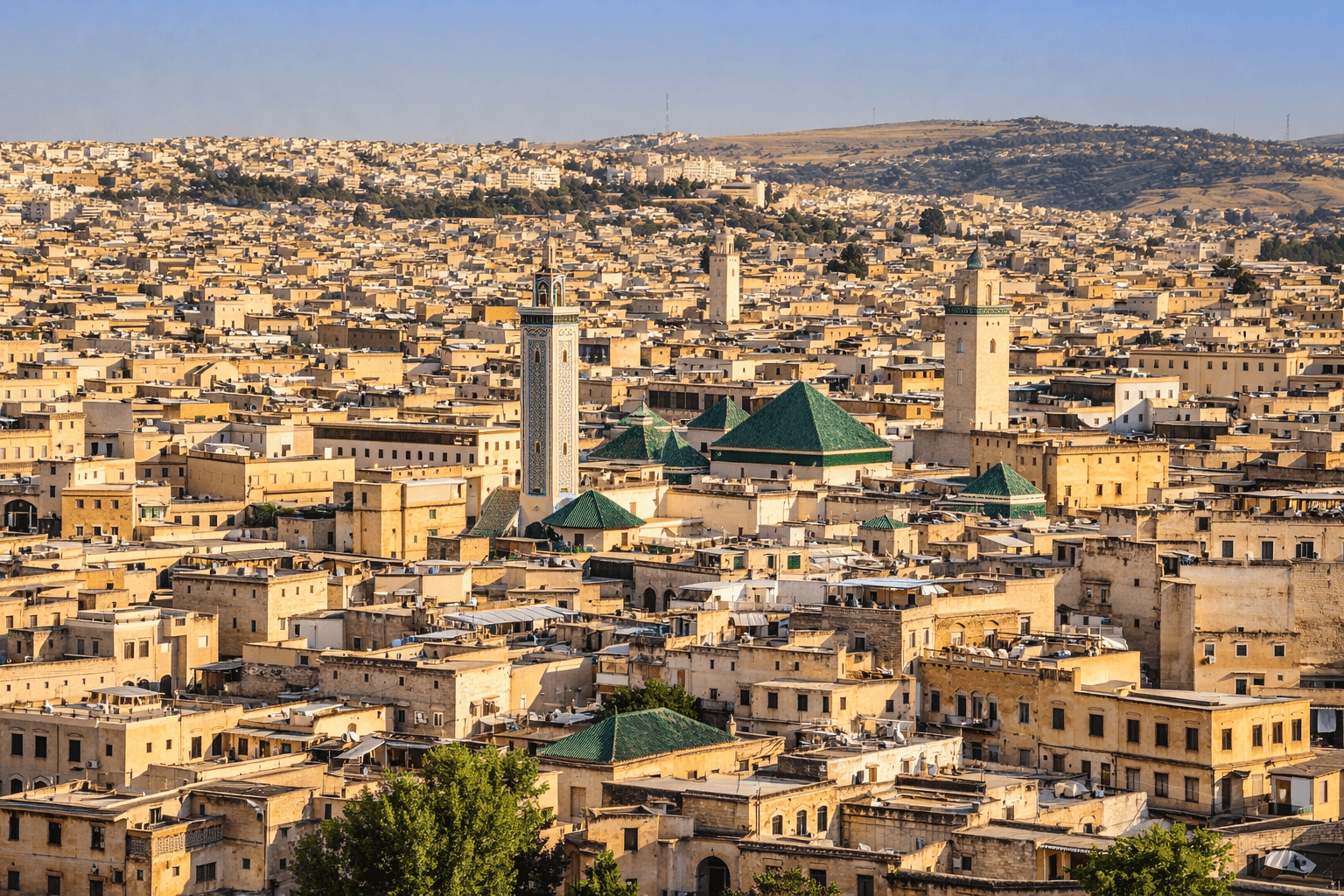
Fes was founded in the 9th century and served as Morocco's capital for centuries. The medina has been continuously inhabited for over 1,200 years, making it one of the oldest and best-preserved medieval cities in the world. UNESCO designated Fes el-Bali a World Heritage Site in 1981.
What you'll find here that you won't find in Marrakech: a medina that hasn't been heavily tourist-adapted, artisan workshops producing goods using techniques unchanged for centuries, a scholarly and spiritual tradition rooted in the University of al-Qarawiyyin (founded 859 AD, recognized by UNESCO and Guinness as the world's oldest existing, continually operating university), and a food culture that many Moroccans consider the finest in the country.
The Must-See Landmarks
Chouara Tannery
The most iconic sight in Fes. Dozens of stone vats filled with natural dyes — saffron yellow, poppy red, indigo blue, mint green — where leather has been processed using the same methods since the Middle Ages. Workers stand knee-deep in the vats, scraping and dyeing hides by hand.
How to see it: You can't access the tannery floor (it's a working facility), but surrounding leather shops have rooftop terraces with panoramic views over the vats. The shops expect you to browse their goods in exchange for terrace access — there's no obligation to buy, but the sales pitch will happen. A sprig of fresh mint is offered at the entrance to offset the smell (pigeon droppings are used in the tanning process — the odor is strong).
Best time to visit: Morning, when the vats are freshest and the light is best for photography. The tannery is less active on Fridays.
Bou Inania Madrasa
One of the finest examples of Marinid architecture in Morocco. Built in the 1350s, this religious school features intricate zellige tilework, carved stucco, and cedarwood that reaches floor-to-ceiling across the courtyard. Unlike most religious buildings in Morocco, Bou Inania is open to non-Muslim visitors.
Entry: Approximately $3.Don't miss: The carved cedarwood screen at the entrance and the courtyard's central marble basin.
Al-Qarawiyyin Mosque & University
Founded in 859 AD by Fatima al-Fihri, a woman, the University of al-Qarawiyyin is the world's oldest continually operating degree-granting institution. The mosque can hold 20,000 worshippers and is the largest in North Africa.
Access: Non-Muslims cannot enter the mosque, but you can peek through the doorways to see the vast prayer hall. The adjacent Al-Qarawiyyin Library (one of the oldest in the world, recently restored) occasionally opens for guided visits — check locally.
Nejjarine Museum of Wooden Arts & Crafts
A beautifully restored fondouk (caravanserai) housing a collection of traditional Moroccan woodwork. The building itself — with its carved cedarwood balconies and central courtyard — is as impressive as the exhibits. The rooftop café offers medina views over mint tea.
Entry: Approximately $3.
Mellah (Jewish Quarter)
Fes's historic Jewish quarter, established in the 15th century, was one of the first mellahs in Morocco. The area has a distinct architectural character — balconies and windows face outward (unlike the inward-facing design of Muslim homes). The Ibn Danan Synagogue is open to visitors and worth a brief stop.
Navigating the Medina
Hire a Guide (Seriously)
Fes medina is genuinely confusing. GPS is unreliable within the narrow alleys. Street names change or don't exist. The medina has been described as a three-dimensional maze — alleys curve, split, dead-end, and loop back on themselves across multiple levels.
A licensed local guide (approximately $30-$50 for a half-day, $50-$80 for a full day) transforms the experience. They know the layout intimately, can take you to workshops and viewpoints that aren't visible from the main paths, and provide historical context that turns a walk into an education.
Tip: Book a guide through your riad, a verified platform, or the official tourism bureau. Avoid unlicensed "guides" who approach you on the street — they often lead you to commission-paying shops rather than genuine highlights.
If You Go Solo
Stick to the main arteries (Talaa Kebira and Talaa Seghira — the two main downhill streets from Bab Bou Jeloud). These are the medina's primary paths and lead to most major landmarks. Download an offline map. Use your riad as a home base and ask staff to mark key routes. If you're truly lost, ask a shopkeeper for directions to Bab Bou Jeloud (the blue gate) — it's the medina's most recognizable landmark and a natural orientation point.
Accept that you'll get lost. It happens to everyone. The medina is small enough (approximately 2 km across) that you'll eventually emerge at a wall or gate. Getting lost is genuinely part of the Fes experience.
The Donkey Rule
Donkeys and mules carry goods through the narrow lanes. When you hear "balak! balak!" (watch out!), press against the wall immediately. The animals are loaded with goods and cannot stop or steer around you in tight spaces. This is not a quaint tradition — it's the medina's active logistics system.
Food in Fes
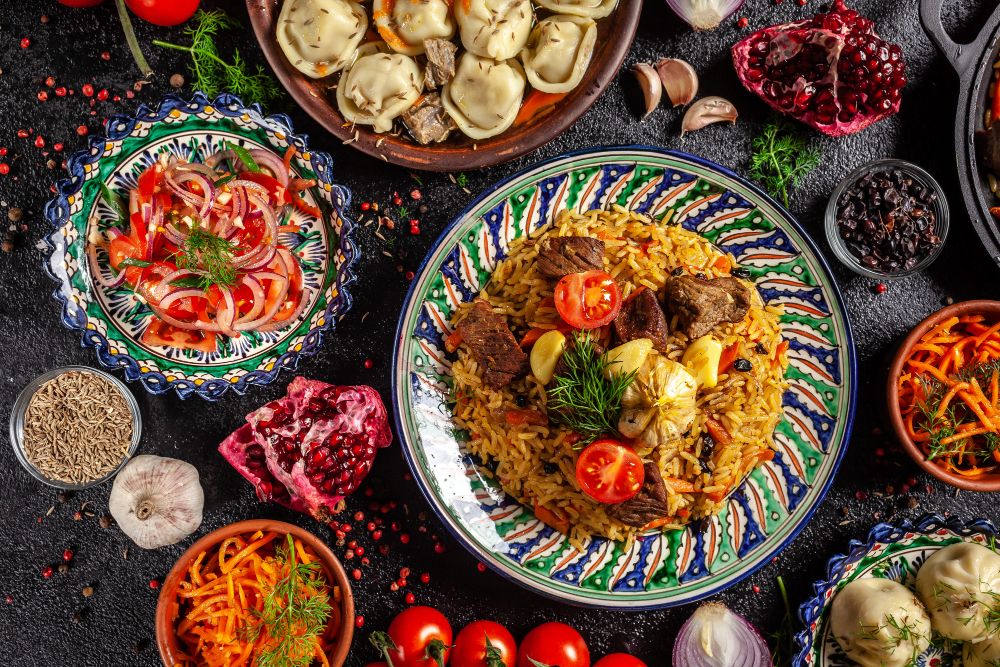
Fes is widely considered the culinary capital of Morocco. The cuisine is more refined and varied than Marrakech's, with dishes that reflect centuries of Andalusian, Arab, and Berber influence.
What to Eat
Pastilla (b'stilla) — the sweet-savory chicken or pigeon pie is said to have originated in Fes. Warqa pastry layers, shredded meat, almonds, eggs, cinnamon, and powdered sugar. This is the dish that defines Fassi cuisine.
Rfissa — shredded msemen flatbread layered with lentils and chicken in a fenugreek sauce. A comforting, aromatic dish unique to Fes and surrounding regions.
Tanjia — a slow-cooked meat dish prepared in a clay pot sealed with parchment and cooked for hours in the embers of a public hammam furnace. Originally a bachelor's dish (men would drop their tanjia at the hammam in the morning and collect it cooked in the evening). Rich, falling-apart-tender, and deeply flavored.
Mechoui — slow-roasted lamb available at specialist stalls near the Rcif area. Buy by weight, eat with cumin salt and bread.
Harira — the hearty lentil soup found everywhere in Morocco but particularly good in Fes, where it's often served with dates and chebakia pastries.
Where to Eat
Café Clock — in the medina near Bou Inania. A cultural café known for its camel burger (yes, really — and it's excellent), cooking classes, and cultural events. A comfortable base for solo travelers.
The Ruined Garden — a restaurant set in the restored courtyard of a formerly abandoned riad. Seasonal menu, excellent presentation, and one of the most atmospheric dining settings in the medina.
Street stalls near Rcif — for budget eating. Mechoui, harira, and fresh-pressed juices at local prices.
Where to Stay
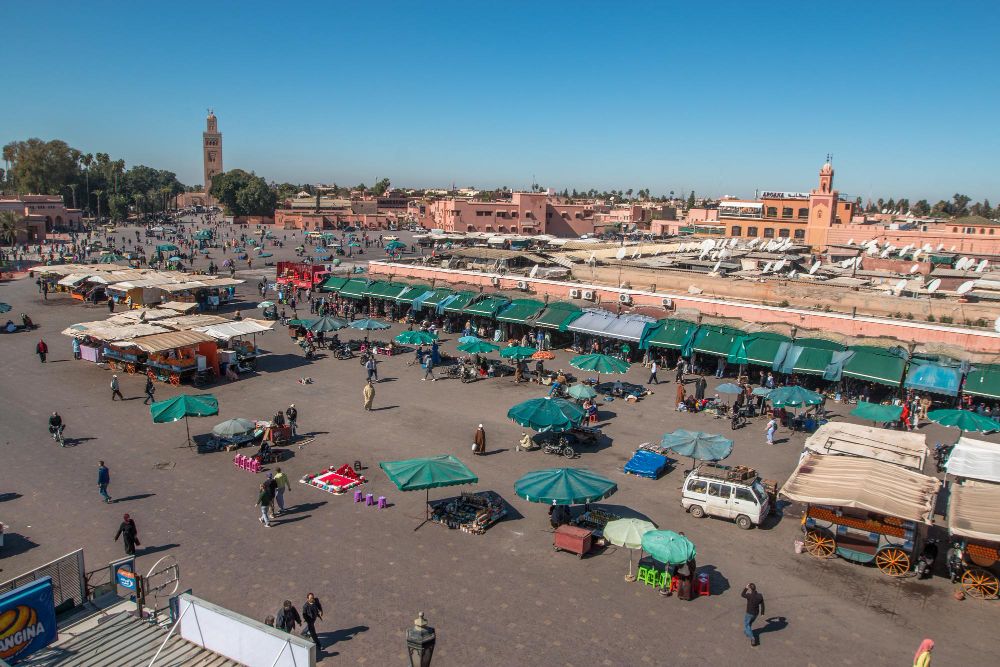
Stay inside the medina for the full Fes experience. Riads (traditional houses with interior courtyards) are the best accommodation option — they range from basic to exquisite.
Budget: $25-$50/night. Basic rooms in family-run riads with shared facilities.Mid-range: $60-$120/night. Restored riads with private bathrooms, breakfast, and rooftop terraces. This is the sweet spot for Fes — the quality of mid-range riads is outstanding.Luxury: $150-$400+/night. Palatial riads with pools, hammams, and multi-course dinners. Riad Fès and Palais Amani are standout options.
Important: Many riads require navigating narrow medina alleys with luggage. Ask your riad for walking directions from the nearest car-accessible point (usually Bab Bou Jeloud, Bab Rcif, or Place Lalla Yeddouna). Some riads send staff to meet you and carry your bags.
Getting to Fes
By air: Fes-Saïss Airport (FEZ) receives flights from European cities (Ryanair, Transavia, Air Arabia) and domestic connections from Casablanca. The airport is 15 km south of the medina (approximately 30 minutes by taxi, $10-$15).
By train: Excellent ONCF train connections from Casablanca (3.5 hours), Rabat (2.5 hours), Marrakech (7 hours with change in Casablanca or direct), and Meknes (45 minutes). Fes train station is in the new city, about 15 minutes by taxi from the medina.
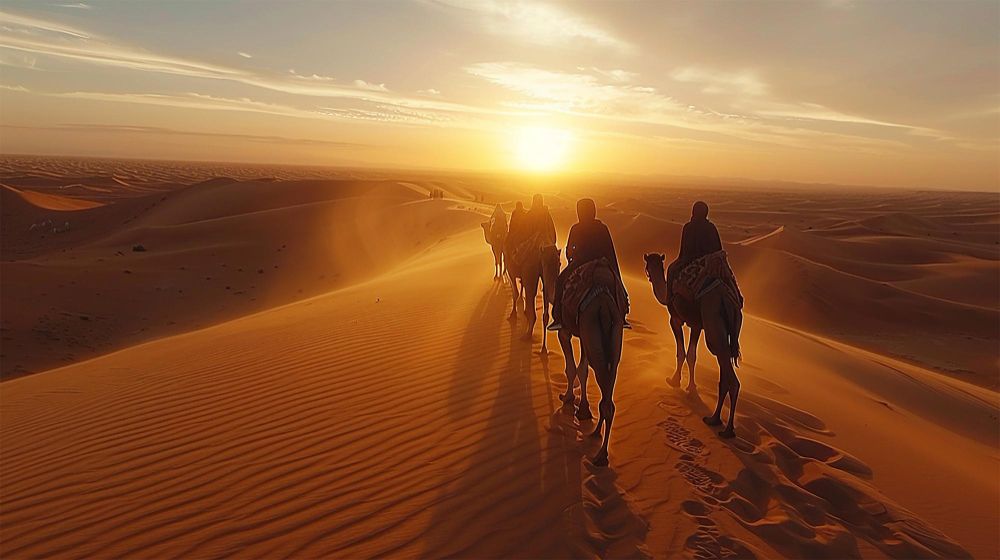
From Chefchaouen: 4 hours by road. See our Chefchaouen Travel Guide for route details. Our 5-Day Chefchaouen & Merzouga Desert Tour passes through Fes with a full guided medina tour included.
How Long to Stay
One full day minimum. A guided medina tour of 4-5 hours covers the main landmarks. Add a leisurely lunch and some independent wandering, and you have a complete day.
Two days ideal. Day 1: guided tour of the main medina highlights. Day 2: independent exploration of areas you want to revisit, plus a cooking class or hammam experience.
Three days if you want to add a day trip to Meknes and Volubilis (Roman ruins, 1 hour from Fes) — an excellent complement to the Fes medina experience.
Explore more things to do in Fes for guided experiences, and see our Morocco 7-Day Itinerary for how Fes fits into a broader Morocco trip.
Frequently Asked Questions
Is Fes better than Marrakech?
Different, not better. Fes is more authentic, less tourist-adapted, and culturally deeper. Marrakech is more accessible, has better nightlife, and is the gateway to the Sahara and Atlas Mountains. Most Morocco trips benefit from including both. Fes is typically preferred by travelers who value history and culture over spectacle and convenience.
Is the medina safe?
Yes. The medina is densely populated and well-policed. Petty crime (pickpocketing) exists but is less common than in Marrakech. The biggest "risk" is getting lost — which is disorienting but not dangerous. The medina empties after dark and is less navigable at night — return to your riad by sunset if you're unfamiliar with the layout.
How does Fes compare to Fes el-Jdid (the "New Fes")?
Fes el-Bali is the ancient medina and the main attraction. Fes el-Jdid ("New Fes," built in the 13th century) contains the Royal Palace (impressive exterior, not open to visitors), the Mellah, and some gardens. The modern Ville Nouvelle has restaurants, shops, and the train station. Most visitors spend nearly all their time in Fes el-Bali.
Do I need to haggle in Fes?
Yes. Like all Moroccan medinas, prices in the souks are negotiable. Start at roughly 30-40% of the asking price and negotiate. The process is gentler in Fes than in Marrakech — vendors are generally less aggressive. For fixed-price shopping, look for cooperative shops (particularly for leather, pottery, and textiles) where prices are labeled.