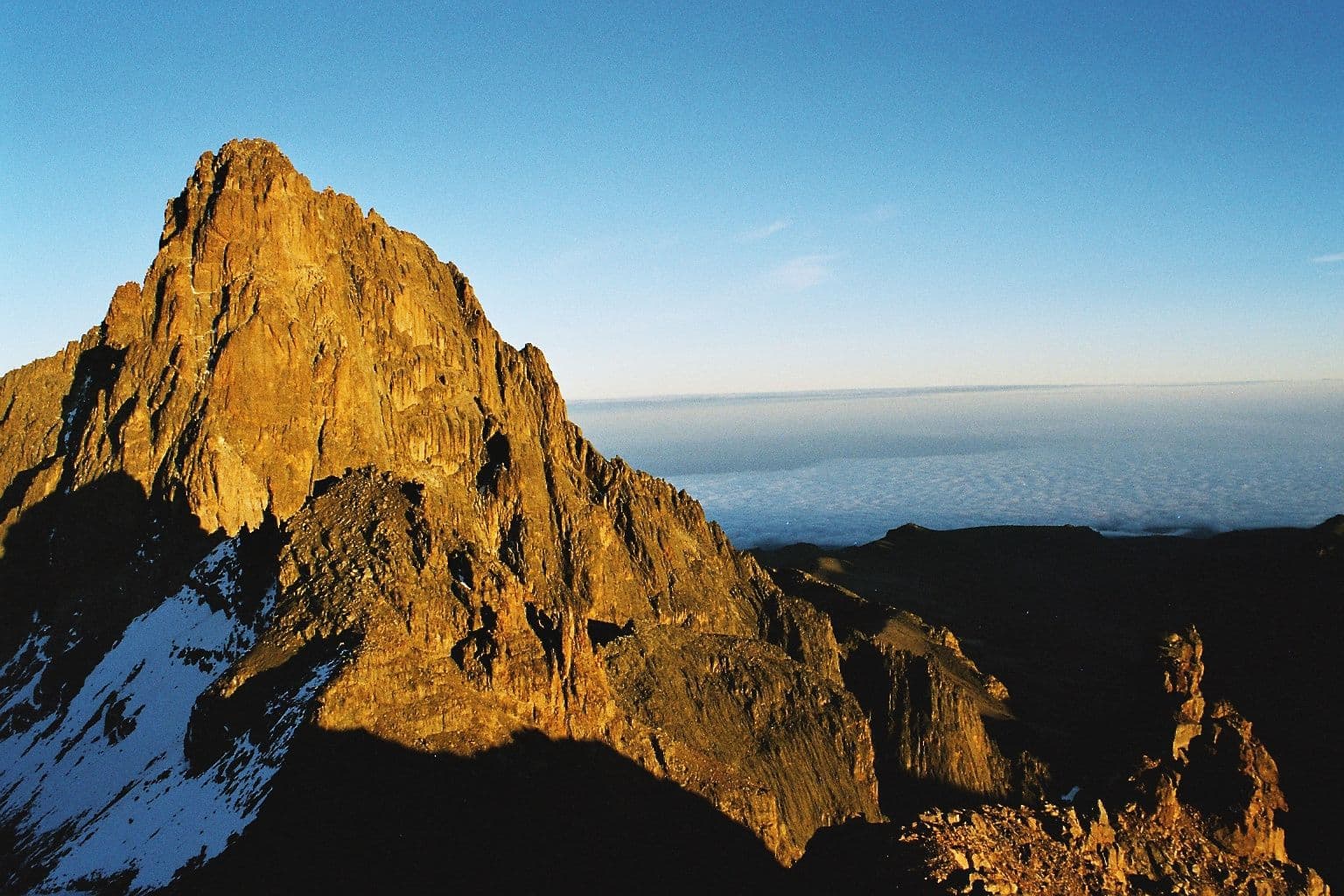
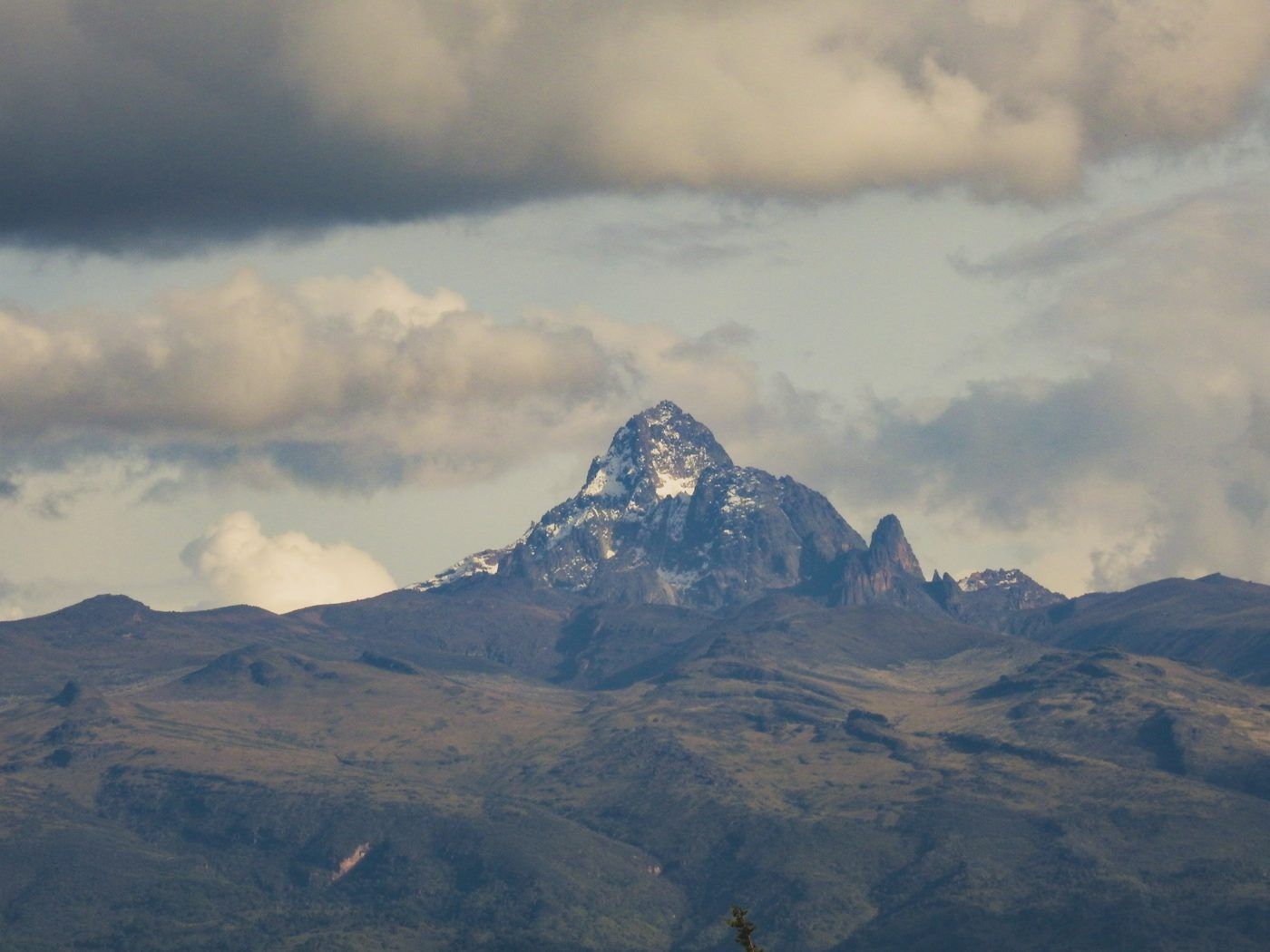
Mount Kenya is Africa's second-highest mountain at 5,199 meters — and for trekkers, it may be the more rewarding climb. While Kilimanjaro gets the fame, Mount Kenya offers more dramatic scenery, fewer crowds, genuine technical variety, and a summit experience (Point Lenana at 4,985 meters) that's accessible to fit hikers without mountaineering experience.
The mountain sits at the equator in central Kenya, its glaciated peaks visible from Nairobi on clear days. The trek passes through bamboo forest, alpine moorland dotted with giant lobelias and groundsels (plants found nowhere else on Earth), and finally high-altitude scree and glacial terrain.
The Summit Options
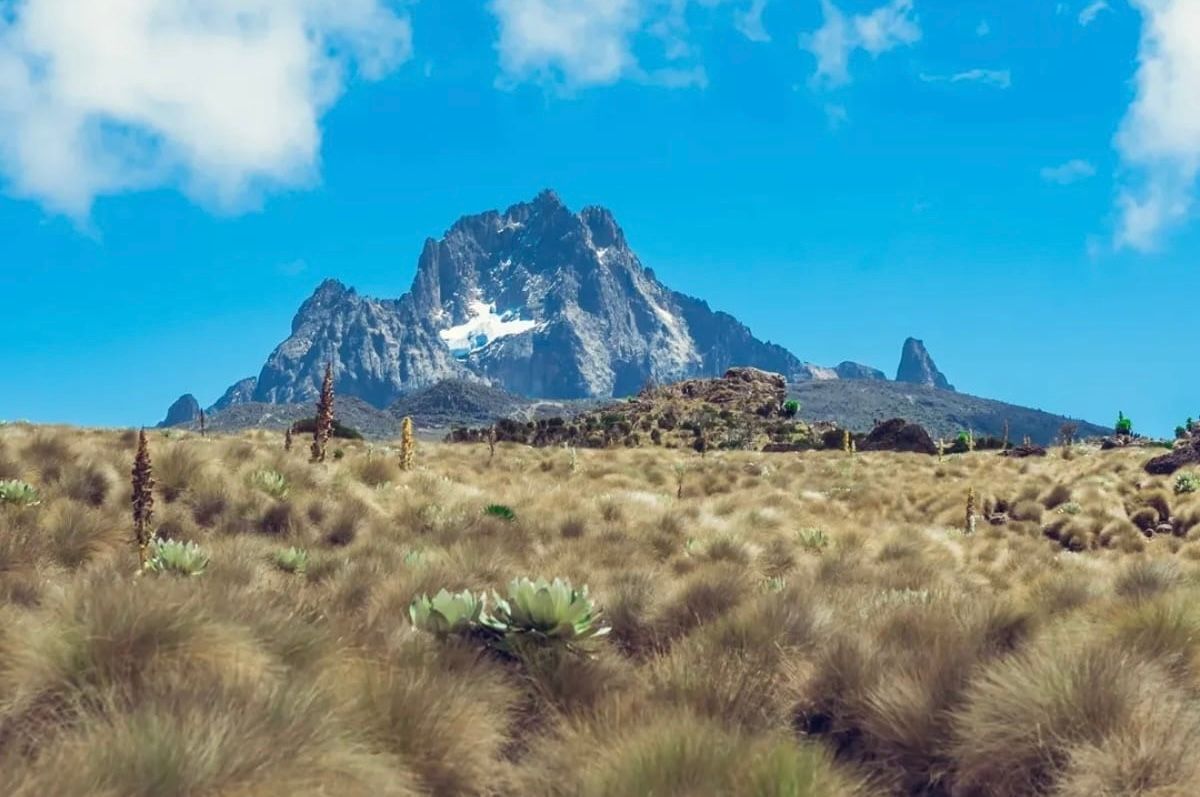
Mount Kenya has three peaks. Understanding the difference is essential for planning.
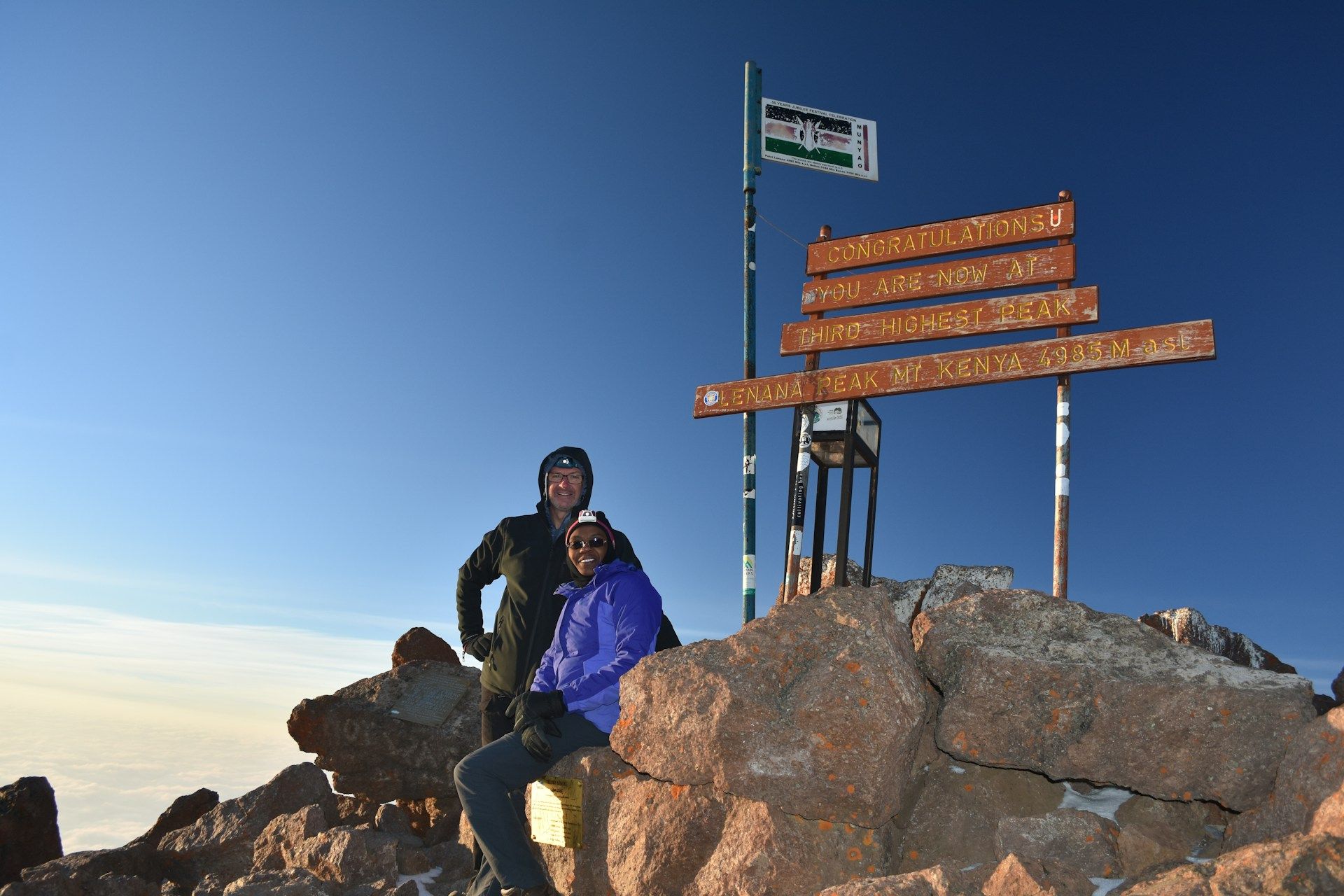
Point Lenana (4,985m) — the trekking peak. Reachable by fit hikers without technical climbing skills. This is the goal for 95%+ of Mount Kenya trekkers. The summit push is a steep scramble on scree, typically done in the dark to reach the top for sunrise.
Batian (5,199m) and Nelion (5,188m) — the true summits. These require technical rock climbing (Grade IV-V), ropes, and mountaineering experience. Only for experienced climbers with guides.
This guide focuses on Point Lenana, the standard trekking objective.
Routes to Point Lenana
Sirimon Route (Recommended for Most Trekkers)
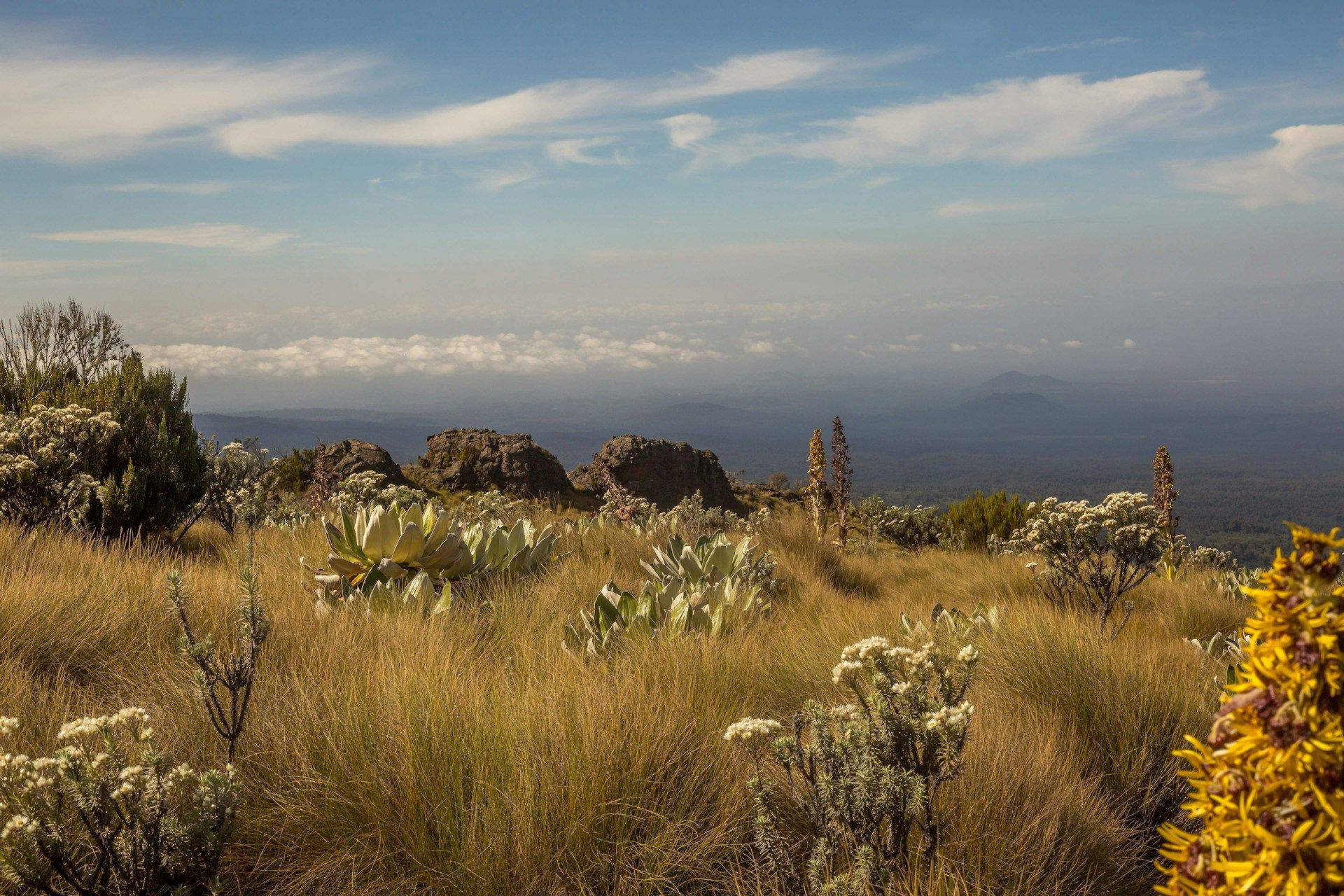
The most popular route, approaching from the northwest. Gradual ascent through forest and moorland with good acclimatization profile. The scenery is excellent throughout, with the Mackinder Valley and Shipton's Camp providing dramatic alpine campsite settings.
Duration: 4-5 days (3-4 days up, 1 day down).Difficulty: Moderate. Well-maintained trail, gradual elevation gain, clear path.Starting point: Sirimon Gate (accessible by road from Nanyuki, approximately 3 hours from Nairobi).Best for: First-time high-altitude trekkers. Best acclimatization of all routes.
Chogoria Route (Most Scenic)
Approaches from the east through stunning scenery — the Gorges Valley, Lake Michaelson (in a dramatic glacial cirque), and the Hall Tarns. Widely considered the most beautiful route on Mount Kenya.
Duration: 4-5 days.Difficulty: Moderate-challenging. Some sections are steeper and rougher than Sirimon.Starting point: Chogoria Gate (accessible from Chogoria town, approximately 4 hours from Nairobi).Best for: Trekkers who prioritize scenery and don't mind a slightly more demanding trail.
Naro Moru Route (Fastest)
The most direct route, approaching from the west. Faster but steeper, with the infamous "Vertical Bog" — a steep, muddy section that's exactly as unpleasant as it sounds.
Duration: 3-4 days.Difficulty: Moderate-challenging. The Vertical Bog is physically demanding and morale-testing.Starting point: Naro Moru Gate (accessible from Naro Moru town, approximately 3 hours from Nairobi).Best for: Trekkers with limited time who are fit and don't mind tough conditions.
Check out the Trekking Through the Lush Wilds of Mount Kenya is a 4-day experience via the Naro Moru route, including all transport from Nairobi, guides, porters, accommodation at Met Station and Mackinders Camp, and the summit push to Point Lenana.
Combination Routes
Many trekkers ascend one route and descend another for variety. The Chogoria up / Sirimon down combination is widely considered the best overall Mount Kenya trek — you get the most scenic ascent and an easy, knee-friendly descent.
What the Trek Is Like
Day-by-Day (Sirimon Route, 4 Days)
Day 1: Sirimon Gate (2,650m) to Old Moses Camp (3,300m). Walk through montane forest with bamboo, colobus monkeys, and birdlife. Gradual ascent, 3-4 hours walking. Overnight in basic bunkhouse.
Day 2: Old Moses to Shipton's Camp (4,200m). Cross the moorland zone — open, wind-swept terrain with giant lobelias and groundsels creating an alien landscape. The scenery is extraordinary. 5-6 hours walking with significant altitude gain.
Day 3: Summit day. Wake at 2:00-3:00 AM. Climb in darkness via scree and rock to Point Lenana (4,985m) for sunrise. The sunrise from Lenana — with the glaciated peaks of Batian and Nelion catching the first light, and the shadow of Mount Kenya stretching across the clouds below — is one of the most rewarding mountain summits in Africa. Descend to Mackinders Camp or back to Old Moses. 8-10 hours total.
Day 4: Descend to Sirimon Gate. 3-4 hours. Transfer to Nairobi.
What to Expect Physically
Mount Kenya is a real high-altitude trek. Point Lenana at 4,985 meters is higher than Mont Blanc and nearly as high as Kilimanjaro's base camp. Altitude sickness is a genuine risk.
Fitness required: You should be comfortable walking 6-8 hours per day on uneven terrain with 500-800 meters of altitude gain. Prior trekking experience is helpful but not essential. The summit day is the hardest — steep scree in cold, dark conditions at altitude.
Altitude sickness: Symptoms include headache, nausea, fatigue, and dizziness. The 4-5 day itineraries provide adequate acclimatization for most people. Drink plenty of water, ascend slowly, and inform your guide immediately if symptoms worsen.
Temperature: Equatorial sun during the day (warm at lower elevations, cool at altitude), freezing at night above 4,000 meters, and potentially below -10°C on summit morning. Layering is essential.
Costs
Mount Kenya is significantly cheaper than Kilimanjaro.
| Item | Approximate Cost |
|---|---|
| Park entry fees | $52/person/day (foreign adult) |
| Guide fees | $25-$40/day |
| Porter fees | $15-$25/day per porter |
| Camp/hut fees | $15-$30/night |
| Equipment rental | $20-$50 total (if needed) |
| Total (4-day trek, budget) | $500-$800/person |
| Total (organized tour, all-inclusive) | $800-$1,500/person |
For comparison: a Kilimanjaro climb costs $1,500-$4,000+ for a 6-8 day trek. Mount Kenya delivers a comparable (some say better) mountain experience at a fraction of the price.
When to Go
Best months: January-February and July-September (dry seasons). Clear skies, minimal rain, and the best summit conditions. July-August is the most popular period.
Avoid: March-May and November (rainy seasons). Trails become muddy, visibility drops, and conditions at altitude can be harsh. The mountain is technically climbable year-round, but wet season treks are significantly harder.
What to Pack
Essentials: Warm layers (thermal base, fleece mid-layer, down or synthetic insulated jacket), waterproof outer shell, warm hat and gloves, headlamp with spare batteries, trekking poles, sturdy hiking boots (broken in), sleeping bag rated to -10°C (or rent one), 2-3 liters of water capacity, sunscreen, sunglasses.
Nice to have: Gaiters (for the Vertical Bog on Naro Moru), camera with charged batteries, altitude sickness medication (Diamox — consult your doctor), snacks for summit morning.
Don't bring: Heavy cotton clothing (gets wet and stays wet), brand-new boots (blisters guaranteed), excessive gear (porters have weight limits).
Mount Kenya vs Kilimanjaro
| Factor | Mount Kenya (Point Lenana) | Kilimanjaro (Uhuru Peak) |
|---|---|---|
| Summit height | 4,985m | 5,895m |
| Duration | 3-5 days | 5-9 days |
| Difficulty | Moderate | Moderate-challenging (primarily altitude) |
| Scenery | More varied and dramatic | More gradual landscape zones |
| Crowds | Low | High (50,000+ attempts/year) |
| Cost | $500-$1,500 | $1,500-$4,000+ |
| Summit success rate | ~85-90% | ~60-70% |
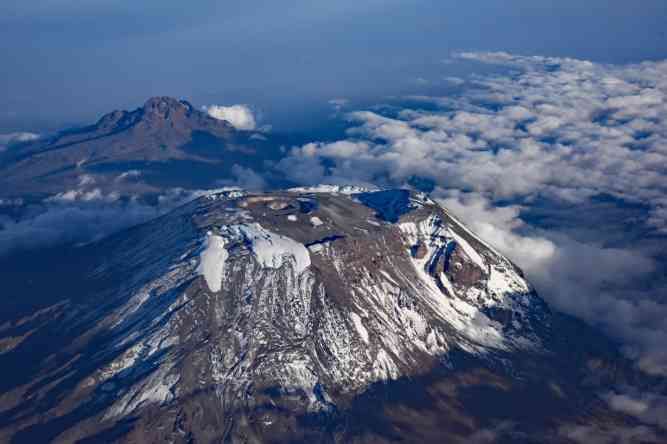
The case for Mount Kenya: More dramatic scenery, fewer crowds, lower cost, higher success rate, and a genuine mountain experience rather than a high-altitude walk. Many experienced trekkers prefer it to Kilimanjaro.
The case for Kilimanjaro: Higher summit (Africa's tallest), greater name recognition, the "Roof of Africa" bucket-list factor.
Browse all Kenya adventure experiences, including the Mount Kenya trekking experience.
Frequently Asked Questions
Do I need a guide?
Yes — guides are mandatory in Mount Kenya National Park. This is for safety (altitude, weather, navigation) and conservation. All organized treks include a lead guide and assistant guides.
Can I combine Mount Kenya with a safari?
Absolutely. A common itinerary: 4 days Mount Kenya trek + 3-4 days Masai Mara or Amboseli safari. The contrast between mountain and savannah makes for an exceptionally varied Kenya trip.
Is Mount Kenya harder than Kilimanjaro?
The trekking is more technical (steeper terrain, rougher trails), but the lower altitude makes altitude sickness less of a factor. Most experienced trekkers rate the overall difficulty as similar, with Mount Kenya being physically tougher but Kilimanjaro being harder due to altitude.
What's the minimum fitness level?
You should be able to hike 15-20 kilometers in a day on hilly terrain without distress. Regular cardio exercise (running, cycling, swimming) for 2-3 months before your trek is recommended. No technical climbing skills are needed for Point Lenana.