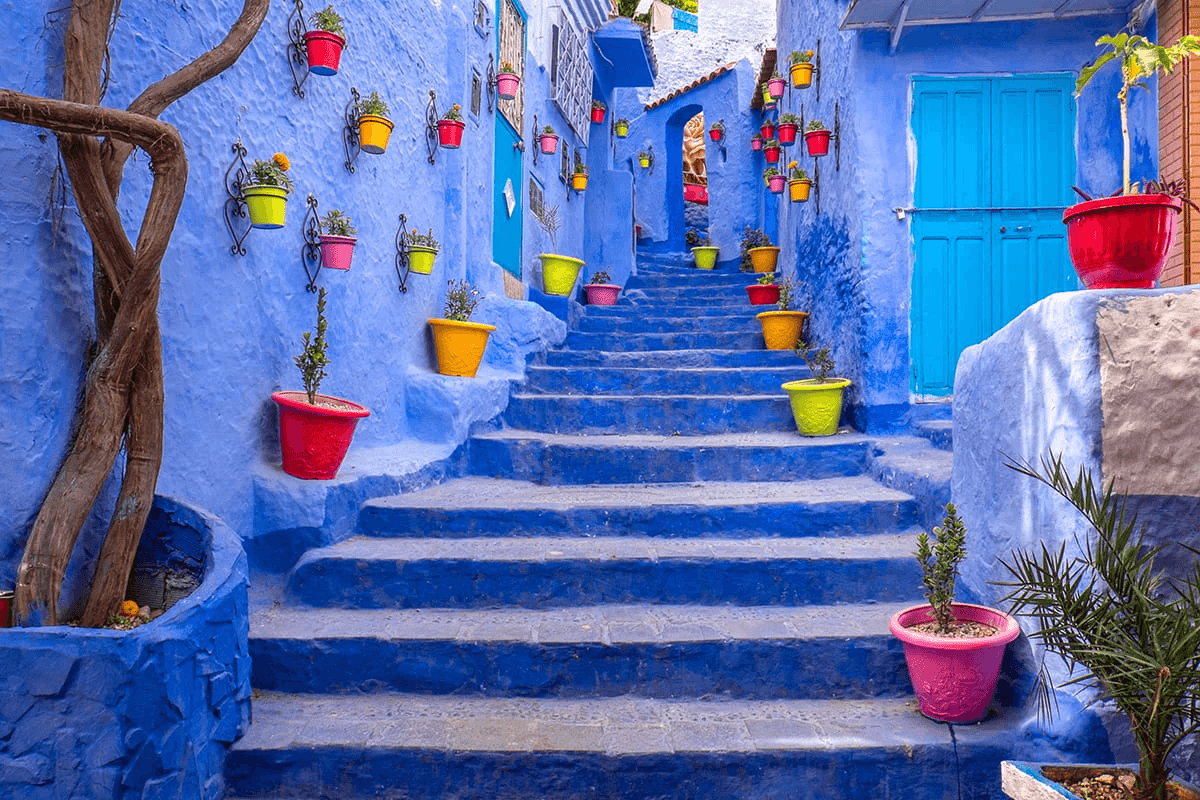
Chefchaouen is the most photographed town in Morocco — and the photos don't lie. Nestled in the Rif Mountains at 600 meters elevation, this small town is painted in every shade of blue, from sky-pale to deep cobalt. The effect is otherworldly: narrow alleyways, flower-pot-lined steps, and arched doorways all washed in blue, set against a backdrop of green mountains.
But Chefchaouen is more than Instagram scenery. It's a genuinely relaxing destination in a country that can be intense, with hiking trails in the surrounding mountains, a laid-back food scene, and a pace of life that makes Marrakech feel like a distant planet.
Why Is Chefchaouen Blue?
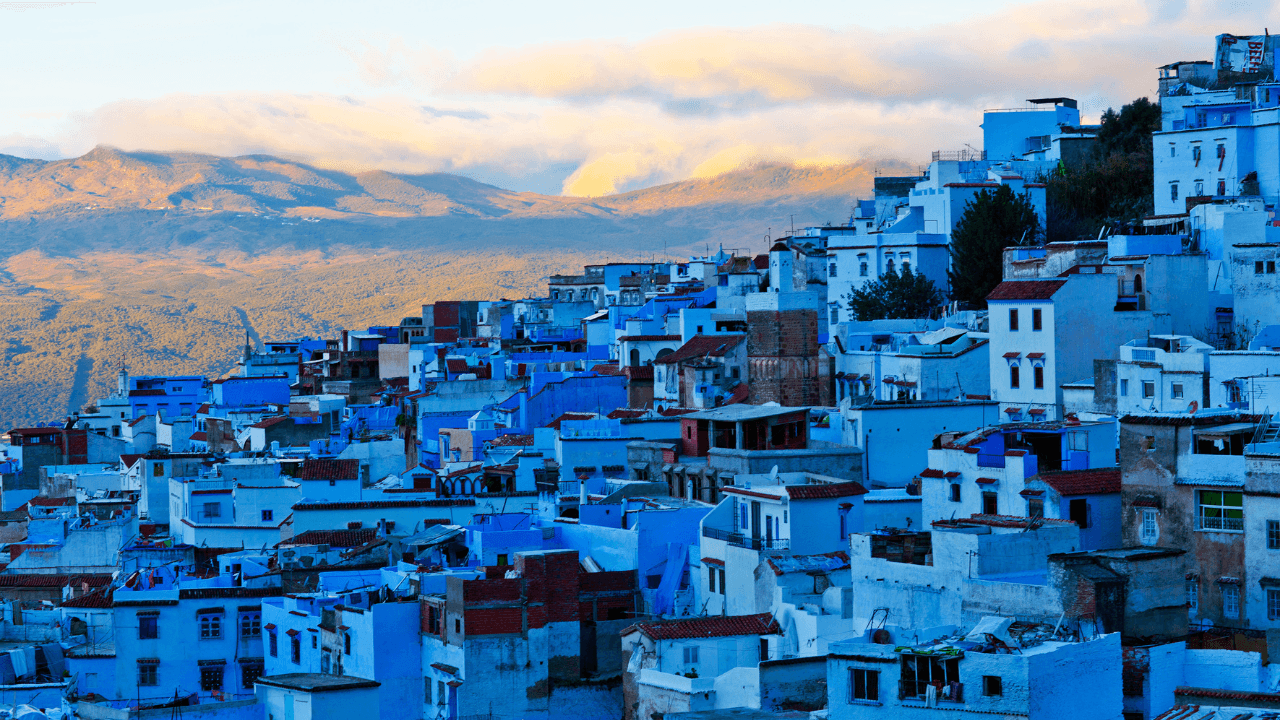
Multiple theories exist and no one is entirely certain. The most common explanation: Jewish refugees fleeing to Chefchaouen in the 1930s painted buildings blue, associated in Jewish tradition with the sky and heaven. Others say the blue repels mosquitoes, or that the tradition was revived by the town to attract tourism. Whatever the origin, the practice is now maintained by residents who repaint their homes regularly, and the town government encourages the tradition.
The blue is not uniform — different buildings use different shades, creating a varied, organic palette that photographs beautifully in all light conditions. Early morning and late afternoon light is particularly stunning.
What to Do in Chefchaouen
Walk the Medina
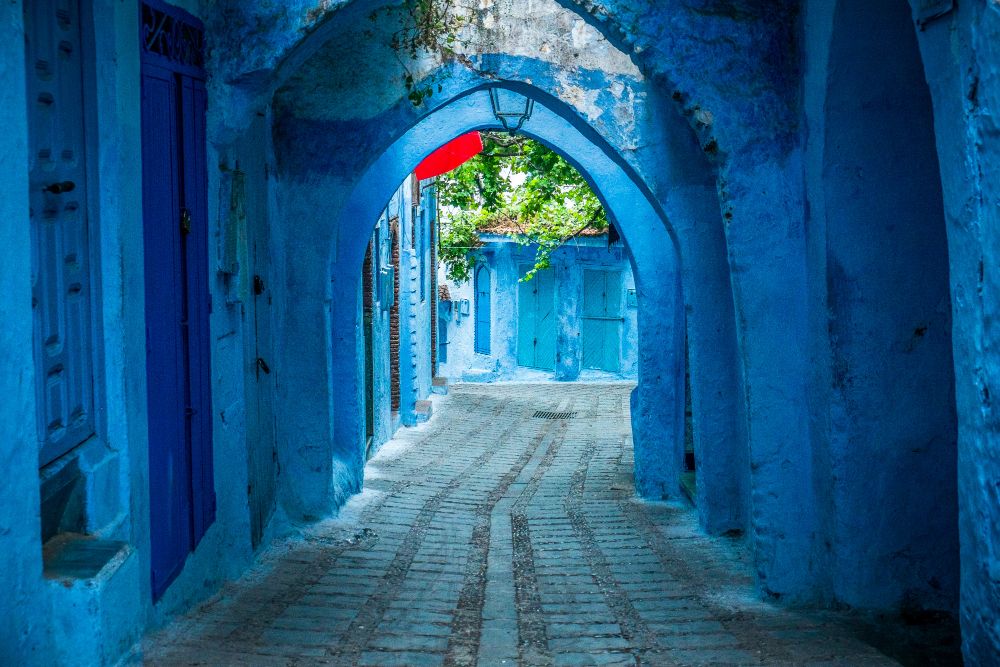
The medina is small enough to explore in a few hours but charming enough to occupy a full day. Unlike Marrakech or Fes, Chefchaouen's medina is calm — no motorbikes threading through alleys, no aggressive vendors, minimal hassle. The streets are clean, residents are friendly, and the blue walls create a uniquely peaceful atmosphere.
Key spots within the medina: Place Outa el Hammam (the main square, lined with cafés — the social hub of town), the Kasbah (a small fortress with a garden and museum, entry approximately $2), and the Ras el-Maa waterfall at the eastern edge of the medina where locals wash wool in the stream.
Hike to the Spanish Mosque
The most popular short hike — a 20-minute walk uphill from the medina to a small mosque built during the Spanish colonial period. The mosque itself is modest, but the viewpoint over Chefchaouen with the Rif Mountains behind it is the town's signature panoramic view.
Best timing: Late afternoon for golden light and sunset. Bring water — the uphill section is exposed to sun.
Hike in the Rif Mountains
Chefchaouen is surrounded by hiking territory. The Talassemtane National Park offers trails ranging from easy half-day walks to multi-day treks through cedar and fir forests. The God's Bridge (Pont de Dieu) — a natural rock arch over a river gorge — is reachable as a half-day hike or drive from town.
For serious hikers, the trek to Jebel el-Kelaa (the twin-peaked mountain visible from town) takes a full day and offers commanding views across the Rif.
Shop for Local Crafts
Chefchaouen is known for hand-woven blankets and rugs (the Rif region's Berber weaving tradition), goat cheese (a local specialty sold at market stalls), and leather goods. The shopping experience is far more relaxed than Marrakech — prices are lower, haggling is gentler, and vendors are less aggressive.
Eat Local Food
The food in Chefchaouen is simple, mountain-influenced Moroccan cuisine. Specialties include goat cheese (served fresh or fried), mountain honey, and simple tagines made with local ingredients. Bab Ssour and Casa Aladdin are popular restaurants with rooftop terraces overlooking the medina.
For a deeper food experience, Our Morocco itinerary articles cover Moroccan cuisine in detail — see our Marrakech Food Tours guide.
Getting to Chefchaouen
Chefchaouen has no airport and no train station. Getting there requires road travel, which is part of the experience — the mountain roads are scenic and dramatic.
From Fes (4 hours)
The most common approach for travelers on a Morocco circuit. The road passes through rolling farmland before climbing into the Rif Mountains. Private transfer approximately $80-$120. Shared taxi (grand taxi) approximately $10-$15 per person. CTM bus available but less frequent.
From Tangier (2.5-3 hours)
Convenient if flying into Tangier from Europe. The drive is relatively short and the road is good. Explore Chefchaouen Highlights day trip from Tangier — a guided experience covering the medina, key viewpoints, and local culture.
From Casablanca (5-6 hours)
A longer drive but doable. Our day trip from Casablanca to Chefchaouen handles all transport and includes guided exploration of the Blue City.
From Marrakech
No direct route — you'd typically visit Chefchaouen as part of a multi-city itinerary via Fes. The 5-Day Chefchaouen & Merzouga Desert Tour from Marrakech includes Chefchaouen along with the Sahara desert and Fes.
How Long to Stay
One night minimum. Many visitors come on day trips from Fes or Tangier and miss the best of Chefchaouen — the early morning light when the medina is empty, the evening atmosphere when cafés fill up, and the sunset from the Spanish Mosque viewpoint.
Two nights ideal. This gives you a full day to explore the medina, hike to the Spanish Mosque, browse the souks, and enjoy the town's laid-back rhythm without rushing.
Three+ nights if you want to add hiking in Talassemtane National Park or simply decompress after the intensity of Marrakech and Fes.
Where to Stay
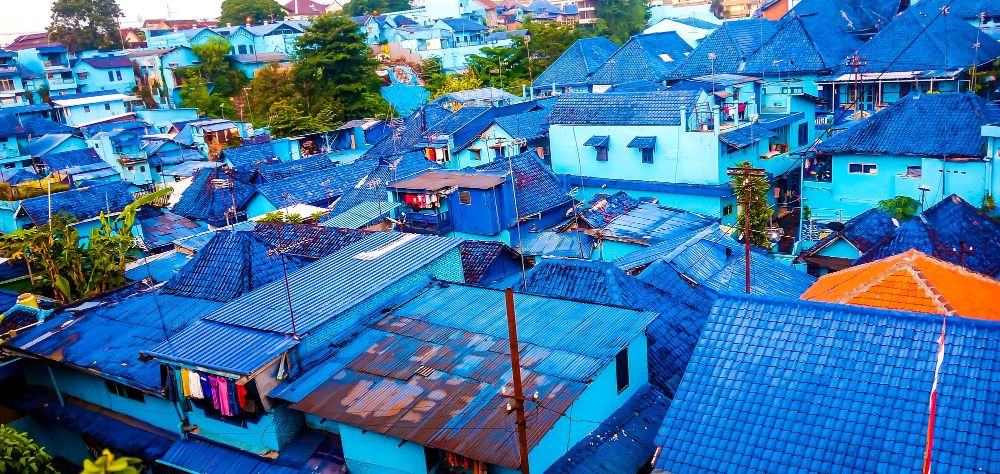
Chefchaouen's accommodation is charming and affordable. Traditional guesthouses (dars and riads) in the medina offer the best experience — many have rooftop terraces with mountain views.
Budget: $15-$30/night for basic guesthouses.Mid-range: $40-$80/night for well-located riads with breakfast and rooftop terraces.Boutique: $80-$150/night for the nicest properties with views and upgraded amenities.
Booking tip: Stay inside the medina for the full blue-city experience. Some properties require walking through narrow alleys with luggage — pack light or ask your host about access.
When to Visit
Best months: March through May and September through November. Comfortable temperatures (18-28°C), clear skies, and manageable tourist numbers. Spring brings wildflowers in the surrounding mountains.
Summer (June-August): Hot during the day (30-35°C) but evenings are pleasant at elevation. Peak tourist season — the medina can feel crowded, especially with day-trippers from Tangier.
Winter (December-February): Cool to cold (8-15°C during the day, near freezing at night in the mountains). Fewer tourists. The blue walls look stunning against grey winter skies. Bring warm layers.
Ramadan: Chefchaouen is more conservative than Marrakech. During Ramadan, most restaurants close during the day. Evening iftar meals are beautiful but options are limited. Plan accordingly.
Practical Tips
Cash: ATMs are available but limited. Bring enough cash from Fes or Tangier. Many guesthouses and small restaurants are cash-only.
Cannabis: The Rif Mountains are Morocco's cannabis-growing region, and you may be offered kif (cannabis) in Chefchaouen. Possession and use are illegal in Morocco regardless of local cultivation. Politely decline.
Photography: Chefchaouen is extremely photogenic and residents are generally tolerant of photography. However, always ask before photographing people directly, particularly women. The town itself (buildings, streets, doors) is fair game for photos at any time.
Footwear: The medina has many steps and steep, smooth surfaces that can be slippery when wet. Wear shoes with good grip.
Explore other Chefchaouen day tours for experiences and local guides in Morocco's Blue City.
Frequently Asked Questions
Is Chefchaouen worth visiting, or is it just for Instagram?
It's genuinely worth visiting. The photogenic quality is real, but the town also offers a distinctive Rif Mountain culture, excellent hiking, and a pace that's incomparably relaxed versus Morocco's bigger cities. Most travelers who spend at least one night describe it as a highlight of their Morocco trip.
Can I visit Chefchaouen as a day trip?
Yes, from Tangier (2.5 hours) or Fes (4 hours). But you'll only have 3-5 hours in town after driving, which limits you to the medina walk and one café stop. An overnight stay is strongly recommended.
Is it safe?
Very safe. Chefchaouen has a low crime rate and a welcoming atmosphere. Standard precautions apply (secure valuables, don't walk alone in unlit areas at night), but this is one of Morocco's safest and most tourist-friendly towns.
How does it fit into a Morocco itinerary?
Chefchaouen works best as a stop between Fes and Tangier (or vice versa) on a Morocco circuit. See our Morocco 7-Day Itinerary for how Chefchaouen fits into the classic route.